
Shopify vs Amazon is the wrong question in 2026 — for most brands the answer is both, in the right order. Sell on Amazon to tap into ready-made demand and reach, and run a Shopify store to own your brand, protect your margins, and keep your customer data. The real decision is which one to lead with based on your product, your goals, and how much control you need.
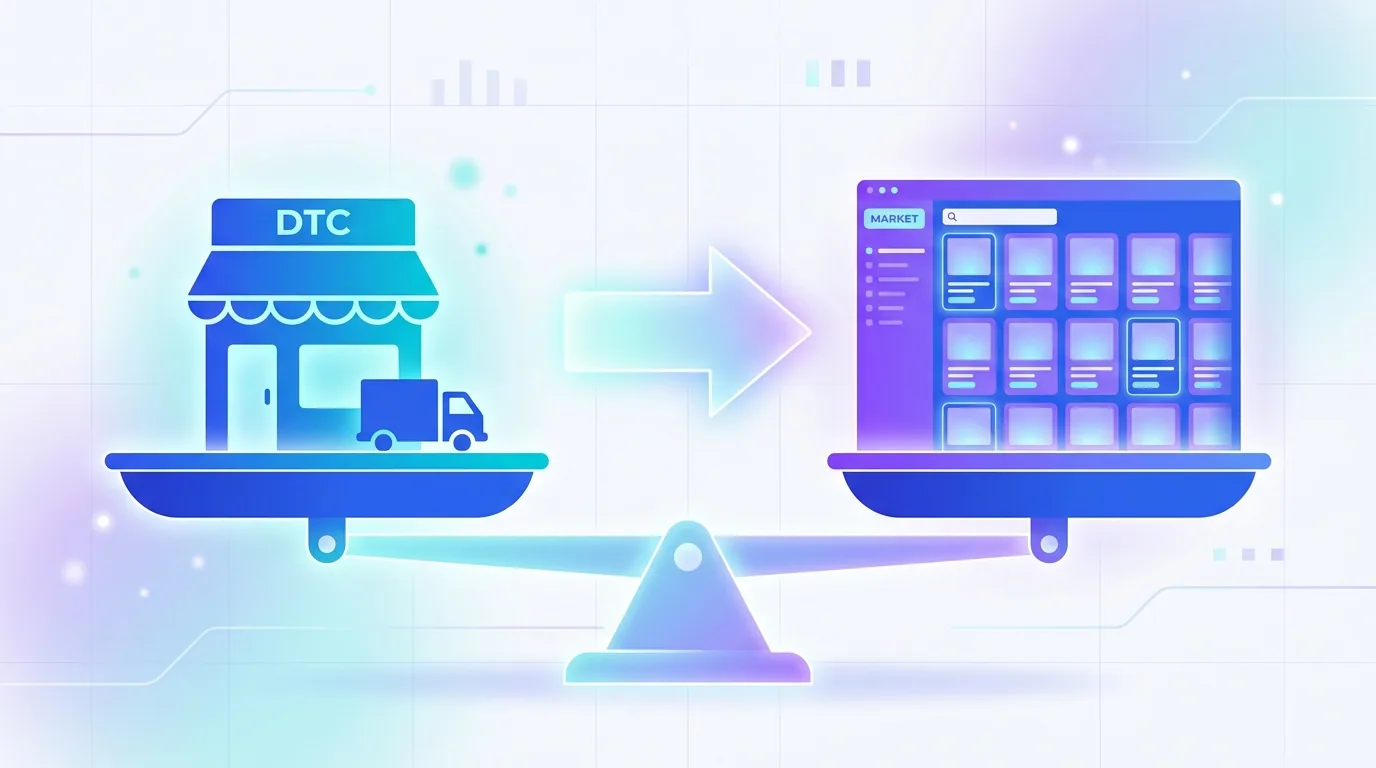
Amazon is a marketplace: enormous traffic, but you play by their rules and you rent the customer relationship. Shopify is direct-to-consumer (DTC): you build the audience and own everything, but you also have to drive the traffic. This guide breaks down DTC vs marketplace so you can decide where to sell online — and we run both through our ecommerce management and Amazon management teams every day.
What is the core difference between Shopify and Amazon?
Shopify gives you a platform to build your own online store; Amazon gives you access to its existing pool of buyers. On Shopify you control the design, the pricing, the data, and the customer relationship — but you are responsible for traffic. On Amazon you get instant reach, but you compete on a crowded results page and Amazon owns the customer.
Put simply: Amazon is where people already go to buy; Shopify is where you build a brand people come back to. One is rented reach, the other is owned audience. The smartest 2026 strategies use each for what it does best.
There is also a shopper-behaviour difference worth naming. People on Amazon are usually in buying mode, comparing options and ready to check out within minutes. People who land on a Shopify store are often discovering a brand for the first time, which means your store has to do more storytelling and trust-building before the sale. That changes not just where you sell, but how you sell in each place.
When should you sell on Amazon?
Amazon shines when shoppers are actively searching for products like yours and trust matters at the point of purchase. If your item is something people look up and buy quickly — a known category, a clear use case, competitive pricing — Amazon's traffic and Prime delivery do heavy lifting you could never match alone in your first year.
- You want fast reach: millions of high-intent buyers are already searching.
- Your product is search-driven: people know what they want and look it up.
- You can win on logistics: Fulfilment by Amazon handles storage, shipping, and returns.
- You can compete on the page: strong listings, reviews, and pricing matter here.

The trade-offs are real: referral and fulfilment fees compress margins, you cannot easily email your buyers, and a policy change or suspension can cut off revenue overnight. Amazon is powerful, but it is a channel you operate on, not an asset you own.
When should you sell on Shopify?
Shopify wins when brand, margin, and customer relationships are central to your business. If your product benefits from storytelling, a distinctive look, subscriptions, or repeat purchases, a DTC store lets you build all of that — and keep the email addresses, the data, and the full margin that Amazon would otherwise take.
The catch is traffic. A Shopify store is a beautiful shop on a quiet street until you drive people to it through ads, SEO, content, and social. That is an investment, but it builds an asset that grows in value — and a well-built, fast store is the foundation, which is why we pair stores with proper web development when speed and conversion matter.
Brand defensibility is the quiet long-term payoff. On Amazon you can be undercut, copied, or buried by a competitor overnight, because shoppers are loyal to the marketplace, not to you. A strong DTC brand builds loyalty that is far harder to steal — customers who seek you out by name, subscribe, and recommend you. That moat is the real reason ambitious brands eventually invest in their own store, whatever they started with.
How do fees and profit compare on Shopify vs Amazon?
On Amazon, expect referral fees (typically a percentage of each sale) plus fulfilment costs if you use FBA, and often advertising spend to stay visible. On Shopify, you pay a monthly subscription and payment-processing fees, but no marketplace referral cut — so once you cover traffic costs, your per-order margin is usually higher.
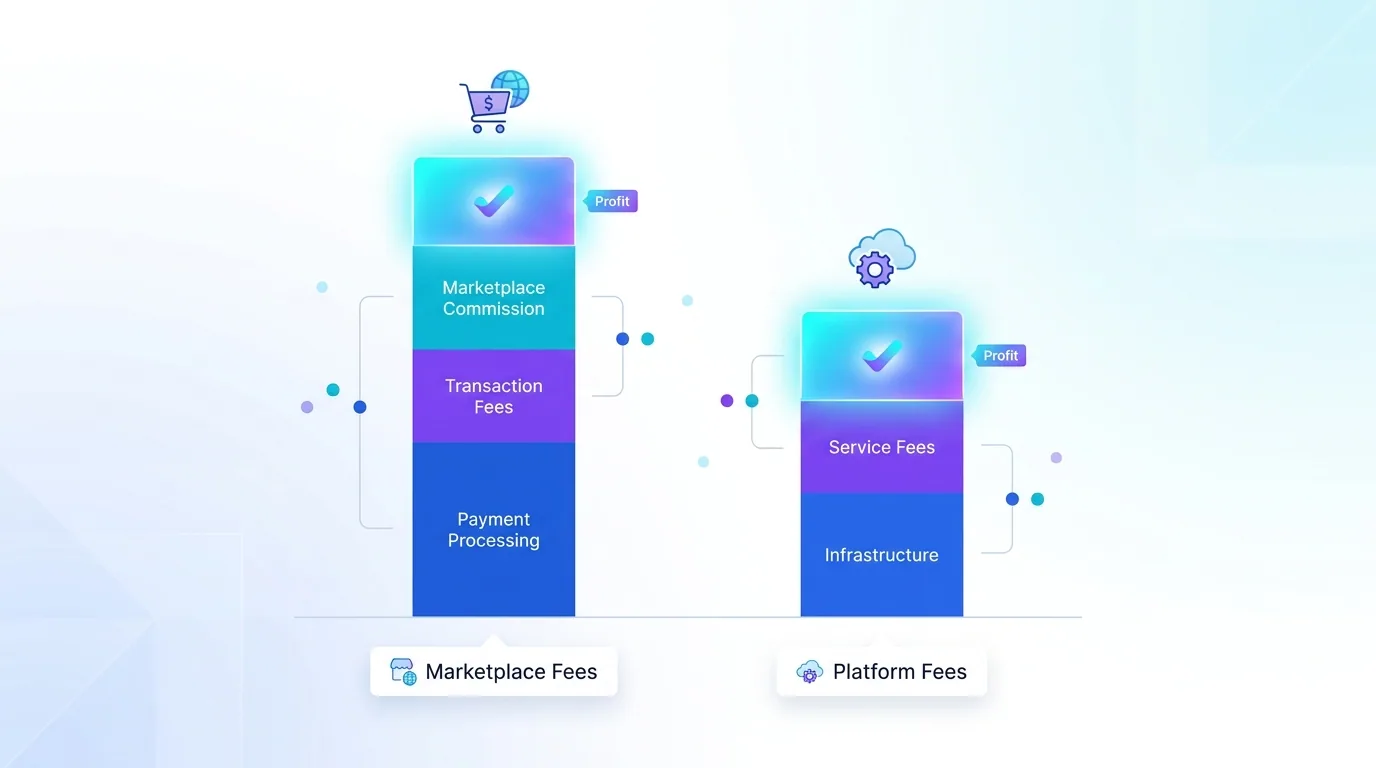
There is no universal winner — it depends on your traffic cost. If acquiring a customer on your own store costs less than Amazon's fees, Shopify is more profitable. If you cannot yet drive cheap traffic, Amazon's built-in demand can be the better deal even after fees.
Lifetime value tips the maths further toward owning your store. A single Amazon sale is often just that — one sale, with no easy way to bring the buyer back. A Shopify customer, by contrast, can be re-engaged through email, loyalty programmes, and subscriptions, so the same first purchase can be worth several more over time. When you compare the channels, compare the lifetime value of a customer, not only the margin on the first order.
Why most brands should sell on both in 2026
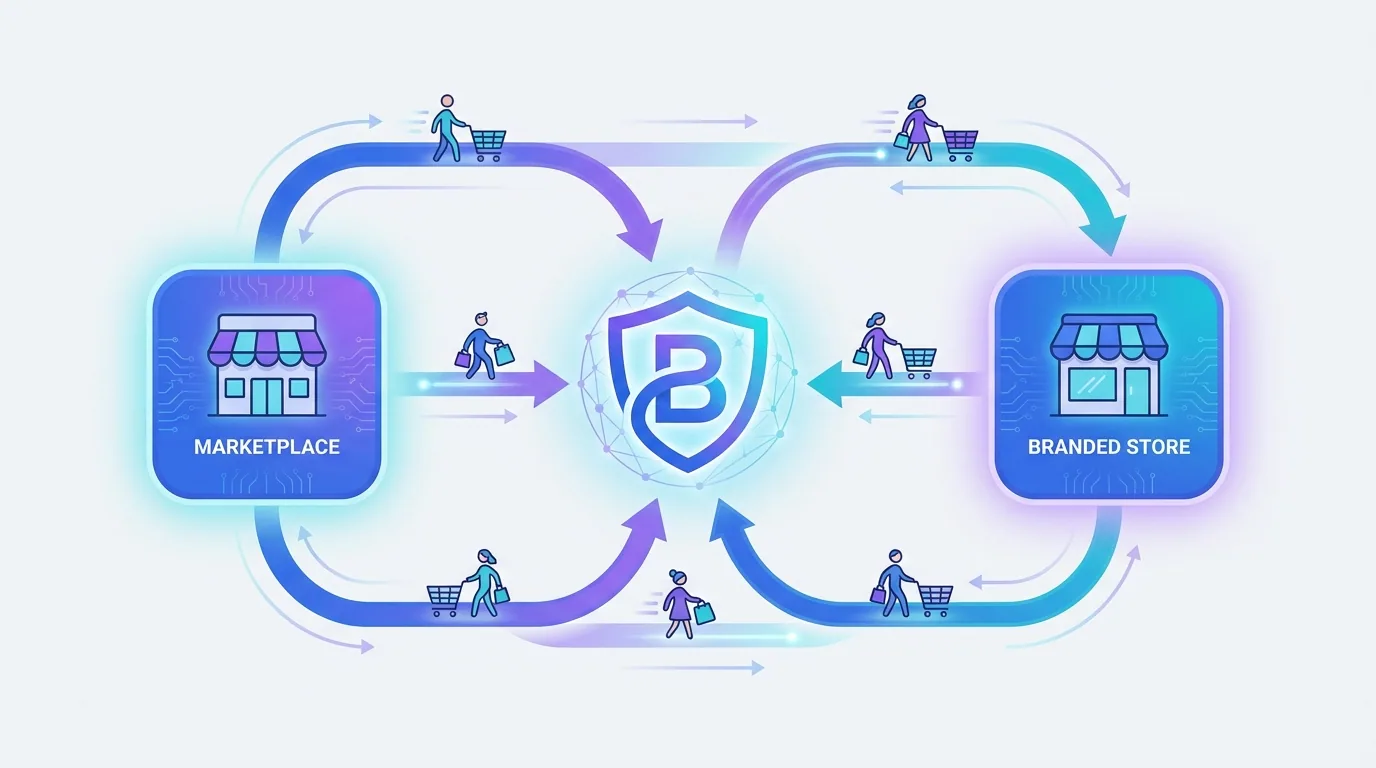
The brands winning in 2026 treat the choice as a portfolio, not a duel. Amazon becomes a discovery and revenue engine that funds growth; Shopify becomes the brand home where you build loyalty and capture data. Many shoppers discover a product on Amazon and then buy direct later — and that journey only works if you are present in both places.
Use Amazon to be found and Shopify to be remembered. The marketplace gives you reach today; your own store builds the brand that compounds tomorrow.
— Sofia Marino, Ecommerce & Marketplace Lead, Fryntavo
- Launch on Amazon to validate demand and generate early revenue.
- Build a fast Shopify store to capture brand searches and repeat buyers.
- Use Amazon profits to fund Shopify traffic — ads, SEO, and content.
- Drive loyalty and subscriptions on Shopify where you own the relationship.
- Keep listings, pricing, and branding consistent across both channels.
How do I decide where to start?
Start where your first profitable sales are easiest. If your product is search-driven and you need revenue fast, lead with Amazon. If brand and margin are your edge and you can drive traffic, lead with Shopify. In both cases, plan to add the other channel within your first year — the goal is a system, not a single storefront.
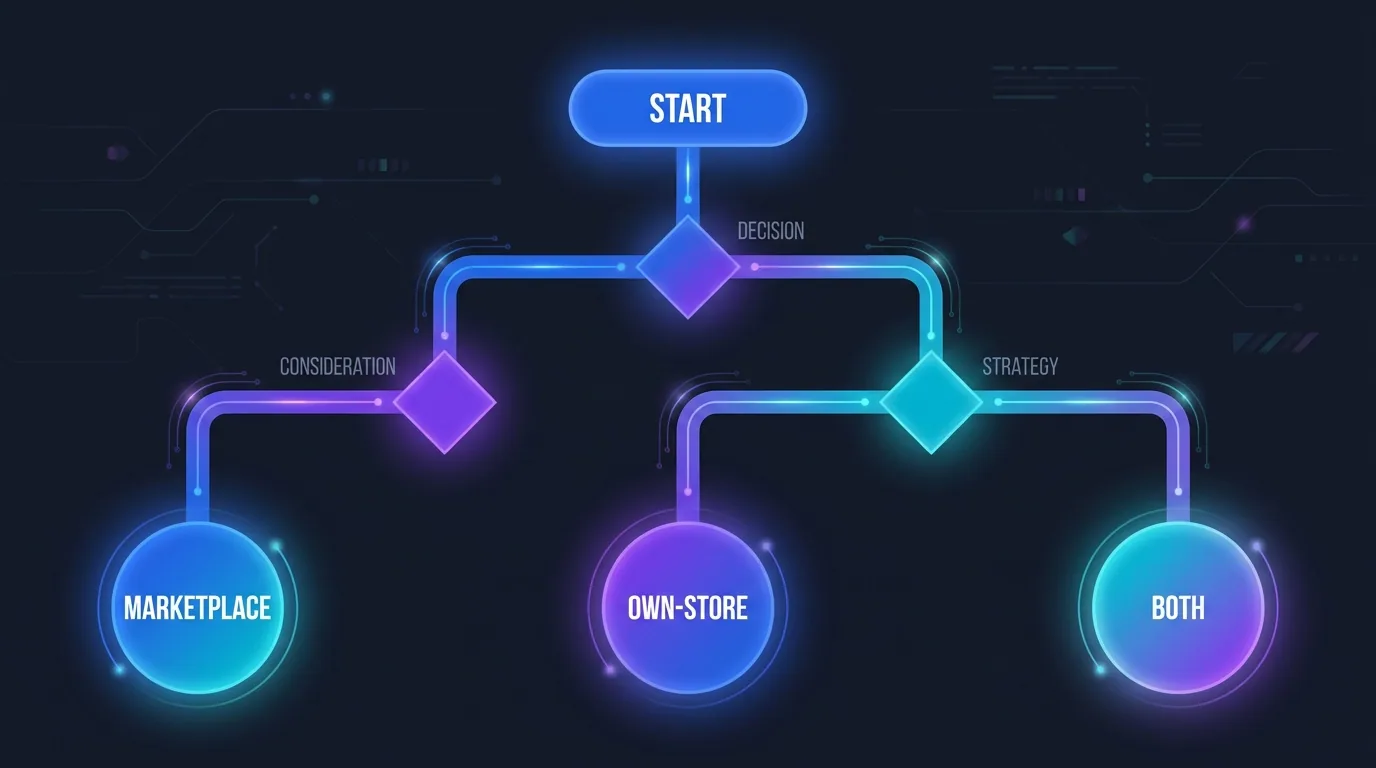
Whichever you lead with, the execution decides the outcome. Our Amazon management and ecommerce management teams build and run both channels so they reinforce each other instead of competing.
Not sure whether to lead with Amazon, Shopify, or both? Let our team map a channel strategy around your product and margins.
Plan Your Channel StrategyFrequently asked questions
Shopify vs Amazon: which is better in 2026?
Neither is universally better — they serve different jobs. Amazon gives you instant reach and high-intent buyers but takes fees and owns the customer. Shopify gives you brand control, higher margins, and customer data but requires you to drive your own traffic. Most brands benefit from using both.
Is it cheaper to sell on Shopify or Amazon?
It depends on your traffic cost. Amazon charges referral and fulfilment fees but supplies demand, while Shopify charges a subscription and processing fees with no referral cut. If you can acquire customers for less than Amazon's fees, Shopify is more profitable per order.
What is the difference between DTC and marketplace selling?
DTC (direct-to-consumer) means selling through your own store, like Shopify, where you own the audience, data, and margin but must drive traffic. Marketplace selling, like Amazon, gives you access to an existing audience and built-in trust, but you rent the customer relationship and pay fees.
Can I sell on both Shopify and Amazon at the same time?
Yes, and most successful brands do. Amazon acts as a discovery and revenue engine while Shopify builds brand loyalty and captures customer data. Keep your listings, pricing, and branding consistent across both, and use marketplace profits to fund your own store's growth.
Should a new brand start on Amazon or Shopify?
Start where your first profitable sales are easiest. If your product is search-driven and you need revenue quickly, lead with Amazon. If brand and margin are your advantage and you can drive traffic, lead with Shopify. Plan to add the second channel within your first year.
Do I own my customer data on Amazon?
No. On Amazon, the marketplace controls the customer relationship and limits how you can contact buyers. On Shopify you own every email, order history, and behaviour signal, which powers retention marketing and lifetime value over time.
What are the risks of selling only on Amazon?
Relying solely on Amazon exposes you to fee increases, fierce price competition, and the risk that a policy change or account suspension cuts off revenue overnight. Because you do not own the customer relationship, you also cannot easily build repeat business off-platform.
Can Fryntavo manage both my Amazon and Shopify stores?
Yes. Fryntavo's Amazon management and ecommerce management teams build and run both channels so they work together rather than compete. Book a free strategy call to map the right mix for your product and margins.
Ready to put this into action?
Fryntavo helps brands grow with web development, SEO, marketplace management, and AI automation. Book a free, no-obligation strategy call.
Book a Free Strategy Call