

Amazon listing optimization in 2026 is no longer about cramming keywords into your title — it is about writing listings a conversational AI assistant can understand and recommend. After Amazon retired the Rufus brand name in May 2026 and folded it into Alexa for Shopping, natural-language shopping queries became central to how products get discovered. Today, the winning listing answers real customer questions clearly, backs them with rich content and reviews, and stays keyword-relevant without sounding robotic.
That is a meaningful shift from the keyword-density era. Shoppers now ask full questions — "which running shoe is best for flat feet and long distances?" — and Alexa for Shopping synthesises an answer from listing content, reviews, and structured attributes. Our Amazon team breaks down exactly how to optimize each part of your listing for this new conversational reality.
What changed with Alexa for Shopping in 2026?
Amazon's conversational shopping assistant, originally launched under the Rufus name, was folded into the broader Alexa for Shopping experience in May 2026. The brand name went away, but the technology became more central: customers increasingly browse by asking natural-language questions across voice and text, and the assistant draws on your full listing — titles, bullets, A+ content, attributes, and reviews — to decide what to surface and recommend.
The practical consequence is that listings written purely for keyword matching now underperform. The assistant rewards listings that genuinely answer the questions shoppers ask. Think of it as the same answer-first, conversational principle reshaping Google search, applied inside the world's largest store.
It is worth being clear about what did not change. Classic Amazon ranking signals — relevance, conversion rate, sales velocity, and inventory health — still matter enormously, and the A9-style retrieval that surfaces products in standard search is alive and well. What Alexa for Shopping adds is a second, conversational discovery path layered on top. The smart move is not to abandon keyword relevance but to make every keyword you target sit inside genuinely helpful, natural sentences that satisfy both the search index and the assistant.
How should you write product titles in 2026?
Your title still matters enormously, but the formula has shifted from keyword stacking to clarity. Lead with the brand, the core product, and the single most important attributes a shopper cares about — then stop. A clean, readable title that a human and an AI both parse instantly beats a stuffed string of repeated terms that reads like spam and gets discounted.
Include the terms people genuinely search, but prioritise the words that describe what the product is and who it is for. The assistant extracts meaning, not just string matches, so an honest, specific title — material, size, key use case — does more work than ten crammed keywords ever did.
How do you optimize bullet points and descriptions?
Bullet points are where conversational optimization pays off most. Instead of listing features in isolation, frame each bullet as the answer to a question a shopper would actually ask. Lead with the benefit, then the feature that delivers it, in plain language the assistant can lift directly into a recommendation.

- Lead with the benefit, then name the feature that delivers it.
- Answer the real questions shoppers ask — fit, durability, compatibility, care.
- Use natural, specific language with concrete details and measurements.
- Cover the objections that drive returns so the right buyer self-selects.
Your product description and backend search terms should reinforce the same natural-language coverage. Address the common questions and use cases competitors ignore — the assistant favours listings that resolve a shopper's full question without forcing them to dig through reviews to find the answer.
Why do images and A+ content matter more now?
Rich visual content has always driven conversion, and in 2026 it also feeds discovery. A+ Content (and Premium A+) lets you tell a fuller story with images, comparison charts, and structured modules — and the assistant reads that content to understand and recommend your product. Strong visuals convert the click; strong A+ content helps you earn the recommendation in the first place.

Invest in a clean main image on a white background, multiple angles, lifestyle shots that show the product in use, an infographic that answers key questions visually, and a comparison chart. Each asset does double duty: it persuades the human and informs the AI. Our marketplace team treats imagery and A+ content as a core ranking lever, not a finishing touch.
How do reviews and attributes feed conversational search?
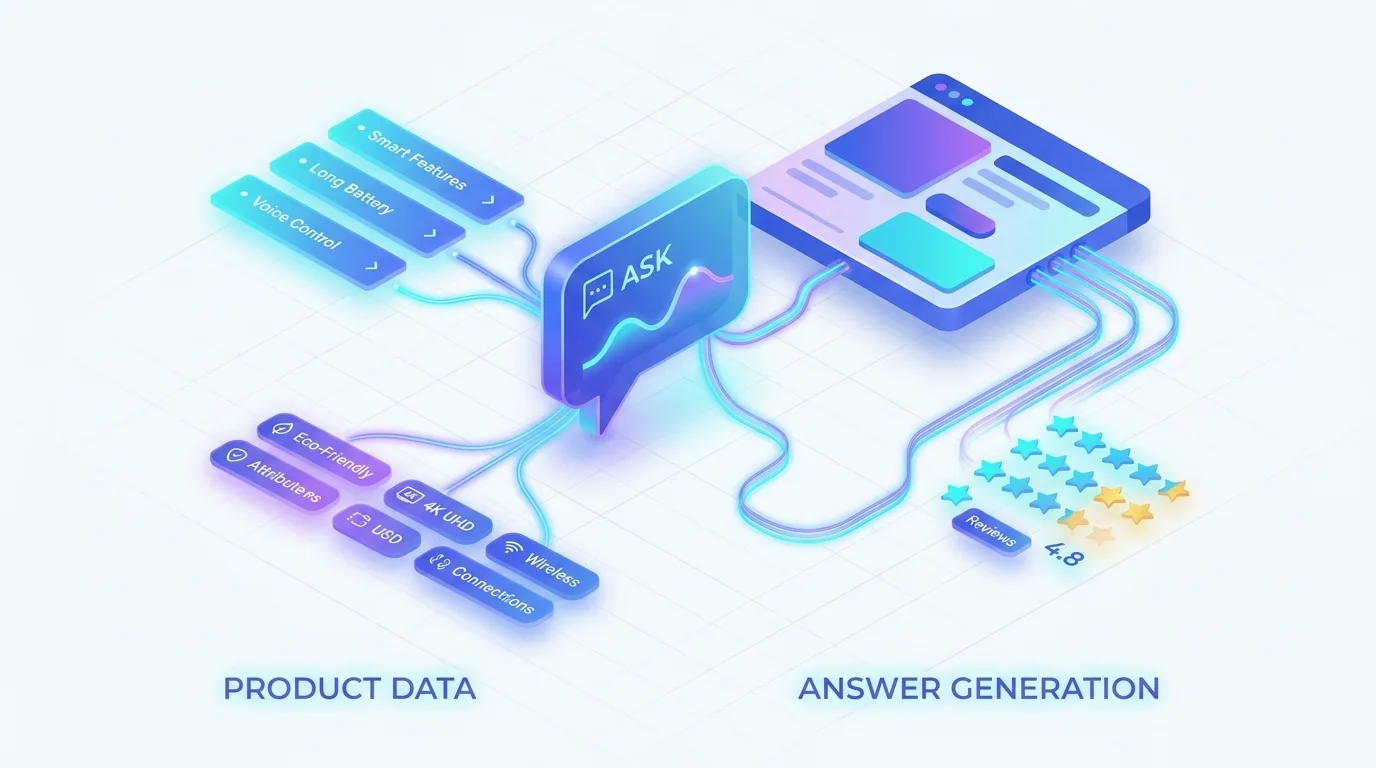
Reviews are now a primary source the assistant mines to answer shopper questions. When someone asks whether a product runs small or holds up over time, Alexa for Shopping often pulls directly from review language. That makes review volume, recency, and the specific words customers use genuinely important to how — and whether — you get recommended.
In the conversational era, your reviews are not just social proof — they are training data for the assistant deciding whether to recommend you.
— Fryntavo marketplace playbook
Encourage reviews through compliant follow-up, respond to questions in the Q&A section, and keep your structured attributes complete and accurate. Filling out every relevant attribute field — material, dimensions, compatibility, intended use — gives the assistant clean, machine-readable facts to match against natural-language queries. Incomplete attributes are a silent reason listings get skipped.
Pay attention to the exact words your customers use, because the assistant speaks their language, not yours. If shoppers consistently describe your product as "lightweight" or ask whether it is "dishwasher safe," those phrases should appear naturally in your bullets, description, and Q&A responses. Mining your own reviews and customer messages for recurring vocabulary is one of the highest-value research tasks in 2026 — it tells you precisely which questions to pre-answer in the listing so the assistant never has to guess.
How do you measure listing performance in 2026?
Track the metrics that reveal both discovery and conversion: organic ranking for your priority terms, glance views, conversion rate, and the share of sessions that convert. Watch how changes to titles, bullets, and A+ content move conversion, and pay attention to question patterns in customer messages and reviews — they reveal the natural-language queries you should be answering.

Treat optimization as ongoing, not one-and-done. Test one element at a time — a title tweak, a reworked lead bullet, a new comparison chart — and measure the impact before moving on. The listings that win in the Alexa for Shopping era are the ones whose owners keep refining them around the questions real customers ask.
Winning the Alexa for Shopping era
Amazon listing optimization in 2026 rewards clarity, relevance, and genuine helpfulness over keyword density. Write natural-language titles and benefit-led bullets that answer real questions, invest in images and A+ content that inform both shoppers and the assistant, cultivate strong recent reviews, and keep your attributes complete. Do that and Alexa for Shopping will recommend you — turning conversational search from a threat into your biggest discovery channel.
Want listings that win in the Alexa for Shopping era? Our marketplace team will audit and rebuild your Amazon listings for conversational search.
Optimize My Amazon ListingsFrequently asked questions
What is the most important change to Amazon listing optimization in 2026?
The biggest change is the shift from keyword density to conversational, natural-language listings. After Amazon retired the Rufus brand and folded it into Alexa for Shopping in May 2026, the assistant recommends products by answering shopper questions from your full listing, so clarity and genuine helpfulness now outperform keyword stuffing.
What happened to Amazon's Rufus assistant?
Amazon retired the Rufus brand name in May 2026 and folded its conversational shopping technology into the broader Alexa for Shopping experience. The brand went away, but conversational, natural-language shopping became more central to how products are discovered and recommended.
How should I write Amazon product titles in 2026?
Lead with the brand, the core product, and the most important attributes in clean, readable language, then stop. The assistant extracts meaning rather than matching strings, so an honest, specific title that reads well aloud outperforms a stuffed keyword string, especially for voice queries.
How do I optimize bullet points for Alexa for Shopping?
Frame each bullet as the answer to a question a shopper would actually ask, leading with the benefit and then the feature that delivers it. Use natural, specific language so the assistant can lift your bullets directly into a recommendation, and cover the objections that cause returns.
Do reviews affect conversational Amazon search?
Yes. Alexa for Shopping often pulls directly from review language to answer questions like whether a product runs small or lasts over time. Review volume, recency, and the specific words customers use genuinely affect whether and how your product gets recommended.
Why does A+ Content matter for Amazon SEO now?
A+ and Premium A+ Content convert shoppers with richer storytelling and also feed the AI assistant structured detail it reads to understand and recommend your product. Strong visuals win the click while strong A+ content helps you earn the recommendation in the first place.
How important are product attributes in 2026?
Very. Complete, accurate attributes — material, dimensions, compatibility, intended use — give Alexa for Shopping clean, machine-readable facts to match against natural-language queries. Incomplete attributes are a common, silent reason listings get skipped in conversational search.
How can Fryntavo help with Amazon listing optimization?
Fryntavo audits and rebuilds your titles, bullets, A+ content, imagery, and attributes for the Alexa for Shopping era, then optimizes continuously around the questions real customers ask. Contact our marketplace team to get a listing audit and growth plan.
Ready to put this into action?
Fryntavo helps brands grow with web development, SEO, marketplace management, and AI automation. Book a free, no-obligation strategy call.
Book a Free Strategy Call