

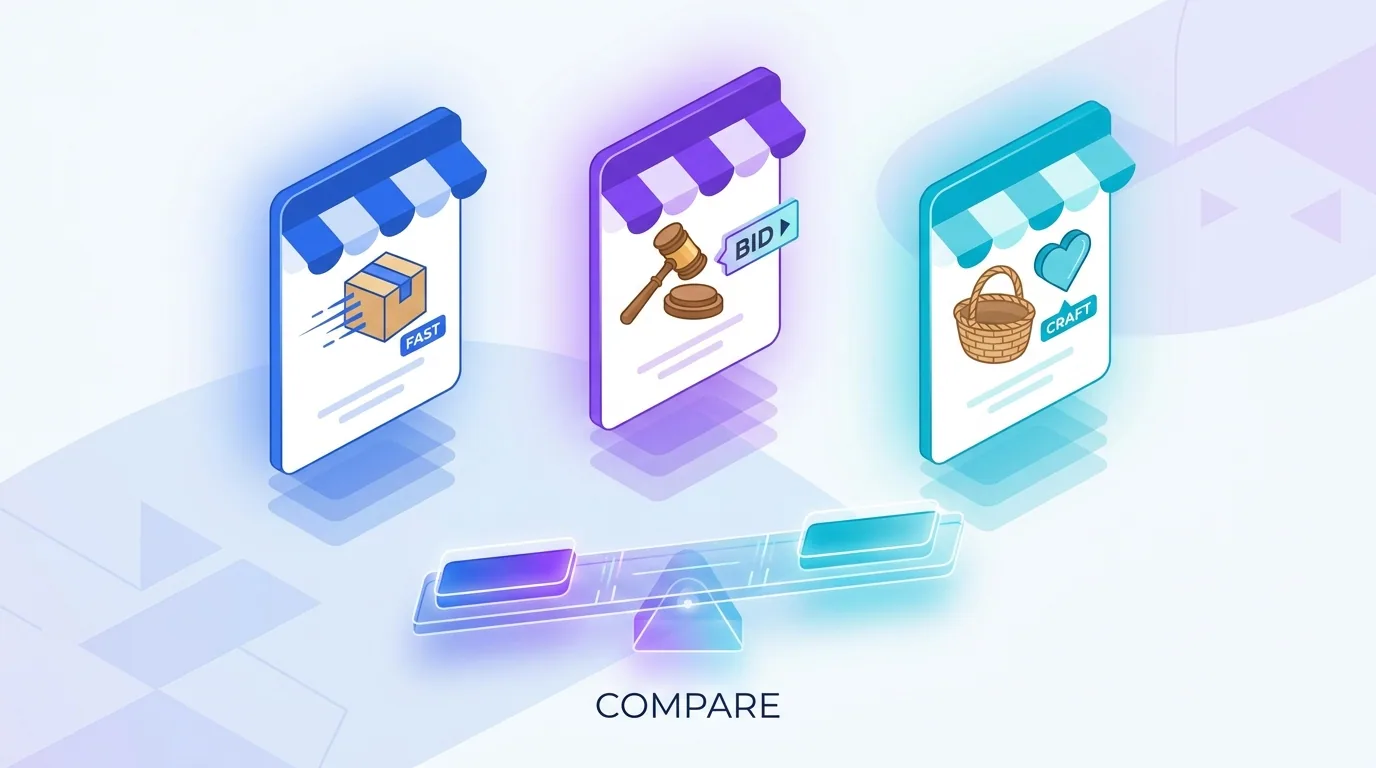
The short answer: choose Amazon if you want the largest buyer base and you sell branded or high-volume products, choose eBay if you sell used, refurbished, niche, or auction-friendly items, and choose Etsy if you make handmade, vintage, or personalised goods. The right marketplace depends on what you sell, your margins, and how much you value reach versus identity.
Most sellers do not need to pick just one forever — but you should pick one to win first. Spreading yourself across all three on day one usually means three mediocre stores. This guide compares Amazon vs eBay vs Etsy across the factors that actually move profit in 2026: audience, fees, competition, control, and effort.
Amazon vs eBay vs Etsy: what is the quick verdict?
Each platform attracts a different shopper with a different intent. Amazon shoppers want it fast, trusted, and now — increasingly through voice and AI assistants. eBay shoppers hunt for deals, rare finds, and parts. Etsy shoppers want something with a story, made by a person, often customised for a gift or occasion.
Those figures are representative of the 2026 landscape and show the headline trade-off: Amazon offers the deepest demand, eBay a flexible mid-sized base, and Etsy a smaller but highly intentional audience that pays a premium for originality.
Which marketplace has the right audience for you?
Audience fit beats raw size. A handmade ceramic mug listed against Amazon's price-driven catalogue will struggle, while the same mug on Etsy meets buyers who are specifically looking for handmade. Match the product's emotional and practical promise to where shoppers already arrive in that mindset.
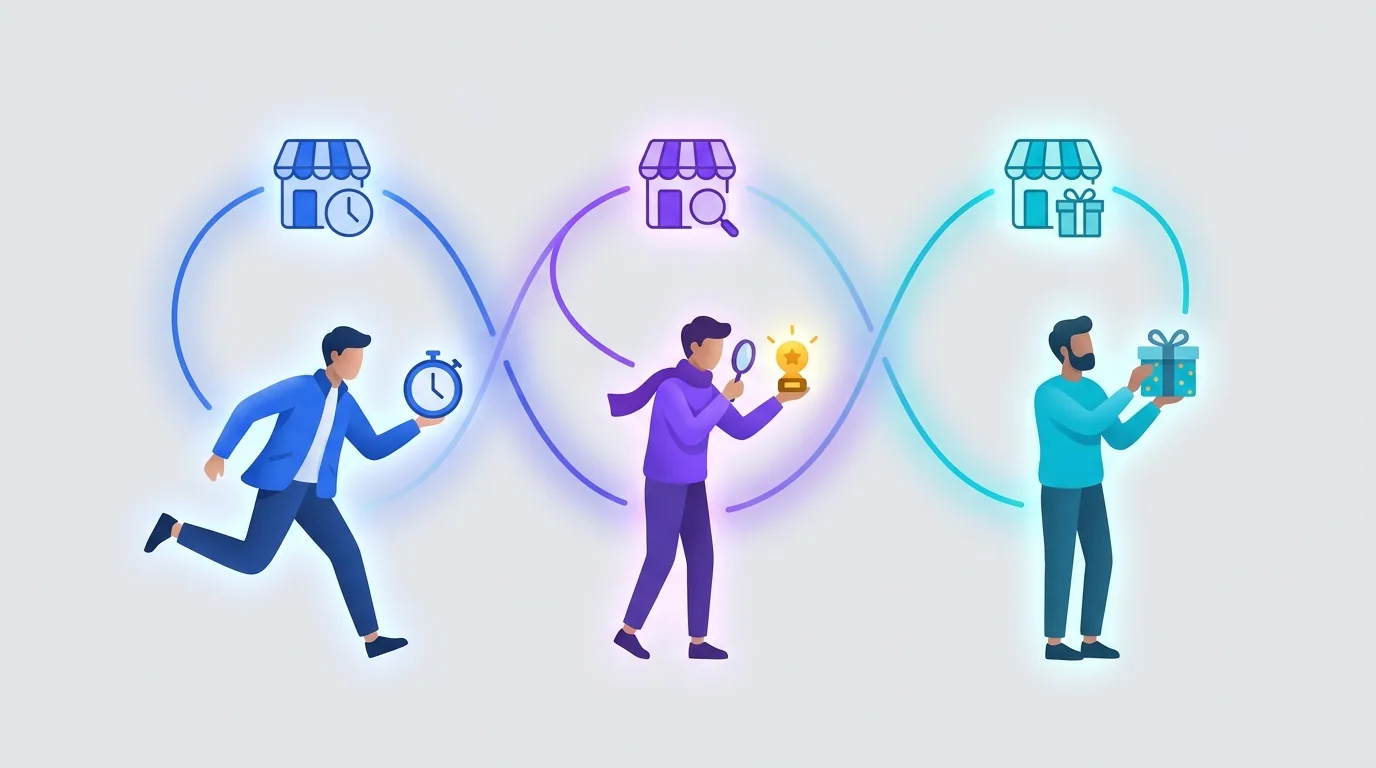
- Amazon — branded, replenishable, or commodity products where Prime delivery and reviews drive the sale.
- eBay — used, refurbished, collectible, spare parts, and items that benefit from auction or best-offer pricing.
- Etsy — handmade, custom, vintage (20+ years old), craft supplies, and gift-led purchases.
- Your own store — when you have a brand worth building and want to own the customer relationship and data.
How do the fees compare in 2026?
Fees can quietly erase your margin, so model them before you list. Amazon typically charges a referral fee around 8–15% per category plus optional FBA fulfilment costs and a monthly Professional plan. eBay charges final value fees in roughly the 10–13% range depending on category, often including payment processing. Etsy charges a small listing fee per item plus a transaction fee around 6.5% and payment processing, with optional Offsite Ads fees on attributed sales.
The cheapest fee structure is not automatically the best choice. Amazon's higher fees can still win if its volume and conversion rate more than compensate. We help sellers run this math properly through our Amazon management and eBay management services so the platform decision is driven by profit, not assumptions.
Fulfilment is the other half of the cost equation. Amazon's FBA stores, picks, packs, and ships for you, which buys speed and the Prime badge but adds storage and per-unit fees that punish slow-moving inventory. eBay and Etsy lean on you to ship, giving you more control and lower fixed costs but more day-to-day work. The right model depends on your order volume, margins, and how much of the operation you want to run yourself.
How much effort does each marketplace take to run?
Time is a cost too, and the three platforms demand it differently. Amazon rewards constant attention to pricing, advertising, reviews, and inventory health, and it can suspend accounts quickly when rules are missed, so it is the most operationally demanding. eBay is moderate, with listing management and customer messaging as the main draws on your time.
Etsy sits between creative and commercial work — the listings are simpler to manage, but the photography, product descriptions, and personalisation that make Etsy shops succeed take real craft. Be honest about how many hours you can give before you commit, because an under-tended store on any platform quietly slides down the rankings.
How much competition and control will you have?
Amazon is the most competitive and the least personal. You often share a product page (the Buy Box) with other sellers, branding is minimal, and the customer largely belongs to Amazon. The upside is scale; the downside is a constant price and ranking fight.
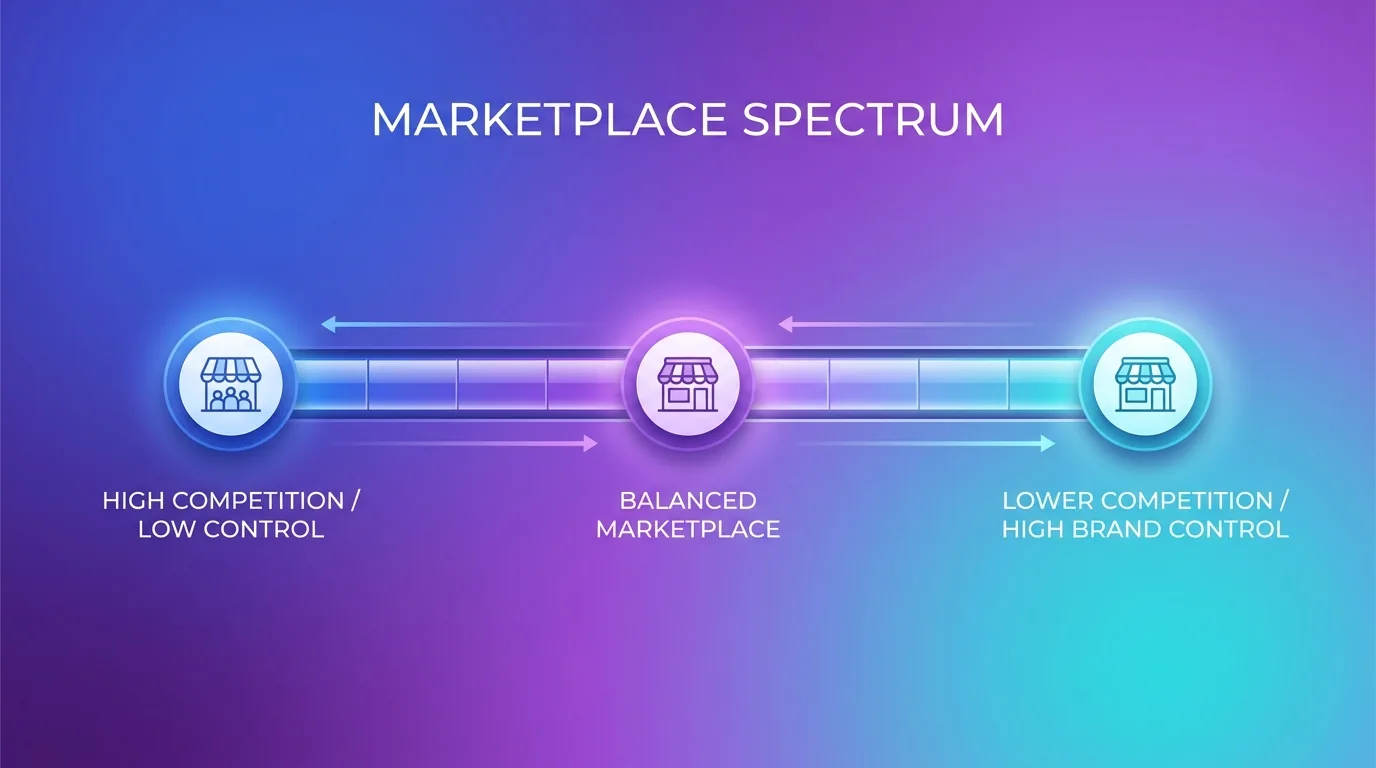
eBay sits in the middle: more room for storefront personality, flexible pricing formats, and a forgiving home for items Amazon does not handle well. Etsy gives the strongest seller identity — your shop name, your story, your aesthetic — which is exactly why customers pay more there. With our Etsy management support, sellers lean into that identity with cohesive branding, photography, and SEO-rich listings.
What about AI and voice shopping in 2026?
Marketplace search is becoming conversational. Amazon's Alexa for Shopping (the assistant that replaced the Rufus brand) now answers natural-language product questions, compares options, and even completes purchases. That changes how listings should be written: not just keyword-dense bullet points, but content that answers real buyer questions clearly enough for an AI to quote and recommend.
The next click is often a conversation. Listings that read like helpful answers — clear specs, honest comparisons, real use cases — are the ones AI assistants surface and recommend.
— Sofia Marino, Ecommerce & Marketplace Lead, Fryntavo
This trend rewards detail and honesty across all three platforms. Structured attributes, complete specifications, and genuine answers to common questions help your product show up when a shopper asks an assistant to 'find me a durable stainless water bottle under $30' instead of typing keywords into a box.
So which marketplace should you start with?
Start where your product and your patience align. If you sell branded or commodity goods and can fund inventory and ads, Amazon's reach is hard to beat. If you sell pre-owned, niche, or variable-condition items, eBay is the natural home. If your value is in craft, story, or personalisation, Etsy will reward you with better margins and loyal buyers.

Once your first channel is profitable and systemised, expanding to a second becomes far easier because your photography, copy, pricing logic, and fulfilment are already built. The mistake is launching everywhere at once and mastering nothing.
The bottom line on Amazon vs eBay vs Etsy
There is no universal winner in the Amazon vs eBay vs Etsy debate — only the best fit for your product, margins, and ambition. Amazon wins on scale, eBay on flexibility, Etsy on identity and margin. Pick deliberately, model your fees, write listings that AI assistants can recommend, and grow from a position of profit.

Not sure which marketplace fits your products and margins? Our commerce team will map your best channel and build listings that sell.
Get a Free Marketplace AuditFrequently asked questions
Is Amazon, eBay, or Etsy the best place to sell online in 2026?
It depends on your product. Amazon is best for branded or high-volume goods that benefit from huge reach and fast delivery, eBay suits used, refurbished, and niche items, and Etsy is best for handmade, custom, and vintage products. Match the marketplace to what you sell and your target margin.
Which marketplace has the lowest fees?
Etsy generally has the lowest per-sale fees with a small listing fee plus around 6.5% transaction fee and payment processing. eBay final value fees sit around 10–13%, and Amazon referral fees run roughly 8–15% plus optional FBA costs. The lowest fee is not always the most profitable once you factor in conversion and volume.
Can I sell on Amazon, eBay, and Etsy at the same time?
Yes, many sellers run multiple channels, but it is wiser to make one profitable first. Once your photography, listings, pricing, and fulfilment are systemised, expanding to a second marketplace is far easier and less risky than launching everywhere at once.
Where should I sell handmade products?
Etsy is usually the best fit for handmade products because its audience specifically seeks unique, handmade, and personalised items and is willing to pay a premium. Amazon Handmade exists but competes against mass-produced listings, while Etsy keeps you in a buyer mindset that favours craft.
Is Amazon too competitive for new sellers?
Amazon is competitive, but new sellers can win by choosing less-saturated niches, optimising listings for search and AI assistants, and pricing for healthy margins rather than racing to the bottom. A focused product with strong content and reviews still performs well.
How is AI changing marketplace selling in 2026?
Conversational and voice shopping, including Amazon's Alexa for Shopping assistant, means buyers increasingly ask questions in natural language instead of typing keywords. Listings with clear specifications, honest comparisons, and real answers to common questions are more likely to be surfaced and recommended by AI.
Do I need my own website if I sell on marketplaces?
Not to start, but a branded website lets you own the customer relationship, capture data, and avoid being entirely dependent on a platform. Many sellers use marketplaces for reach and a dedicated store to build a lasting brand and higher-margin repeat sales.
Can Fryntavo manage my marketplace stores?
Yes. Fryntavo offers Amazon, eBay, and Etsy management covering listing optimisation, pricing strategy, advertising, and analytics, so you can scale profitably on the right channels. Book a free marketplace audit to find your best fit.
Ready to put this into action?
Fryntavo helps brands grow with web development, SEO, marketplace management, and AI automation. Book a free, no-obligation strategy call.
Book a Free Strategy Call