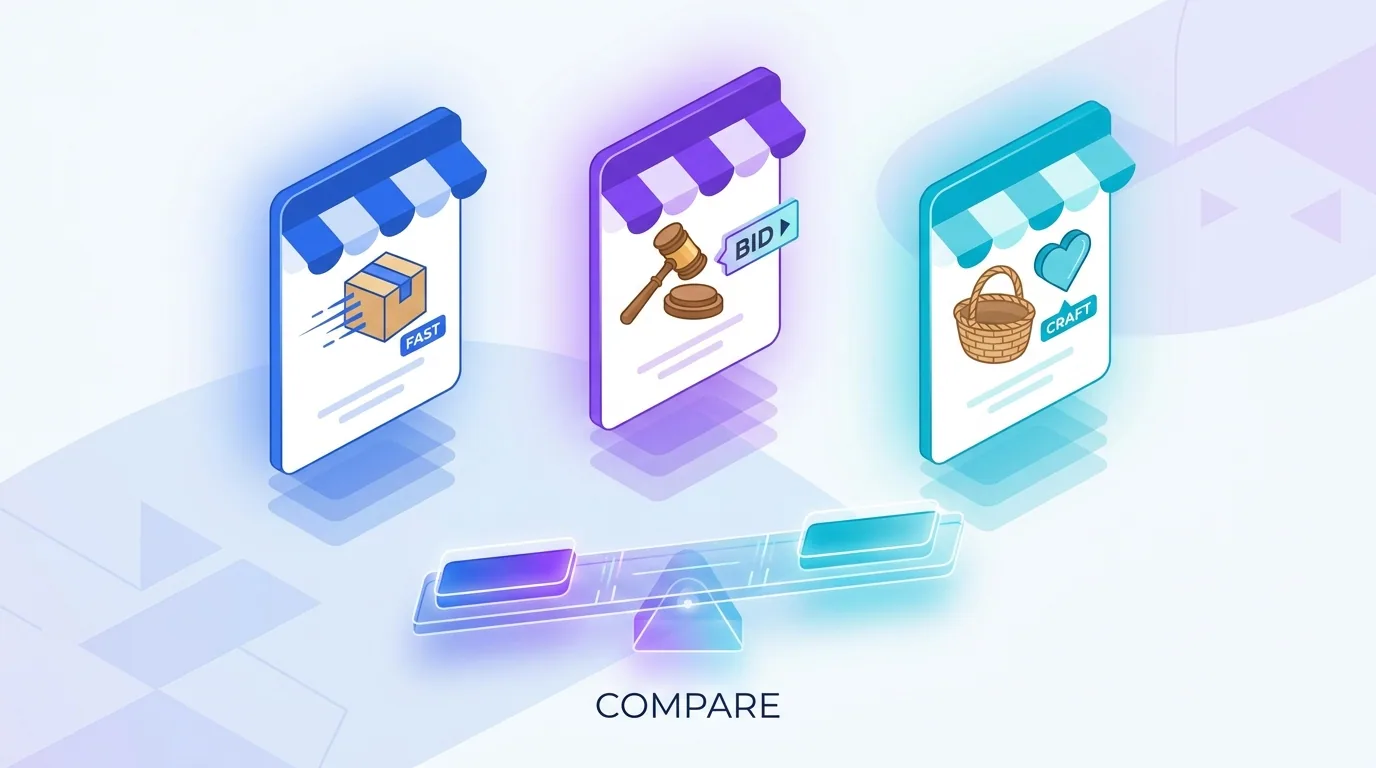


To optimize Amazon listings for AI shopping assistants in 2026, write listings the way buyers actually talk, answer their real questions inside the title and bullets, and earn a high conversion rate — because Alexa for Shopping (the assistant that absorbed the retired Rufus brand in May 2026) recommends products it can confidently match to a natural-language request and that it trusts will convert. The short version: stop writing for a keyword box and start writing for a conversation.
Shoppers no longer always type "wireless earbuds running waterproof." They ask "which earbuds won't fall out when I run in the rain?" The listings that win that moment are the ones whose copy already contains that answer. This guide breaks down the exact framework our Amazon management team uses to make listings AI-assistant-ready.
What is amazon ai shopping optimization in 2026?
Amazon AI shopping optimization is the practice of structuring your listing data — title, bullets, A+ content, reviews, and attributes — so an AI assistant can understand it, trust it, and surface it as the answer to a natural-language shopping question. It sits on top of classic Amazon SEO, not in place of it.
The shift matters because the assistant is now an intermediary between the buyer and the search results. When a shopper asks Alexa for Shopping for "a gift for a coffee lover under fifty dollars," the assistant reads structured product data and reviews, then narrows thousands of options to a handful it presents conversationally. If your listing doesn't clearly state who it's for, what problem it solves, and why it's trustworthy, the AI simply skips it.
This is a genuine change in buyer behavior, not a gimmick. The traditional funnel — search, scroll a grid, compare ten tabs — collapses into a short conversation where the assistant has already done the comparison. Winning that moment means your listing has to be the easiest one for the AI to understand and the safest one for it to recommend. Ambiguity is now your biggest competitor.
How do you write conversational Amazon listings?
Write the way a great salesperson would answer a customer out loud. Lead each bullet with the benefit and use-case, then back it with the spec. Instead of "IPX7 waterproof rating," write "Stays sealed through sweat and downpours — IPX7 waterproof, so rain on your run is never a problem." The first half feeds the AI's intent matching; the second half feeds keyword and attribute matching.
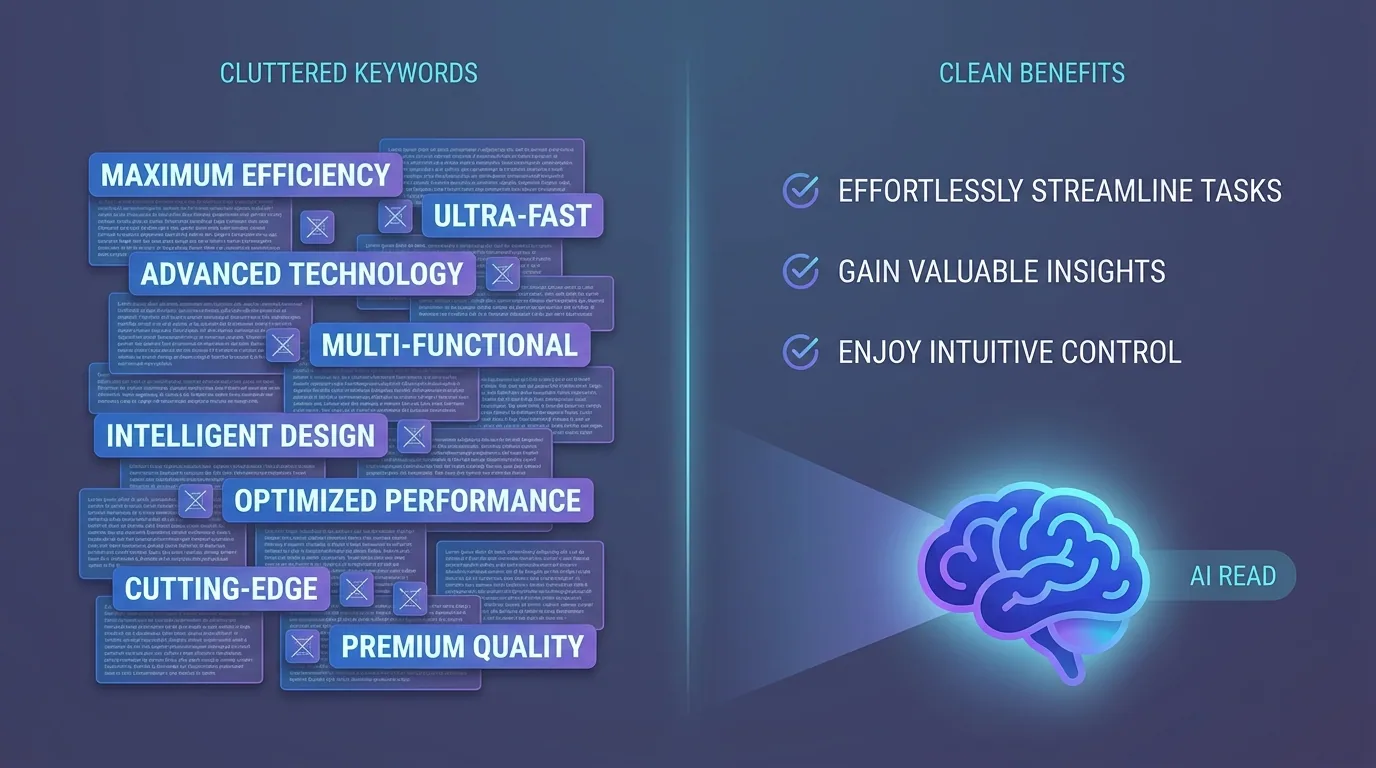
- Front-load intent in the title: include who it's for and the core use-case, not a wall of synonyms.
- Answer the top three buyer questions directly in the bullets — pulled from your reviews and Q&A.
- Use natural phrasing people speak aloud, not robotic keyword chains.
- Map specs to outcomes: every spec should be tied to a reason the buyer cares.
- Keep one clear claim per bullet so the AI can quote it cleanly.
How to optimize for Rufus and Alexa for Shopping
When you optimize for Rufus — now operating under the Alexa for Shopping brand since May 2026 — you are optimizing for an assistant that reasons over your structured data and reviews to answer comparison and suitability questions. It asks itself: can I tell who this is for, what it does, how it compares, and whether real buyers are happy? Your listing has to make all four answers obvious.
Complete every backend attribute and structured field Amazon offers — material, dimensions, compatibility, audience, occasion. The assistant leans heavily on these because they are unambiguous. A listing with rich, accurate attributes is far easier for an AI to confidently recommend than one that buries the same facts inside prose.
Reviews and Q&A are part of this picture too. Assistants summarize sentiment and pull specifics straight from customer feedback to answer questions like "is this durable?" or "does it run small?" You cannot fake reviews, but you can shape them: proactively answer common questions in your listing, address the concerns buyers raise, and deliver a product that matches the promise so the feedback the AI reads reinforces your case rather than undermining it.

In an AI-assistant marketplace, the best-described product wins more often than the cheapest one. Clarity is the new shelf position.
— Sofia Marino, Ecommerce & Marketplace Lead, Fryntavo
Why is conversion rate the new ranking signal?
Amazon's ranking has become heavily conversion-rate-weighted in 2026. The platform — and the AI layer on top of it — prioritizes listings that turn impressions into purchases, because a high conversion rate is the clearest proof that buyers actually wanted what the listing promised. AI assistants amplify this: they prefer to recommend products that historically satisfy the request, since a bad recommendation erodes shopper trust in the assistant itself.
This means your images, price, reviews, and copy all feed a single loop. Clearer copy attracts better-matched buyers, better-matched buyers convert and leave positive reviews, and stronger conversion plus reviews earn more assistant recommendations. Optimizing one element in isolation rarely moves the needle — the listing has to work as a whole.
- Tighten relevance so you attract buyers your product genuinely fits.
- Strengthen the first image and price perception to win the click.
- Make the decision easy with scannable, question-answering bullets and A+ content.
- Earn and surface authentic reviews that confirm the promise.
- Watch conversion rate weekly and iterate on the weakest step.
How do you measure AI shopping performance?
Track unit session percentage (conversion rate), the search terms and questions driving traffic, and how often your listing appears in comparison or recommendation contexts. Branded search growth is also a strong proxy: when an assistant recommends you well, more shoppers come back searching for you by name.

Set a baseline before you change anything, then optimize one variable at a time so you can attribute lift correctly. Listings are living assets in 2026 — the sellers who treat optimization as a continuous loop, not a one-time launch task, are the ones the assistants keep recommending. If that ongoing work is more than your team can carry, ongoing Amazon account management keeps your catalog AI-ready as the assistants evolve.
Putting it together
Amazon AI shopping optimization rewards the same thing great retail always has: clearly telling the right buyer why this product solves their problem, and proving it. Write conversational, benefit-led copy, complete every structured attribute, answer real buyer questions, and obsess over conversion rate. Do that and Alexa for Shopping won't just index your listing — it will recommend it.

Want listings that AI assistants recommend and shoppers buy? Our Amazon specialists will rewrite your catalog for conversational search and conversion-weighted ranking.
Optimize My Amazon ListingsFrequently asked questions
What is amazon ai shopping optimization?
It is the practice of structuring your listing's title, bullets, A+ content, attributes, and reviews so AI shopping assistants like Alexa for Shopping can understand, trust, and recommend your product in response to natural-language questions. It builds on classic Amazon SEO rather than replacing it.
Is Rufus still around in 2026?
The Rufus brand was retired in May 2026 and folded into Alexa for Shopping, Amazon's unified AI shopping assistant. The underlying capability — answering conversational shopping questions and recommending products — continues, so optimizing for it remains essential.
How do I write conversational Amazon listings?
Lead each bullet with the benefit and use-case, then support it with the spec, using the natural phrasing buyers actually speak. Pull the exact wording from your customer reviews and questions so your copy already answers what shoppers ask the assistant.
Why does conversion rate affect Amazon ranking now?
Amazon's 2026 ranking is heavily conversion-rate-weighted because a high conversion rate proves buyers genuinely wanted what the listing promised. AI assistants reinforce this by preferring to recommend products that reliably satisfy the request, which protects shopper trust.
Do backend attributes matter for AI assistants?
Yes, significantly. Assistants lean on structured attributes like material, size, compatibility, and audience because they are unambiguous and easy to match to a query. Completing every relevant field makes your product far easier to recommend confidently.
How is AI shopping different from regular Amazon SEO?
Regular SEO targets keyword matching for a results page, while AI shopping optimization targets intent matching for a conversation. The assistant reasons over your data to answer suitability and comparison questions, so clarity, completeness, and proof of satisfaction matter as much as keywords.
How do I measure AI shopping performance?
Track your conversion rate (unit session percentage), the search terms and questions driving traffic, how often you appear in recommendation contexts, and branded search growth. Set a baseline and change one variable at a time to attribute lift correctly.
Can Fryntavo optimize my Amazon listings for AI shopping?
Yes. Fryntavo's Amazon management team rewrites listings for conversational search, completes structured attributes, builds A+ content, and tunes for conversion-weighted ranking so assistants recommend your products. Book a free strategy call to get started.
Ready to put this into action?
Fryntavo helps brands grow with web development, SEO, marketplace management, and AI automation. Book a free, no-obligation strategy call.
Book a Free Strategy Call