
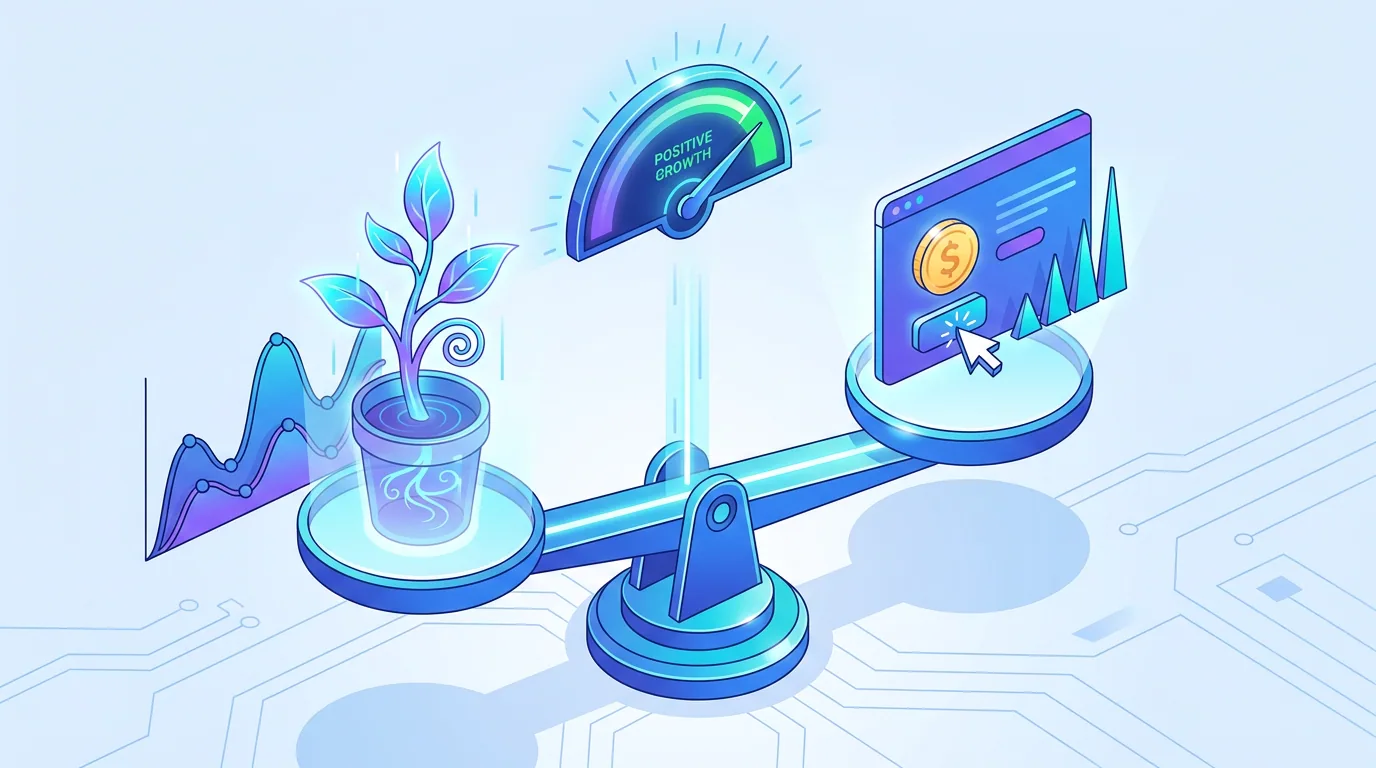
SEO vs paid ads comes down to a trade-off between speed and durability. Paid ads buy you instant, controllable traffic that stops the moment you stop paying; SEO is a slower investment that compounds into traffic you do not pay for every click. For most businesses in 2026, the highest-ROI answer is not one or the other — it is a deliberate blend, weighted toward SEO for long-term value and paid for speed, testing, and targeting.
But the ROI math has genuinely shifted this year. AI Overviews and answer engines have compressed organic real estate, while ad costs keep climbing. Below, our SEO team breaks down the real cost, timeline, and return of each channel so you can split your budget with clear eyes rather than by habit.
What is the core difference between SEO and paid ads?
Paid ads (PPC) are rented attention: you bid for placement in search results, social feeds, or shopping listings, and you pay per click or impression. The moment your budget runs out, the traffic disappears. SEO is owned attention: you earn organic rankings and AI citations through content, technical health, and authority, and that visibility keeps working without a per-click fee.
Think of paid ads as turning on a tap and SEO as digging a well. The tap is instant but only flows while you pay the water bill. The well takes effort to dig, but once it is producing, it keeps delivering at a fraction of the ongoing cost. Smart marketers use both depending on what the moment demands.
Which is cheaper: SEO or PPC?
Over the long run, SEO is almost always cheaper per visit. With paid ads you pay for every single click, and competitive industries can see costs climb steeply as more advertisers bid for the same clicks. With SEO, your cost is the upfront and ongoing investment in content and optimisation — but each ranking page can deliver clicks for years at no marginal cost.
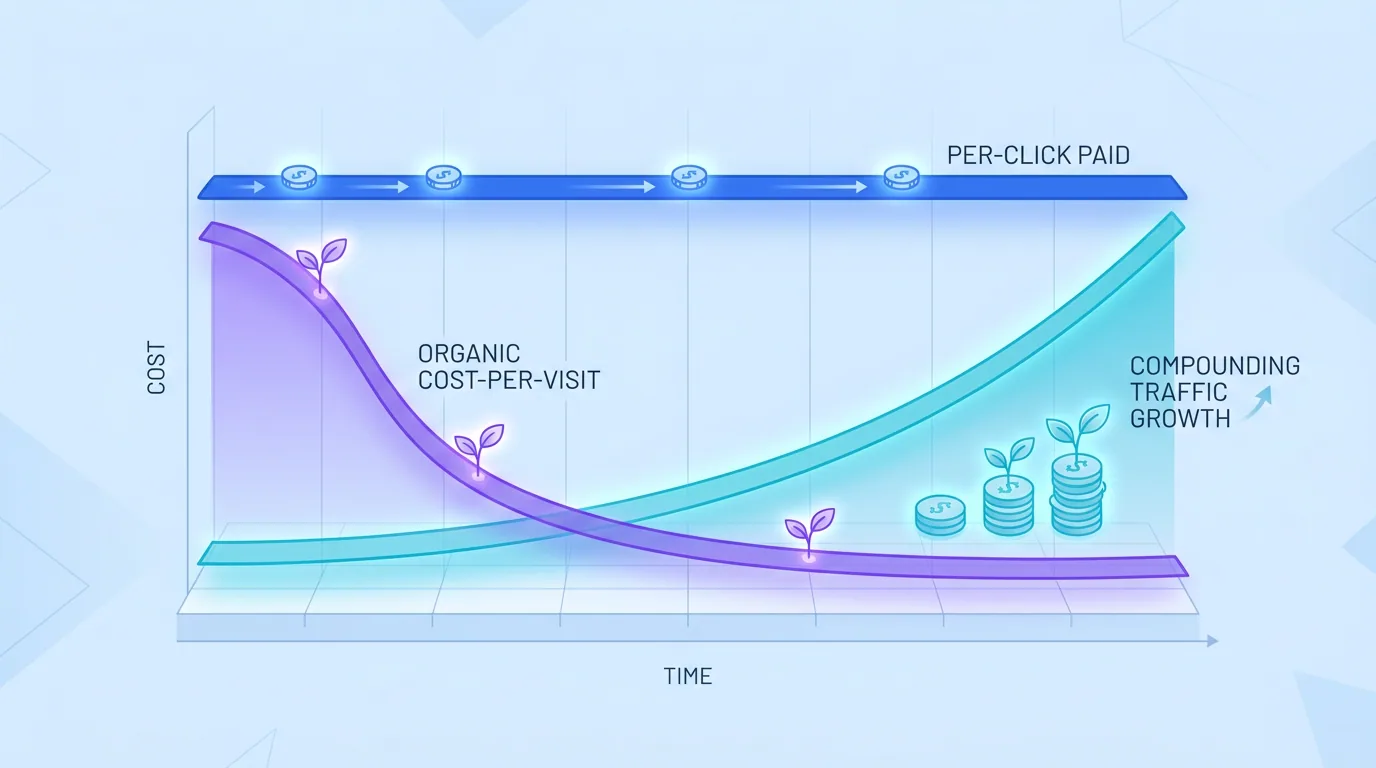
The catch is timing. SEO costs more in the early months when you are investing without much return yet, while paid ads deliver from day one. The cheapest blended strategy often runs paid ads to generate revenue now, while SEO builds in the background to reduce your reliance on paid over time.
Which channel delivers faster results?
Paid ads win on speed without contest. You can launch a campaign today and have qualified traffic landing on your site within hours. That makes paid ideal for product launches, seasonal pushes, testing new offers, and any situation where you need results now. You also get near-total control over targeting, messaging, and budget.
SEO is the slow burn. It typically takes three to six months to gain real momentum and longer to dominate competitive terms. But the traffic that arrives is often higher-intent and higher-trust, because users tend to trust organic results and AI citations more than ads. The wait is the price of an asset that keeps paying.
How do SEO and paid ads compare on ROI in 2026?
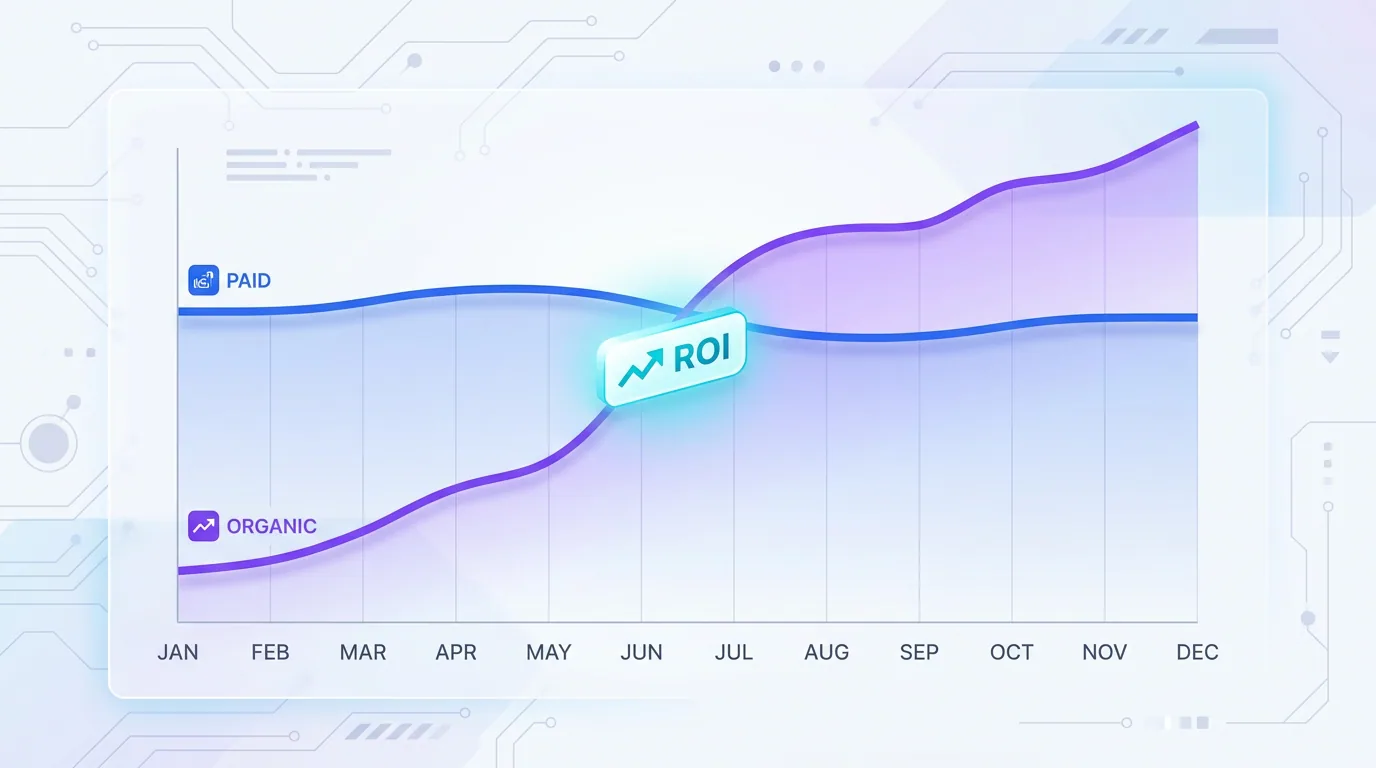
ROI depends on your time horizon. In the first quarter, paid ads usually win because SEO has not ramped yet. Over a year or more, SEO frequently delivers a stronger return because the cost per acquisition falls as organic traffic compounds while paid costs stay constant or rise. The brands with the best blended ROI treat the two as partners, not rivals.
The 2026 wrinkle is AI search. AI Overviews and answer engines now sit above many results, which can reduce clicks for purely informational queries. This pushes smart marketers toward SEO that earns AI citations and brand authority, while using paid ads to guarantee visibility on the high-intent, bottom-of-funnel queries that drive immediate revenue.
- Short horizon, need revenue now: weight toward paid ads.
- Long horizon, want durable cost efficiency: weight toward SEO.
- High-intent buyer keywords: use paid to guarantee presence even if you rank organically.
- Informational and research queries: use SEO and AEO to earn citations and trust.
How should you split your budget between SEO and paid ads?
There is no universal ratio, but a useful starting framework is to fund paid ads to hit your near-term revenue targets, then invest a steady, protected amount into SEO so you are building an asset every month. As organic traffic grows, you can gradually shift spend from paid toward higher-return activities — or reinvest the savings into scaling.
Paid ads buy you time. SEO buys you independence. The smartest brands use the first to fund the second.
— Fryntavo growth playbook
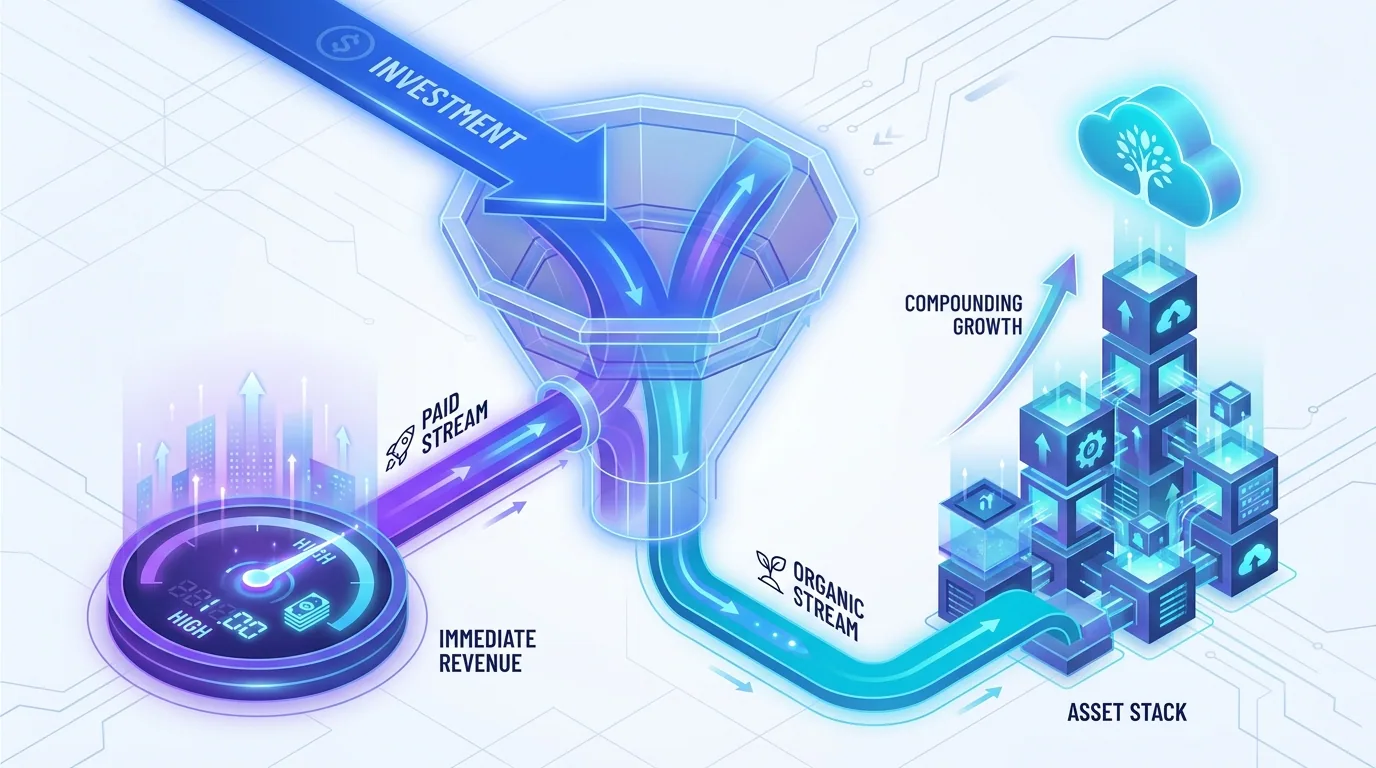
The two channels also make each other better. Paid campaigns generate fast keyword and conversion data you can feed into your SEO content plan, while strong organic rankings can lower your ad costs by improving quality and landing-page relevance. Run them together and the whole becomes more than the sum of its parts.
When should you choose one over the other?
Choose paid ads when you need immediate results, are testing offers, or are launching with no organic footprint. Choose to prioritise SEO when you want sustainable, lower-cost traffic, are building long-term brand authority, or operate in a niche where buyers research heavily before purchasing. For nearly every established business, the honest answer is to invest in both — with the mix tuned to your stage and goals.
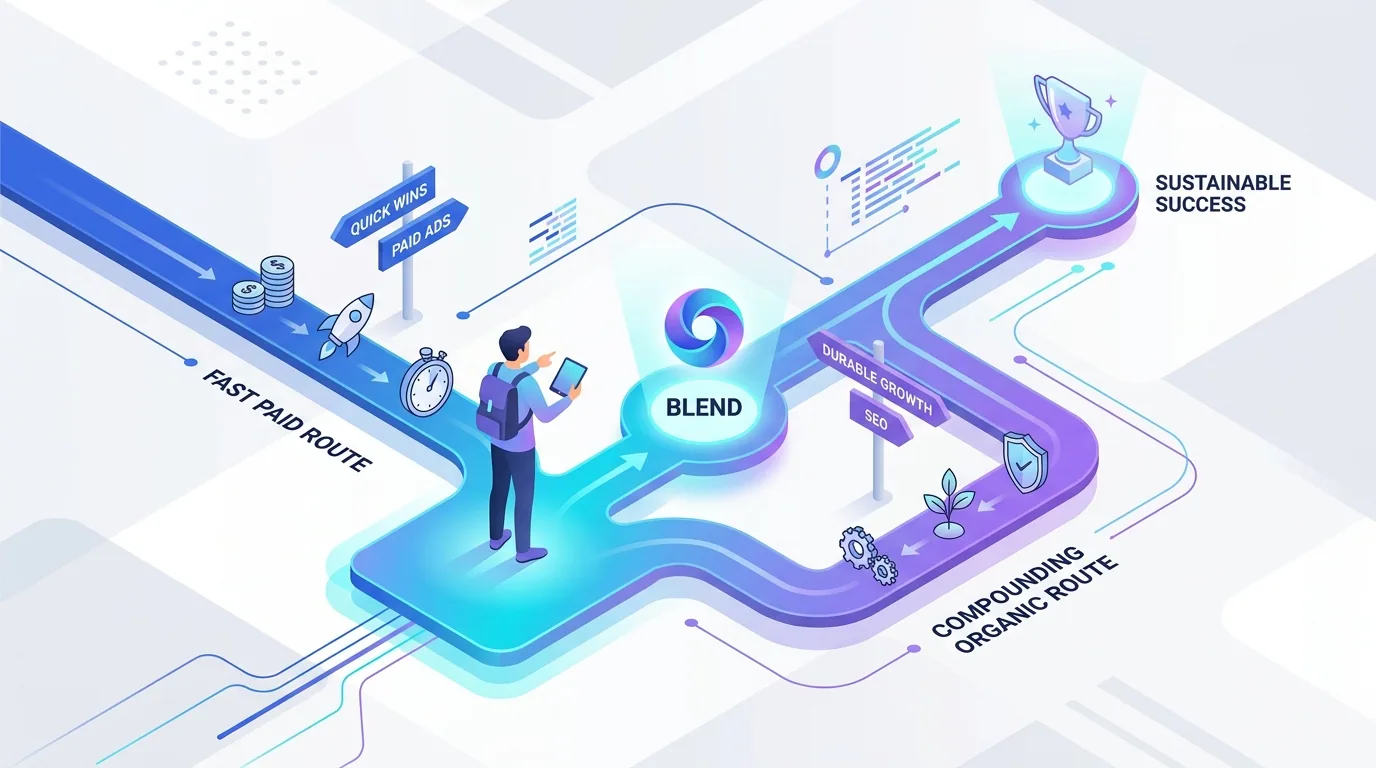
If you are unsure where you sit, the fastest way to clarity is a quick audit of your current traffic mix, cost per acquisition by channel, and competitive landscape. That tells you whether you are over-reliant on rented traffic or leaving durable organic growth on the table. Our SEO team often finds that businesses pouring everything into paid are one well-structured content program away from cutting their blended acquisition cost in half within a year.
It is also worth remembering that the two channels feed different stages of the buyer journey. Paid excels at capturing people who are ready to act right now, while SEO and AI citations build the awareness and trust that bring buyers to you in the first place. A brand that only buys bottom-of-funnel clicks is renting demand it never learns to create. The most resilient growth engines do both: they manufacture demand through organic visibility and capture it efficiently through paid.
The bottom line on SEO vs paid ads
SEO vs paid ads is rarely a true either-or. Paid ads deliver speed, control, and immediate revenue; SEO delivers compounding, lower-cost, higher-trust traffic and AI citations that last. In 2026, with AI search reshaping the results page and ad costs rising, the winning play is to use paid to fund the present and SEO to own the future — then tune the balance as your organic asset grows.
Not sure how to split your budget between SEO and paid? We will audit your channel mix and build an ROI-focused plan tailored to your stage.
Book a Free Strategy CallFrequently asked questions
Is SEO or paid advertising better for ROI?
It depends on your time horizon. Paid ads usually deliver a better return in the first few months because they work immediately, while SEO often wins over a year or more as organic traffic compounds and the cost per visit falls. The best blended ROI comes from using both deliberately.
Is SEO cheaper than PPC?
Over the long run, yes. PPC charges for every click, and costs can rise as competition increases, while SEO requires upfront and ongoing investment but then delivers clicks at no marginal cost once you rank. SEO is more expensive early and cheaper later.
How long does SEO take to show results?
Most sites need three to six months to gain real organic momentum, with competitive terms taking longer. The trade-off is that SEO traffic is durable and keeps working without a per-click fee, unlike paid ads which stop the moment you pause spending.
Should a new business start with SEO or paid ads?
New businesses with no organic footprint often start with paid ads to generate immediate traffic and revenue, while investing a steady amount in SEO in the background. This funds the present while building a compounding organic asset for the future.
How has AI search changed the SEO vs paid ads decision in 2026?
AI Overviews and answer engines now sit above many results and can reduce clicks on informational queries. This pushes marketers to invest in SEO and answer engine optimization to earn AI citations and authority, while using paid ads to guarantee visibility on high-intent, bottom-of-funnel queries.
Can SEO and paid ads work together?
Yes, and they make each other stronger. Paid campaigns generate fast keyword and conversion data that improves your SEO content plan, while strong organic rankings and relevant landing pages can lower your ad costs through better quality signals.
What budget split between SEO and paid ads should I use?
There is no universal ratio. A practical approach is to fund paid ads to meet near-term revenue targets, protect a steady monthly SEO budget to build a durable asset, and shift spend toward higher-return activities as organic traffic grows.
How can Fryntavo help me decide?
Fryntavo audits your traffic mix, cost per acquisition by channel, and competitive landscape, then builds an ROI-focused plan that balances SEO and paid for your stage and goals. Book a free strategy call to get a clear recommendation.
Ready to put this into action?
Fryntavo helps brands grow with web development, SEO, marketplace management, and AI automation. Book a free, no-obligation strategy call.
Book a Free Strategy Call