


If your organic traffic dipped in 2026 but your rankings barely moved, you are feeling the AI Overviews effect. Google's AI-generated answers now appear above the traditional blue links for the majority of informational queries, summarising several trusted sources into one combined response. The brands that win are not the ones with the most keywords — they are the ones Google's AI chooses to cite.
This guide breaks down the exact framework our SEO team uses to earn citations inside AI Overviews, ChatGPT Search, and other answer engines. None of it requires tricks — it rewards genuinely useful, well-structured, trustworthy content.
What changed: from ten blue links to one AI answer
For two decades, SEO was a competition for position one. In 2026, the game is different. AI Overviews extract sentences, statistics, and steps from multiple pages and stitch them into a single answer with citation links. Your goal is no longer just to rank — it is to be the source the AI quotes.
Research across thousands of queries shows AI Overviews favour content that answers a specific question directly, in clean and quotable language, backed by visible expertise. Keyword stuffing and thin "what is" pages are losing ground because the AI already does definitional answers better than a generic blog post.
The answer-first content structure
The single highest-impact change is to lead with the answer. Put your direct, complete answer in the first two or three sentences of the page or section — before any preamble. AI models extract from the top, and so do impatient readers.
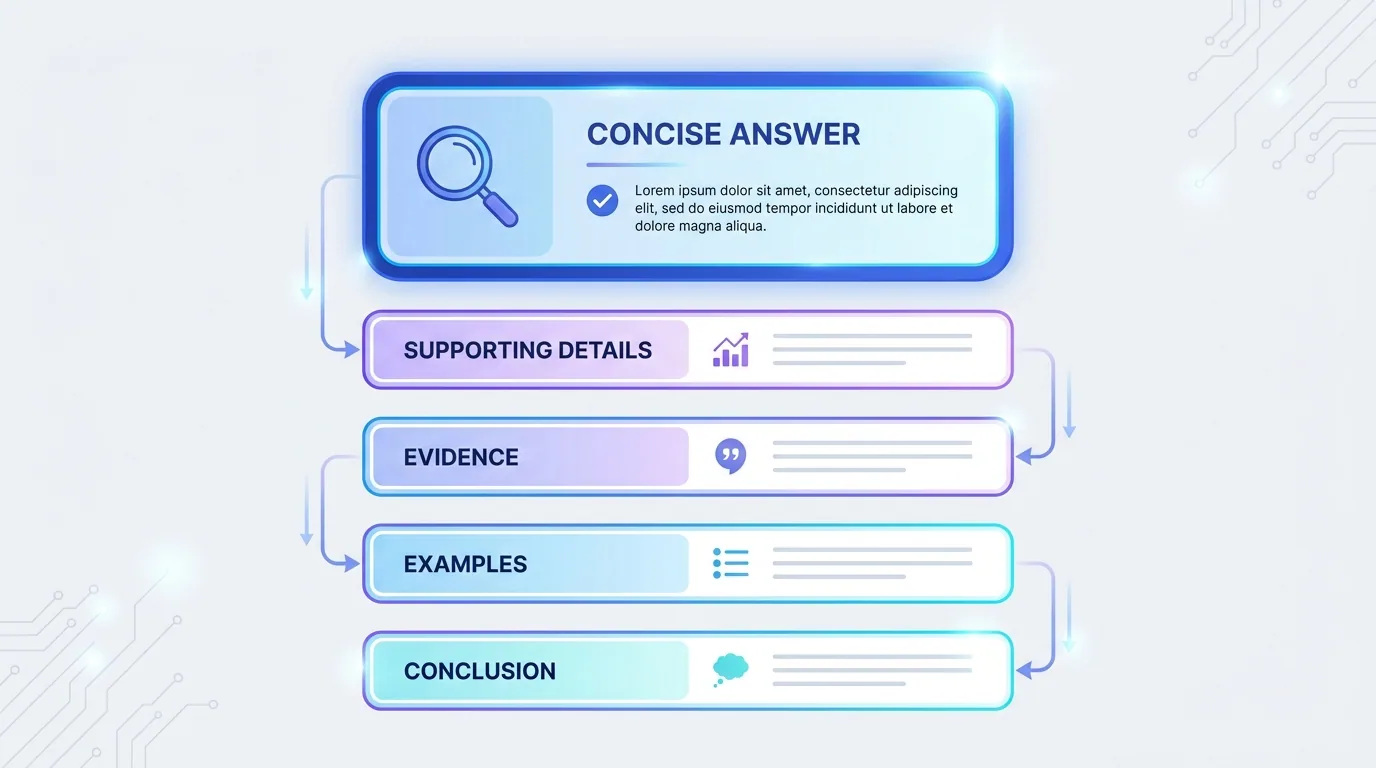
After the answer, expand with the supporting detail, examples, and nuance. Use descriptive H2 and H3 headings phrased as the questions people actually ask. Each section should be independently extractable — a self-contained mini-answer that makes sense even if the AI pulls only that block.
- Open each section with a one-sentence answer to the heading's question.
- Use short paragraphs (2–4 sentences) and scannable lists for steps or criteria.
- Add concrete numbers, dates, and named tools — specifics get quoted, vague claims do not.
- Close with a takeaway the reader can act on immediately.
Target question-based, long-tail keywords
Queries that trigger AI Overviews average around four words and frequently begin with how, what, is, does, and why. Instead of chasing one fat head term, map the cluster of real questions around it. Tools like Google's "People also ask", Search Console queries, and customer support tickets are goldmines for the exact phrasing people use.
Add FAQ schema and structured data
FAQ sections with question-format headers are one of the strongest signals for AI extraction. Add 6 to 10 frequently asked questions that answer long-tail variants the way users phrase them, and mark them up with FAQPage structured data so search engines can parse them unambiguously.
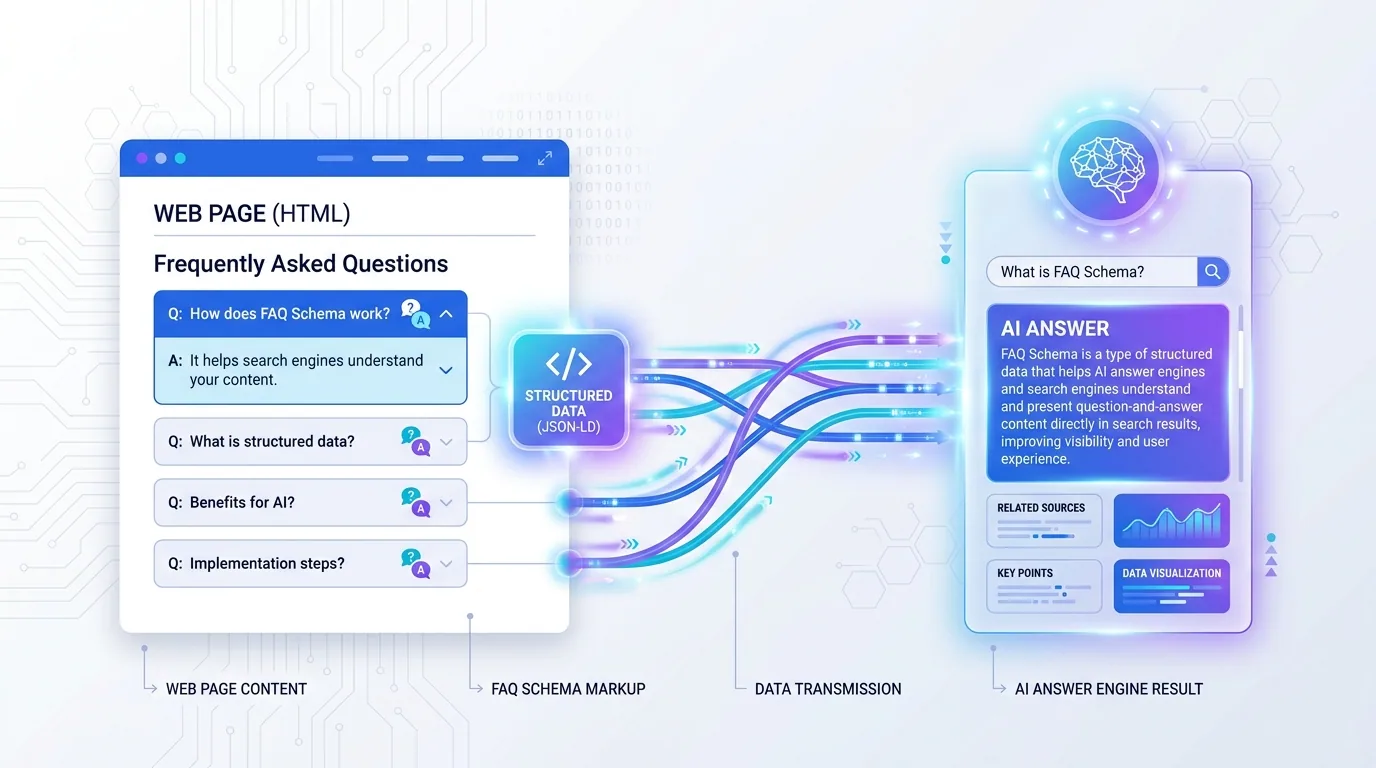
Beyond FAQs, use Article, BreadcrumbList, and Organization schema, plus clear author markup. Structured data does not guarantee a citation, but it removes ambiguity — and ambiguity is what causes AI engines to skip your page in favour of a clearer competitor.
Prove E-E-A-T: experience, expertise, authority, trust
Google's AI overwhelmingly selects sources it considers credible. That means visible authorship with real credentials, first-hand experience signals (original data, screenshots, case studies), citations to primary sources, and a site that is technically healthy. A page that demonstrates it was written by someone who has actually done the thing will out-cite a generic AI-spun article every time.
- Experience: include original examples, results, and screenshots only you could produce.
- Expertise: add author bios, job titles, and links to relevant work.
- Authority: earn mentions and links from respected sites in your niche.
- Trust: keep contact details, policies, and a fast, secure site in good order.
Do not neglect the technical foundation
AI search still runs on top of the classic crawl-and-index pipeline. If Googlebot cannot render your content quickly, it cannot feed it to the AI layer. The 2026 core update tightened the bar: a Largest Contentful Paint near 2.0 seconds and an Interaction to Next Paint under 200ms are now genuine ranking risks if you miss them.
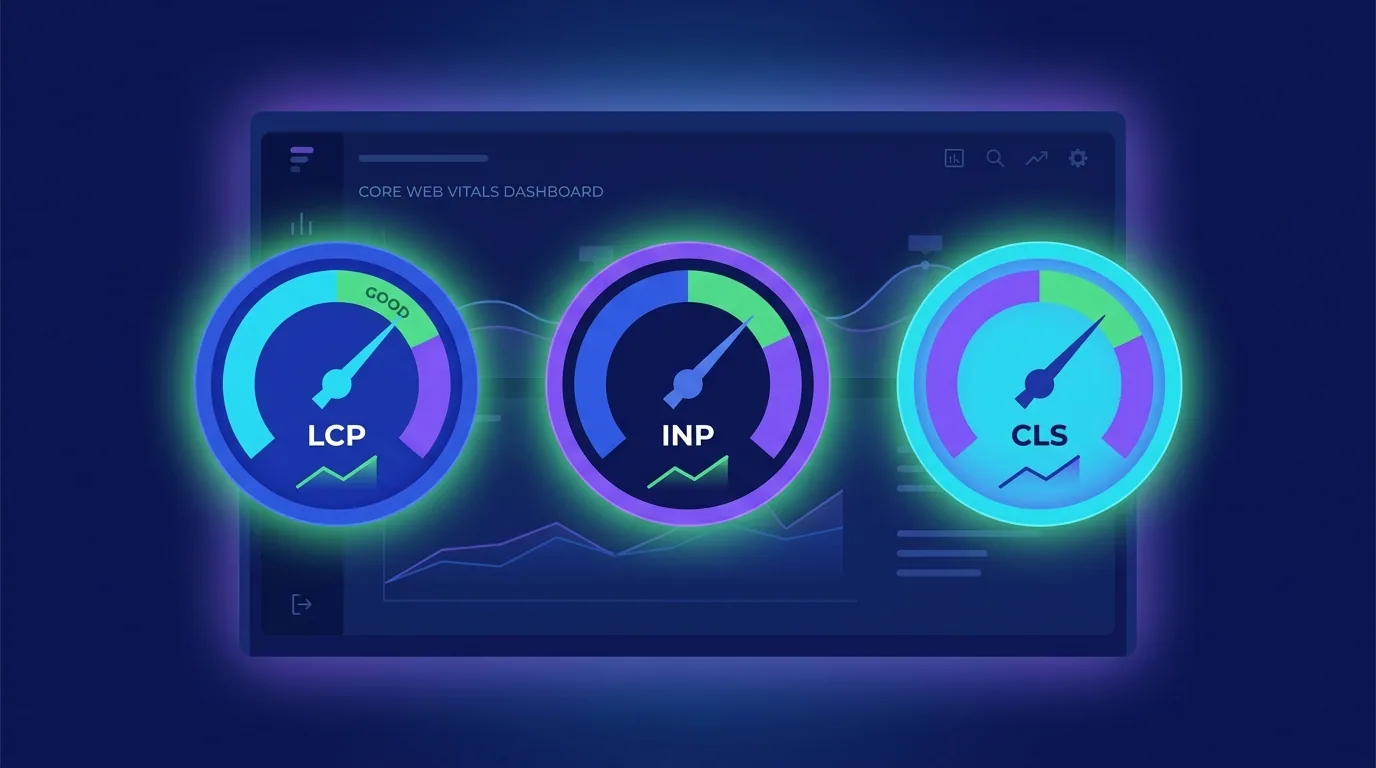
Server-side rendering, image optimisation (modern formats like WebP and AVIF), and disciplined JavaScript all help. This is exactly why we build client sites on fast, modern web foundations — performance is no longer a nice-to-have, it is a prerequisite for visibility.
Measure what matters in an AI-search world
Clicks per impression will look different when an AI answer sits above your link. Track impressions and branded search growth, not just raw clicks. Monitor which queries surface an AI Overview, whether you are cited, and how assisted conversions trend. The brands that adapt their measurement stop panicking about "lost" clicks and start optimising for influence.

Common mistakes that keep you out of AI Overviews
Most pages that fail to earn citations are not penalised — they are simply skipped because something easier to quote exists. The biggest culprit is burying the answer under three paragraphs of throat-clearing. If an AI engine has to read 400 words to find your point, it will usually find a competitor who made the same point in the first sentence. Lead with the answer, every time.
The second common mistake is writing thin, undifferentiated "what is" content. Definitional explainers were the bread and butter of blogging for a decade, but AI now produces those instantly. To stand out, add what a model cannot synthesise on its own: original data, a real workflow, a specific example with numbers, a contrarian-but-defensible point of view, or a screenshot of the thing actually working. Experience is the moat.
- No clear answer up top — the single most common reason a page is skipped by AI engines.
- Walls of text — long, unbroken paragraphs are hard to extract; break them into scannable blocks.
- Missing structured data — no FAQ, Article, or breadcrumb schema means more ambiguity and fewer citations.
- Outdated facts — AI engines favour fresh, accurate content; review and re-date evergreen posts regularly.
- Anonymous authorship — no author, no credentials, no trust signals to support E-E-A-T.
Fix these five issues on your highest-intent pages first and you will usually see your citation rate climb before you touch anything else. The point is not to game the system — it is to make your genuine expertise impossible to overlook.
Putting it together
Ranking in AI Overviews is the natural reward for content that is genuinely helpful, clearly structured, demonstrably expert, and technically fast. Lead with the answer, target real questions, add FAQ schema, prove your E-E-A-T, and keep your Core Web Vitals healthy. Do that consistently and you will not just survive the shift to AI search — you will be the source it quotes. The brands that treat AI search as a content-quality problem rather than a loophole to exploit are the ones compounding visibility through 2026 and beyond.
Want your pages cited in AI Overviews instead of buried beneath them? Our team can audit your site and build an AI-search-ready content plan.
Get a Free SEO AuditFrequently asked questions
What are Google AI Overviews?
AI Overviews are AI-generated summaries that appear at the top of Google's search results for many informational queries. They combine information from several trusted pages into one answer, with citation links to the sources used.
How do I get my content cited in AI Overviews?
Lead with a direct answer in the first two or three sentences of each section, target question-based long-tail keywords, add FAQ and Article structured data, demonstrate strong E-E-A-T, and keep your site fast and crawlable. AI engines quote clear, credible, well-structured sources.
Is traditional SEO dead in 2026?
No. AI search is built on top of the classic crawl-index-rank pipeline, so technical SEO, quality content, and authority still matter. What has changed is the emphasis: answer-first structure, FAQ schema, and demonstrable expertise now carry more weight.
Does FAQ schema help with AI Overviews?
Yes. FAQ sections with question-format headers and FAQPage structured data are among the strongest signals for AI extraction because they give answer engines a clean, machine-readable version of your content.
How long does it take to rank in AI Overviews?
It varies by niche and site authority, but most sites that adopt an answer-first, well-structured approach begin to see citations within a few months, with results compounding as topical authority builds.
Can Fryntavo help me rank in AI search?
Yes. Fryntavo offers technical SEO, content strategy, and answer-engine optimization services that prepare your site to be cited in AI Overviews and other AI answer engines. Book a free strategy call to get started.
Ready to put this into action?
Fryntavo helps brands grow with web development, SEO, marketplace management, and AI automation. Book a free, no-obligation strategy call.
Book a Free Strategy Call