
To recover from an organic traffic drop, you first have to diagnose the cause precisely — guessing wastes weeks. The drop is almost always one of a handful of culprits: a Google algorithm update, AI Overviews absorbing your clicks, a technical or indexing problem, lost rankings to competitors, or a tracking glitch. Once you know which, the fix is usually clear and the traffic comes back. The mistake most sites make is reacting before they have identified the real reason.
This guide walks through the exact diagnostic sequence our SEO team runs when a site loses traffic, then the recovery moves for each cause. Work it in order — the early steps rule out the simplest explanations before you tear apart your content strategy.
First, confirm the drop is real
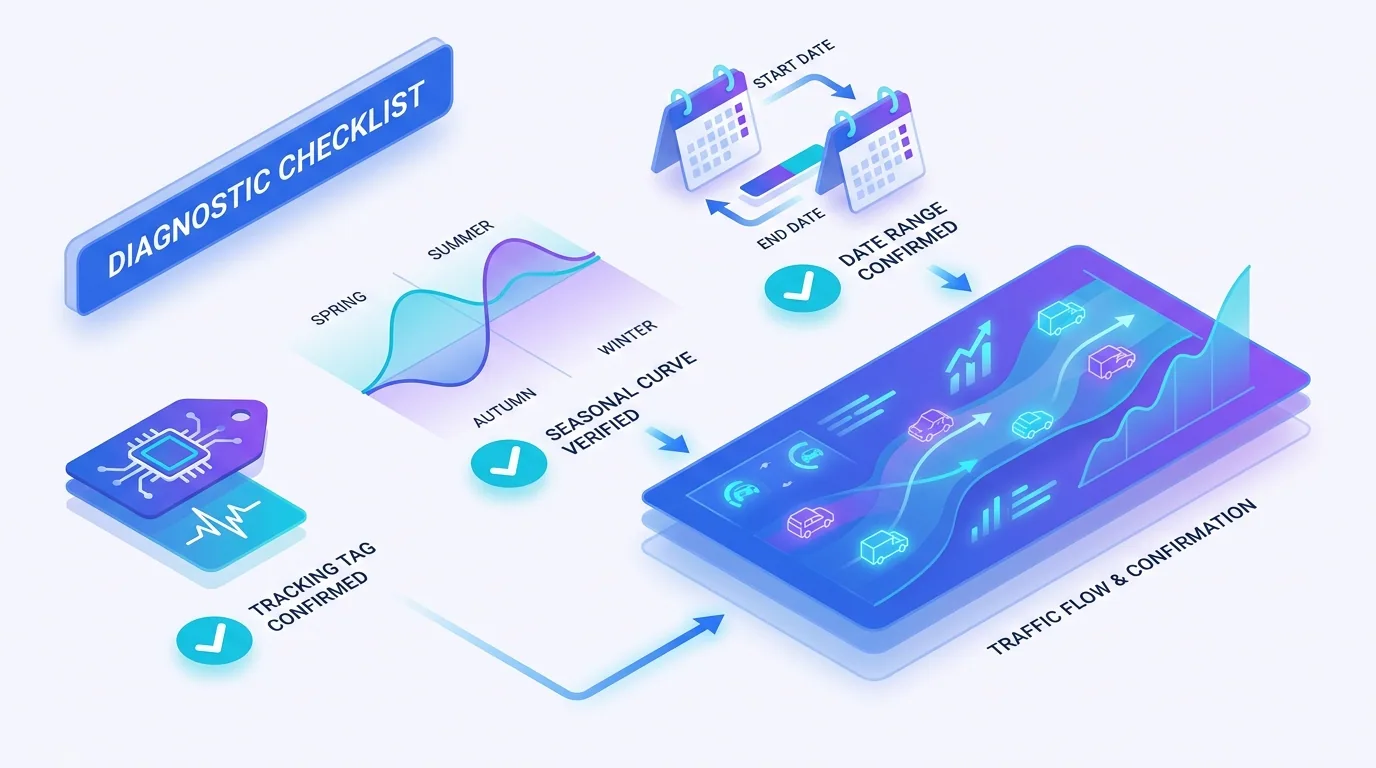
Before you panic, confirm the traffic loss is genuine and not a measurement artefact. Check whether your analytics tracking is firing correctly, whether a recent site change broke a tag, and whether the dip lines up with normal seasonality. A surprising number of "traffic drops" turn out to be a broken analytics snippet or a year-over-year comparison against an unusual spike.
Then open Google Search Console and compare clicks, impressions, and average position over the affected period. Search Console is the source of truth for organic search, and the relationship between clicks and impressions is your first big clue about what happened.
Did an algorithm update cause the drop?
Algorithm updates are the most common cause of sudden, sitewide organic drops. Cross-reference the date of your decline with the known Google update timeline. If your drop aligns tightly with a core or spam update rollout, that is your most likely cause, and the fix is about quality rather than a single technical toggle.
Core updates reward helpful, trustworthy, people-first content and demote thin, derivative, or low-E-E-A-T pages. Recovery means improving genuine quality: deepening expertise, adding first-hand experience, removing or consolidating weak pages, and strengthening trust signals. These recoveries are real but gradual — they often land with the next update cycle, not overnight.
Are AI Overviews absorbing your clicks?
A signature pattern of 2026 is stable or rising impressions paired with falling clicks. That usually means an AI Overview now sits above your result and answers the query before users click. You did not lose your ranking — you lost the click to the AI summary. This is the new normal for informational queries, and it requires a different response than a ranking loss.
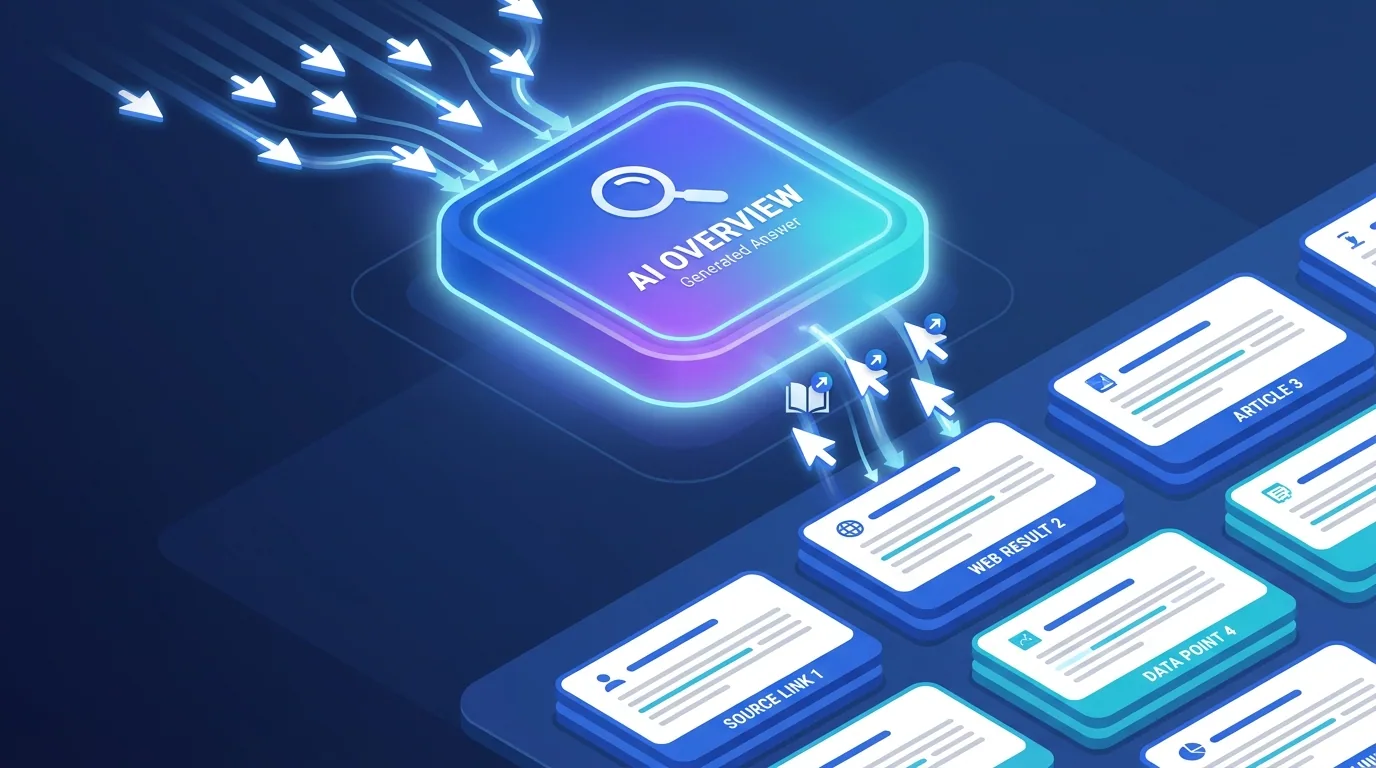
The recovery here is to become the cited source inside the AI Overview rather than fighting it. Restructure pages to be answer-first, add FAQ schema, target deeper questions the AI cannot fully answer in two sentences, and shift some focus to bottom-of-funnel queries that still drive clicks. Brands that adapt their content for citations recover influence even when raw clicks stay lower.
- Rewrite affected pages answer-first so you become the AI's cited source.
- Add FAQ and Article schema to feed clean answers to the AI layer.
- Pivot toward complex, high-intent queries that an AI summary cannot fully resolve.
- Build branded demand so users seek you out directly, not just via informational search.
Is a technical or indexing problem to blame?
If the drop is sharp and tied to a site change, suspect a technical cause. A botched migration, an accidental noindex tag, a broken robots.txt rule, a canonical pointing to the wrong page, or a server slowdown can all crater organic traffic fast. These are the most fixable causes — and the most urgent, because every day they persist costs you visibility.
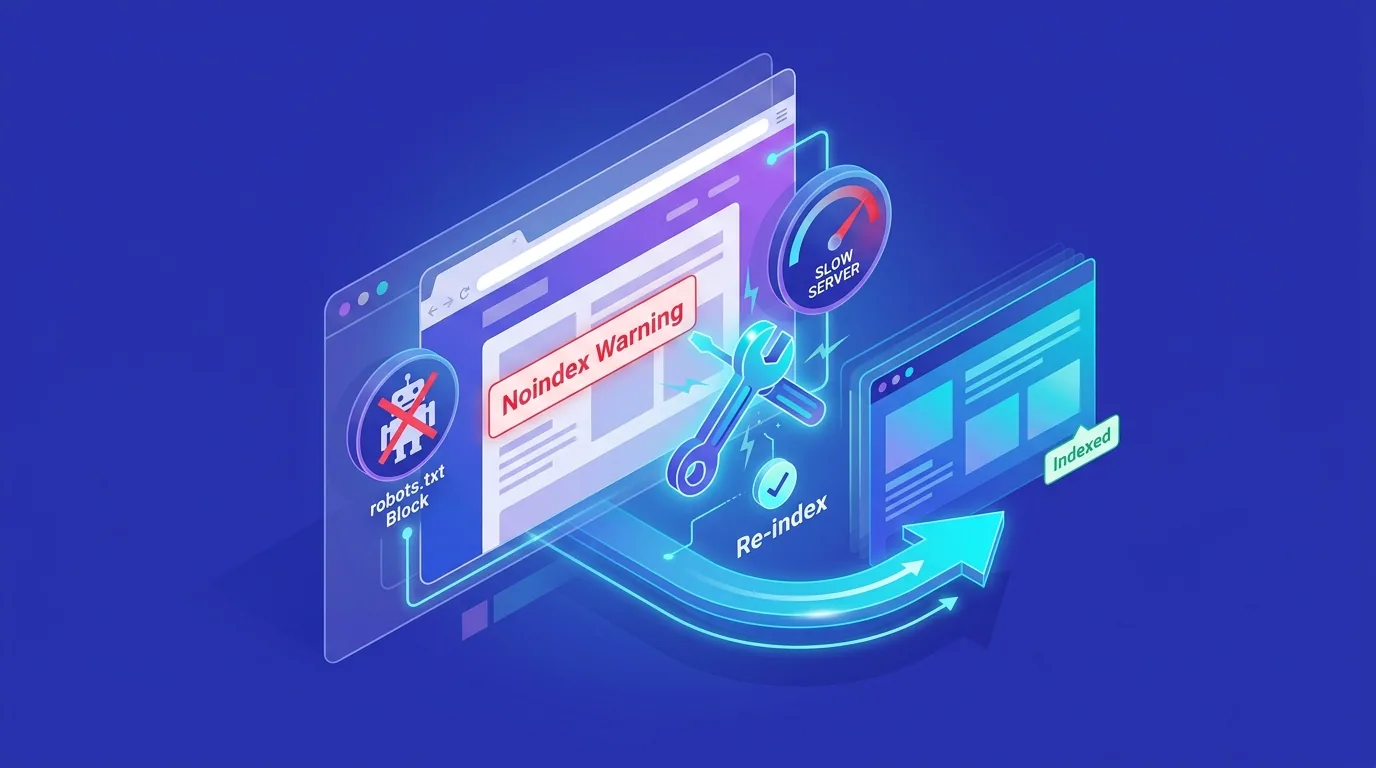
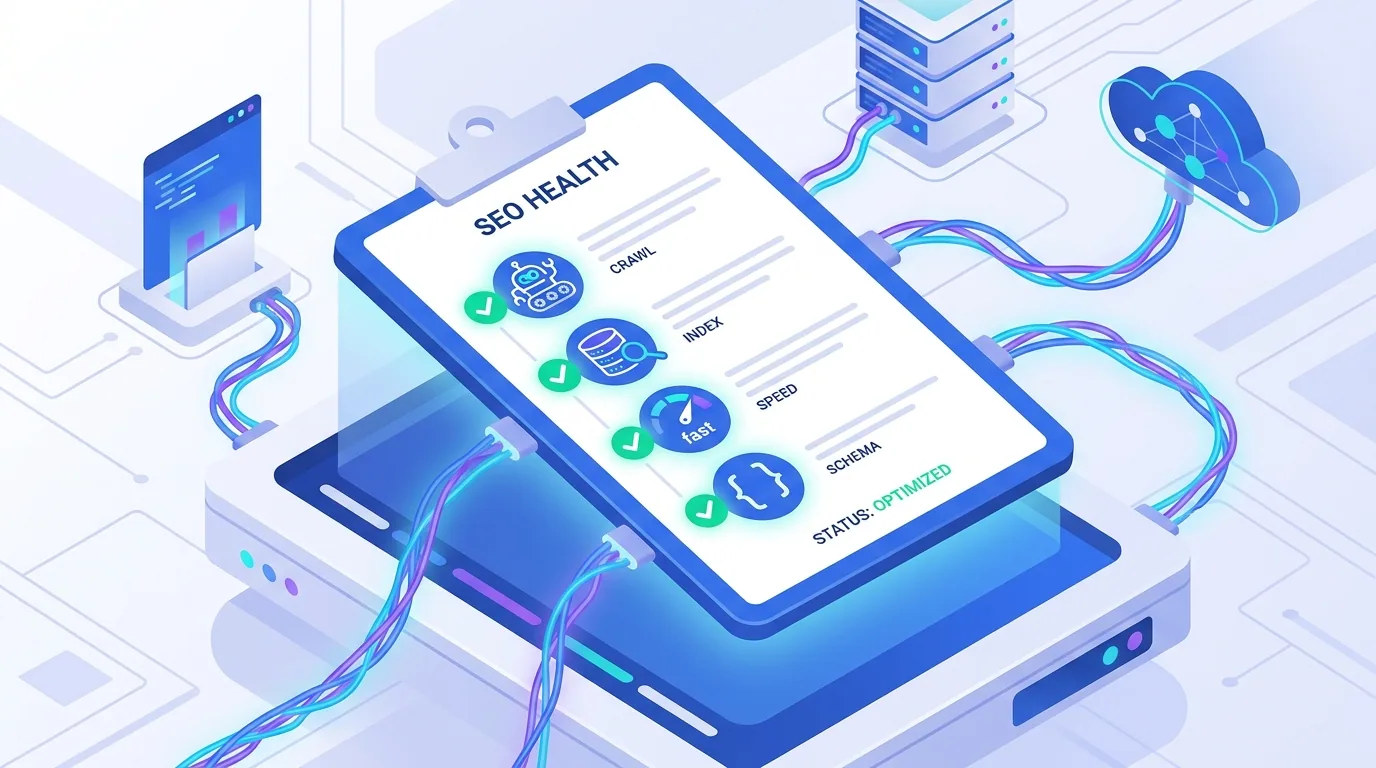
Run through the Search Console coverage and pages reports, check indexing status on your key URLs, test your robots.txt, and verify your Core Web Vitals are healthy — a Largest Contentful Paint near 2.0 seconds and an Interaction to Next Paint under 200ms. If crawlers cannot fetch or render your content, nothing else you do will help. Fix the foundation first.
Migrations deserve special caution. The most painful drops we see come from redesigns and replatforms that quietly dropped redirects, changed URL structures, or shipped a slower front end. If your decline lines up with a launch, audit it forensically: confirm every old URL redirects to its new home, check that key pages still render their content server-side, and re-test performance. Building on solid web foundations prevents most of these self-inflicted wounds before they happen.
Have competitors overtaken you?
If the drop is gradual and confined to specific keywords rather than sitewide, a competitor has likely outranked you. Search engines reward freshness and depth, so a page that was best two years ago can quietly slip as rivals publish better, more current content. This is a slower, query-by-query erosion rather than a sudden cliff.
Rankings are not owned, they are rented from relevance. The moment a competitor serves the searcher better, the algorithm hands them your spot.
— Fryntavo SEO playbook
Recovery means studying who overtook you and why, then making your page demonstrably better: refresh the content, add depth and original data, improve the structure, strengthen internal links, and earn fresh authority. Refreshing high-value pages that have decayed is one of the fastest, highest-ROI moves in any recovery program.
Be honest about intent shifts, too. Sometimes you did not lose to a better page — you lost because what searchers want from that query changed, and your content no longer matches. A guide that once ranked may now sit below comparison tools, videos, or transactional pages because the dominant intent moved. Re-examine the live results for your lost keywords and reshape your page to match the format and depth searchers now expect, rather than defending a structure the query has outgrown.
What does a recovery plan look like?
Once you have diagnosed the cause, sequence your fixes by impact and effort. Resolve technical and indexing issues immediately, because they are fast and decisive. Then tackle content quality and E-E-A-T for algorithmic drops, restructure for AI citations where AI Overviews are the culprit, and refresh decayed pages where competitors have overtaken you.
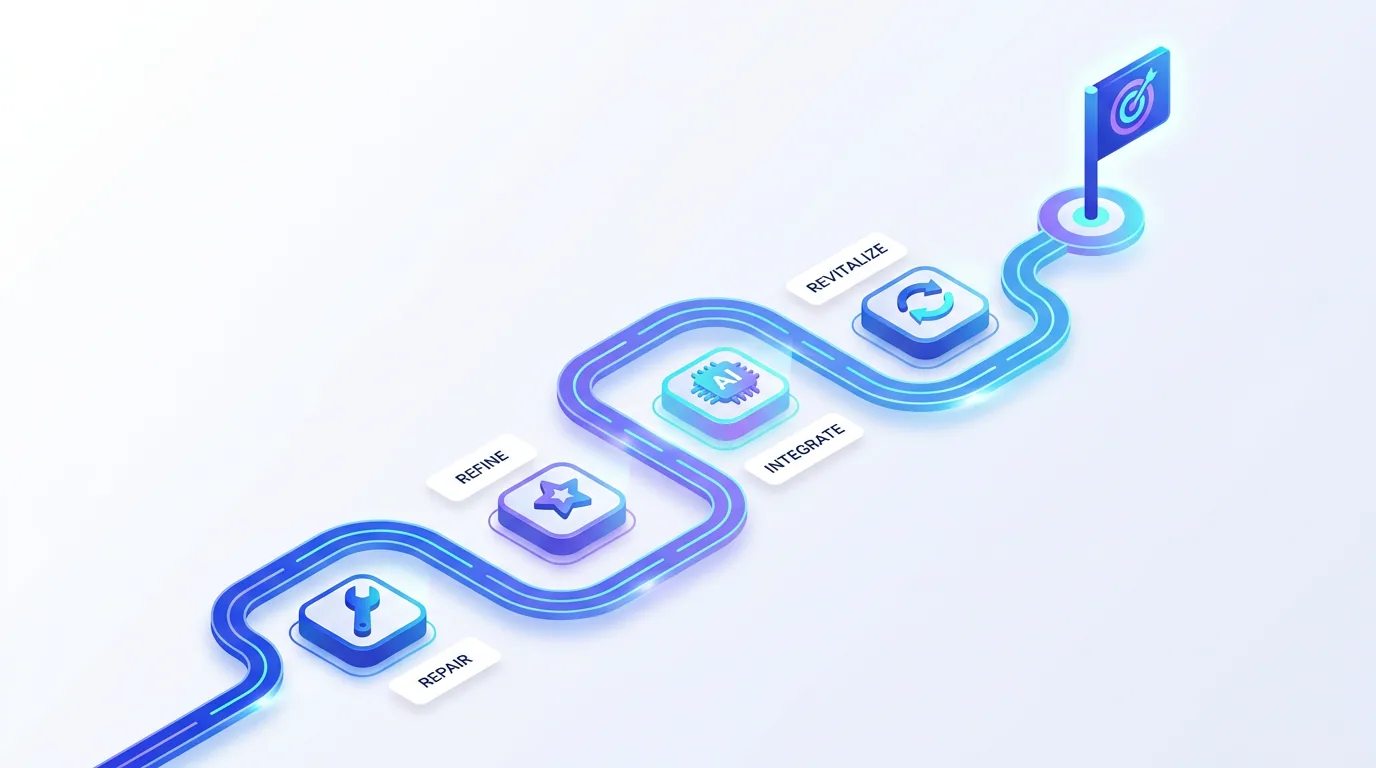
Set realistic expectations: technical fixes can recover traffic within weeks, while algorithmic and content recoveries unfold over a quarter or more as Google re-evaluates your site. Track progress in Search Console, document what you changed, and resist the urge to make ten changes at once — measured, sequenced fixes let you learn what actually worked.
Turning a drop into a stronger comeback
An organic traffic drop feels alarming, but it is a solvable diagnostic problem. Confirm the drop is real, read the clicks-versus-impressions signal, match the timing to algorithm updates, and rule out technical issues before touching content. Fix the actual cause — not a guessed one — and most sites recover, often emerging stronger because the cleanup makes the whole site healthier and more AI-search-ready.
Lost organic traffic and not sure why? We will run a full diagnostic and build a prioritized recovery plan to win back your rankings.
Get a Free Traffic Recovery AuditFrequently asked questions
Why did my organic traffic suddenly drop in 2026?
The most common causes are a Google algorithm update, AI Overviews absorbing clicks, a technical or indexing issue, competitors overtaking you, or a tracking error. Start by confirming the drop is real, then compare clicks and impressions in Search Console to narrow down the cause before acting.
How do I know if AI Overviews caused my traffic loss?
Check Search Console: if your impressions stayed steady or rose but clicks fell, an AI Overview is likely answering queries before users click. The fix is to become the cited source by restructuring content answer-first, adding FAQ schema, and targeting deeper, high-intent queries.
How do I tell if an algorithm update hit my site?
Cross-reference the date of your traffic decline with the known Google update timeline. If your drop aligns tightly with a core or spam update rollout and is sitewide, an algorithm update is the most likely cause, and recovery focuses on content quality and E-E-A-T.
What technical issues cause traffic drops?
Accidental noindex tags, broken robots.txt rules, incorrect canonicals, botched migrations, and slow rendering can all crater organic traffic quickly. These are the most fixable and most urgent causes, so check indexing status, robots.txt, and Core Web Vitals first.
How long does it take to recover lost organic traffic?
It depends on the cause. Technical and indexing fixes can recover traffic within weeks, while algorithmic and content-quality recoveries typically unfold over a quarter or more as Google re-evaluates your site across update cycles.
Can I recover from a core update penalty?
Core updates are not penalties; they re-evaluate quality. Recovery comes from genuinely improving content — deepening expertise, adding first-hand experience, consolidating thin pages, and strengthening trust. Improvements usually take effect with the next update cycle rather than instantly.
Should I make all my fixes at once?
No. Sequence fixes by impact and effort, resolve technical issues immediately, then address content and AI optimization. Making many changes at once makes it impossible to learn what worked. Measured, documented changes let you attribute recovery to the right action.
How can Fryntavo help me recover lost traffic?
Fryntavo runs a full diagnostic to pinpoint the real cause of your drop, then builds a prioritized recovery plan covering technical fixes, content quality, AI citation optimization, and page refreshes. Book a free traffic recovery audit to get started.
Ready to put this into action?
Fryntavo helps brands grow with web development, SEO, marketplace management, and AI automation. Book a free, no-obligation strategy call.
Book a Free Strategy Call