
Product descriptions that sell lead with the benefit, not the spec. They tell the shopper what the product will do for their life in the first sentence, answer the objections that stall a purchase, and are written to be understood by both humans and the AI shopping assistants now mediating millions of buying decisions. Get those three things right and your copy stops describing — it starts converting.
Most descriptions fail because they read like a packing slip: dimensions, materials, a list of features, the end. Features tell; benefits sell. This guide is the ecommerce copywriting framework our team uses across stores and marketplaces — the same one behind our ecommerce management and Amazon management work.
What makes a product description actually sell?
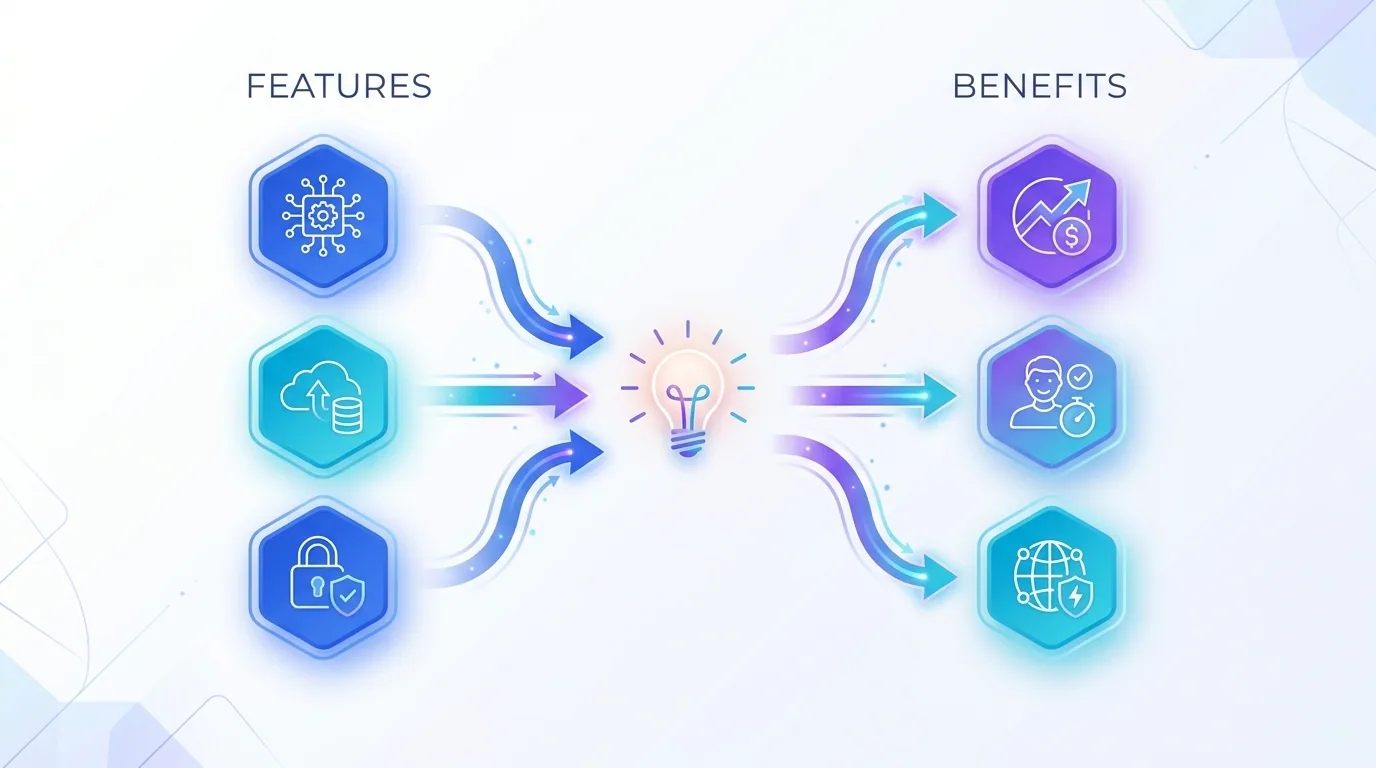
A description sells when it connects a feature to an outcome the buyer cares about. "Double-walled stainless steel" is a feature. "Keeps your coffee hot for six hours, so your morning never goes cold" is a benefit. The buyer does not want steel — they want hot coffee at 11am.
The strongest copy follows a simple rhythm: hook, benefits, proof, specifics, and a nudge to buy. It opens with the single most compelling reason to care, translates every important feature into a benefit, removes doubt with proof, and closes by making the next step obvious.
Before writing a word, get clear on who you are talking to. The same product needs different copy for a budget-conscious student and a time-poor professional, because they care about different outcomes. Pick the one buyer you most want to win, picture the exact moment they decide to purchase, and write the description that meets them there. Generic copy aimed at everyone persuades no one.
How do I write benefit-led copy instead of feature lists?
Use the "so what?" test. Write the feature, then ask "so what?" until you reach a real human benefit. "Breathable fabric" → so what? → "so you stay cool" → so what? → "so you can wear it all day without that sticky, end-of-shift feeling." That last line is what you put in the copy.
- List every feature in one column.
- Next to each, write the benefit using "so you can…" or "which means…".
- Lead the description with the single most powerful benefit.
- Keep features for the spec section, where detail-driven buyers expect them.
- Cut any sentence that does not help the shopper picture owning the product.
How should I structure a product description in 2026?
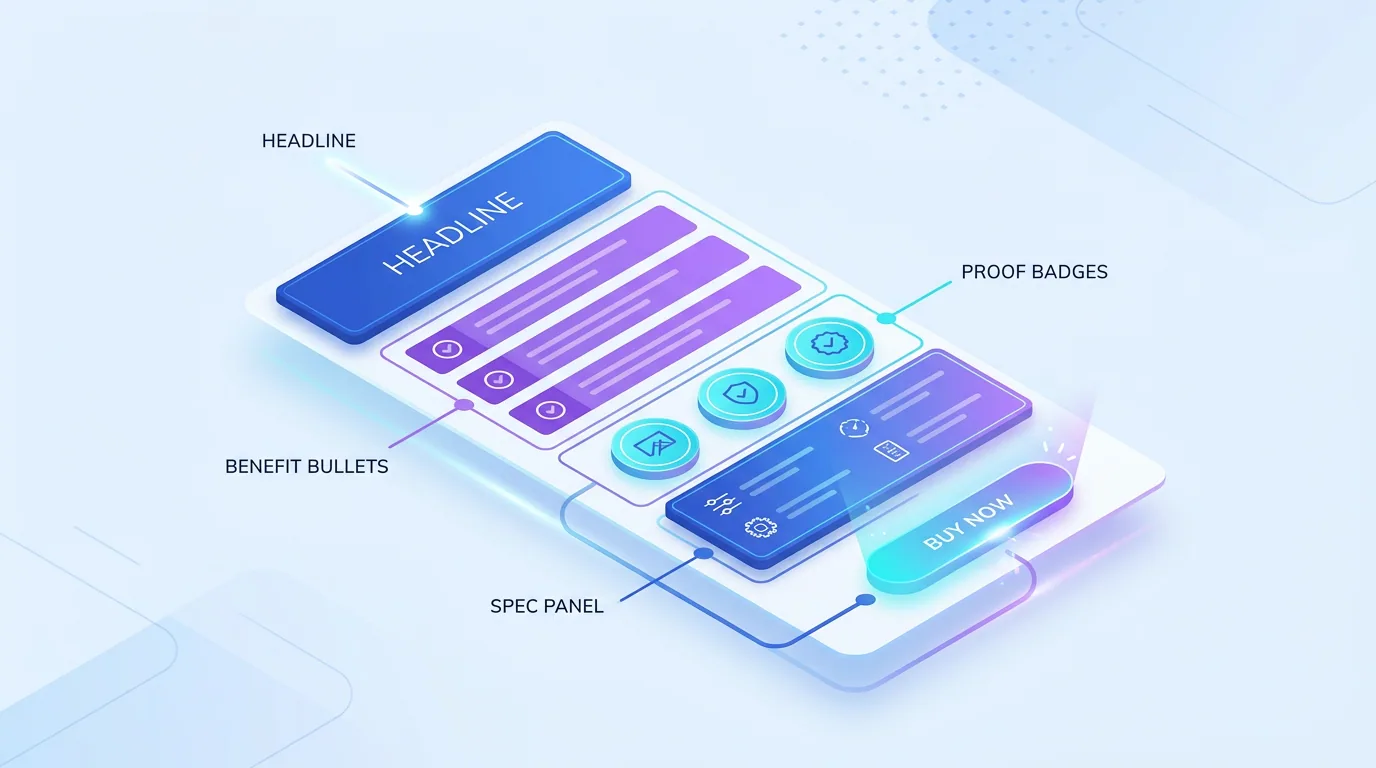
Structure for scanners. Most shoppers skim, so front-load the value and break the copy into digestible blocks: a benefit-rich opening paragraph, three to five scannable bullets, and a short spec section for the detail-hungry. The opening earns attention; the bullets do the persuading; the specs close the deal.
Formatting is part of the message. Generous white space, bold lead-ins, and consistent bullet structure make a description feel effortless to read, and effortless reading converts. Walls of unbroken text do the opposite — they signal effort, and effort is friction. The goal is for a shopper to grasp the core promise in a three-second glance and find the supporting detail only if they want it.
Voice matters as much as structure. Write the way your customer talks, match the brand's personality, and keep sentences short. Confident, specific, human copy outperforms corporate filler every time — and it is far easier for AI assistants to summarise accurately.
Sensory and concrete language pulls its weight here. Words that let a shopper feel, see, or imagine the product — the weight in the hand, the quiet of the motor, the warmth of the fabric — create the mental ownership that precedes a purchase. Swap tired filler like "high quality" and "premium" for the specific reasons the product actually is good. Show, do not just assert.
How do I write product copy for AI shopping assistants?
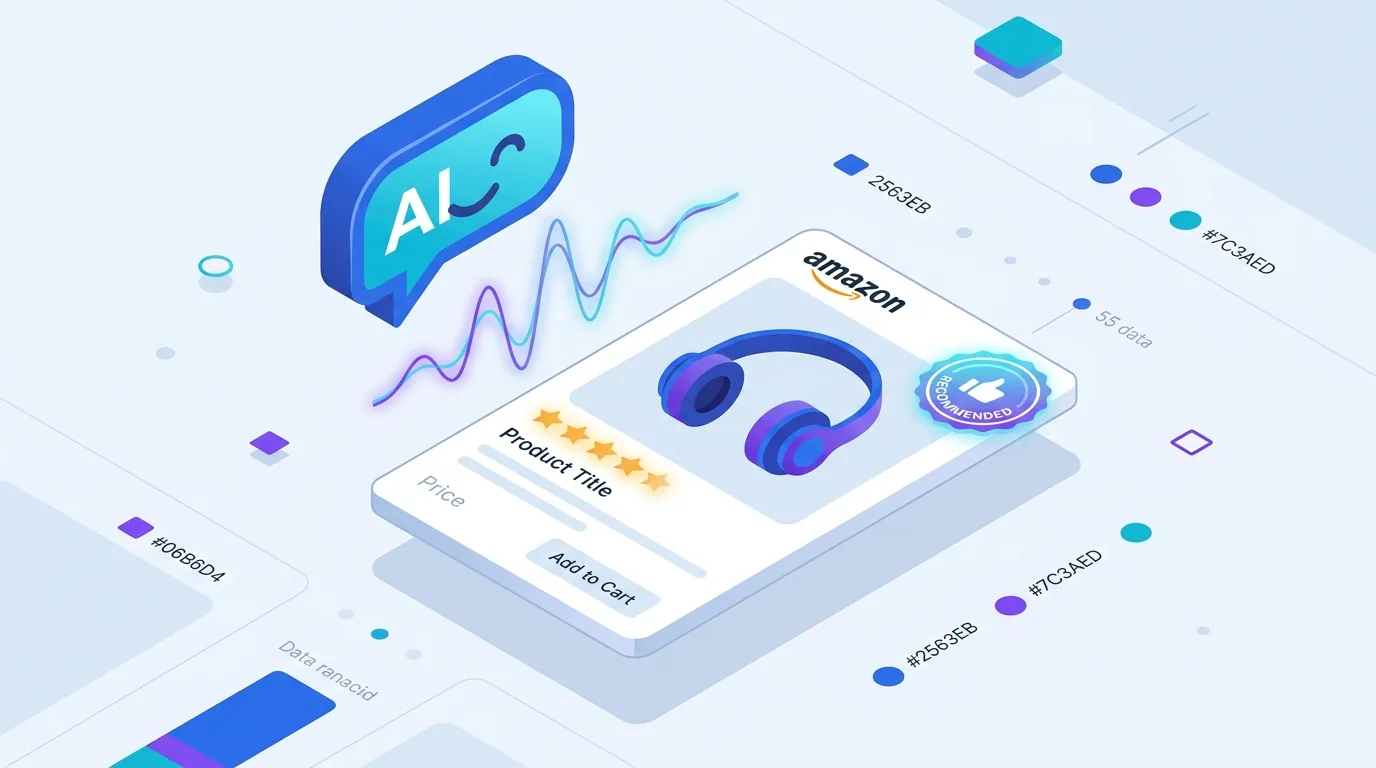
In 2026, a growing share of buyers never read your full page — they ask an assistant. Amazon's Alexa for Shopping, conversational marketplace search, and AI Overviews increasingly answer "which one should I buy?" by reading and comparing listings. If your copy is vague, the assistant has nothing concrete to quote, and you get skipped.

- Be specific: concrete numbers, materials, sizes, and use cases beat adjectives.
- Answer questions directly: name the use case, who it suits, and what is in the box.
- Use natural language: assistants parse plain sentences better than keyword soup.
- State differentiators clearly: the one reason to choose you over the alternative.
How do I handle objections and build trust in the copy?
Every shopper hesitates over something — fit, durability, whether it is worth the price, what happens if it is wrong. Great descriptions answer those doubts before they become reasons to leave. Pre-empt the top three objections for your product and address each one in plain language.
Layer in proof: review snippets, materials and care details, guarantees, and honest specifics about what the product is — and is not — for. Trust is a conversion accelerant. The more confident a shopper feels, the smaller the gap between the description and the add to cart button.
Honesty is a long-game strategy that pays off in fewer returns and better reviews. Describe limitations as plainly as strengths — who the product is not for is as useful as who it is for. A shopper who knows exactly what they are getting is far more likely to keep it, leave a positive review, and come back. Over-promising wins one sale and loses the next three.
Customers do not buy features. They buy a better version of their day. Your job is to describe that day clearly enough that they can see themselves in it.
— Sofia Marino, Ecommerce & Marketplace Lead, Fryntavo
How do I test and improve descriptions over time?
Treat copy as a living asset, not a one-time write. Watch conversion rate, add-to-cart rate, and return rate per listing. A high view-to-cart drop often signals a weak opening benefit; a high return rate often signals copy that over-promised or under-described. Rewrite, measure, and keep the version that sells better.

Putting it together: the description that converts
A description that sells in 2026 opens with a benefit, turns every feature into a reason to care, answers objections, proves its claims, reads naturally for humans and AI alike, and is sharpened by testing. Write for the person trying to picture a better day — and make the path from that picture to checkout effortless.
If writing high-converting copy across a full catalogue feels like a lot, it is — and it is exactly what our ecommerce management and Amazon management teams do at scale.
Want product copy that turns browsers into buyers across your store and marketplaces? Our team writes and tests descriptions built to convert.
Get a Copy ReviewFrequently asked questions
What makes a product description that sells?
It leads with the benefit rather than the spec, translating each feature into an outcome the buyer cares about. It then answers objections, adds proof such as reviews or guarantees, includes the specifics detail-driven buyers want, and makes the next step to purchase obvious.
What is benefit-led copy?
Benefit-led copy describes what a feature does for the customer instead of just stating the feature. For example, 'double-walled steel' is a feature, while 'keeps your coffee hot for six hours' is the benefit. Use the 'so what?' test to turn any feature into a benefit.
How long should a product description be?
Long enough to sell and no longer. A benefit-rich opening paragraph, three to five scannable bullets, and a short spec section usually covers it. Front-load the value because most shoppers skim, and keep extra detail for the buyers who want it.
How do I write product copy for AI shopping assistants?
Be specific and concrete: real numbers, materials, sizes, and use cases. Answer common questions directly, use natural language rather than keyword soup, and state your key differentiator clearly so assistants like Alexa for Shopping have something definite to recommend.
Should I write features or benefits in a product description?
Both, but in the right place. Lead with benefits in the opening and bullets because they persuade, and keep a clear spec section for features because detail-driven buyers and AI assistants rely on them. Benefits sell the idea; features close the deal.
How do I handle buyer objections in product copy?
Identify the top three reasons shoppers hesitate over your product, such as fit, durability, or price, and address each one directly in plain language. Add proof like review snippets, care details, and guarantees to remove doubt before it becomes a reason to leave.
How do I know if my product description is working?
Track conversion rate, add-to-cart rate, and return rate per listing. A high view-to-cart drop often points to a weak opening benefit, while a high return rate can signal copy that over-promised. A/B test versions and keep the one that converts better.
Can Fryntavo write my product descriptions?
Yes. Fryntavo's ecommerce and Amazon management teams write and continually test benefit-led product copy across your store and marketplace listings. Book a free copy review to see where your descriptions are leaking sales.
Ready to put this into action?
Fryntavo helps brands grow with web development, SEO, marketplace management, and AI automation. Book a free, no-obligation strategy call.
Book a Free Strategy Call