
A lead qualification bot is an AI agent that engages every new inquiry instantly, asks the right questions, scores how sales-ready the person is, and routes hot leads to your team while nurturing the rest — all automatically. To build one in 2026 you need three things: a conversational AI agent, a clear scoring framework, and a connection to your CRM with a human handoff for the leads that matter. Done well, it means your sales team only ever talks to people worth talking to.
This guide walks through exactly how to build that system, from the qualifying questions to the scoring logic to the CRM automation behind it. The bot itself is an AI agent; the routing and follow-up are an automation workflow. Together they replace hours of manual triage with a system that never sleeps and never forgets to follow up.
What is a lead qualification bot?
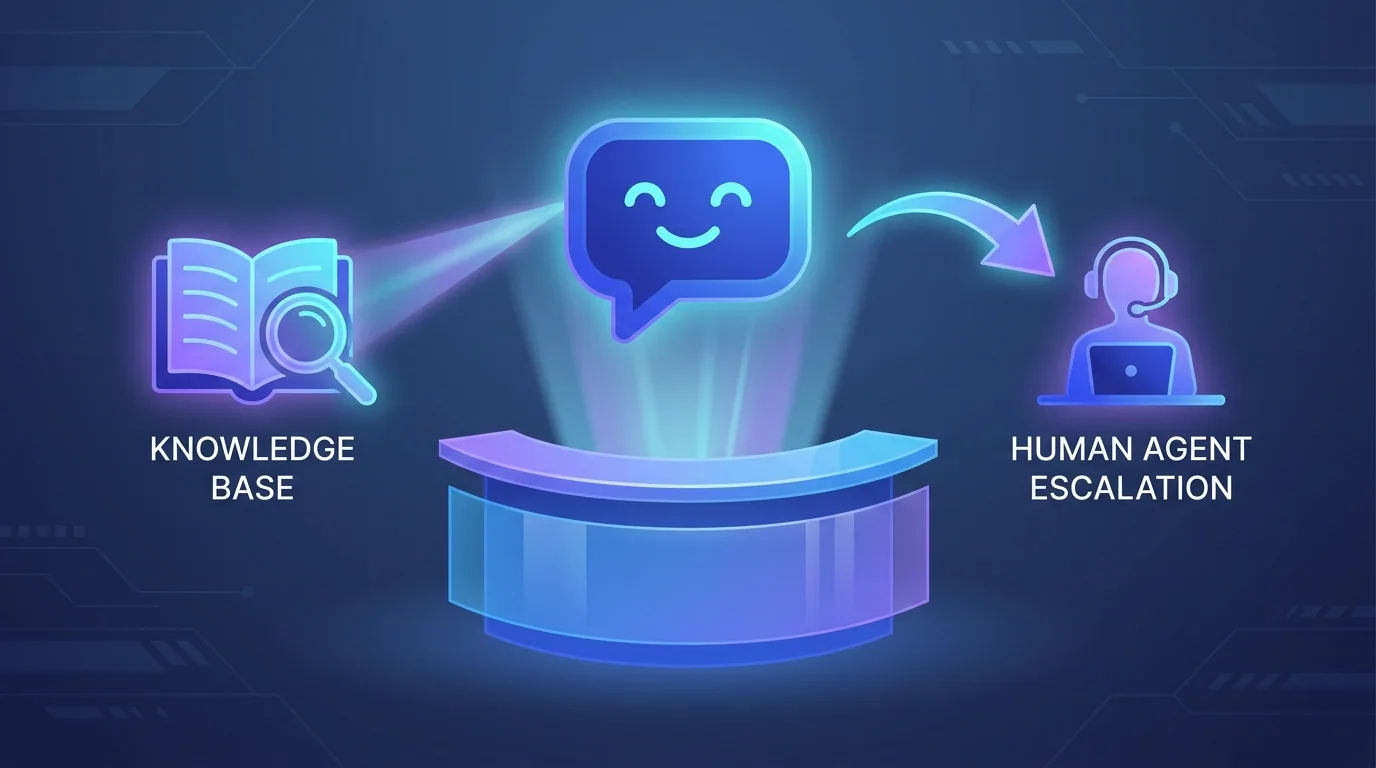
A lead qualification bot is a conversational AI agent that talks to inbound leads, gathers the information your sales team needs, and decides how promising each lead is before a human ever gets involved. Think of it as a tireless front-desk assistant: it greets every visitor, asks about their needs, budget, and timeline, and hands the best ones straight to sales with full context attached.
The difference between a 2026 bot and the clunky chatbots of the past is agentic AI. Modern bots understand free-form answers, ask sensible follow-up questions, and pull in data — enriching a lead from their email domain or looking up their company — before scoring. They feel like a helpful conversation, not a rigid form, which is exactly why they convert more visitors into qualified leads.
How does a lead qualification bot actually work?
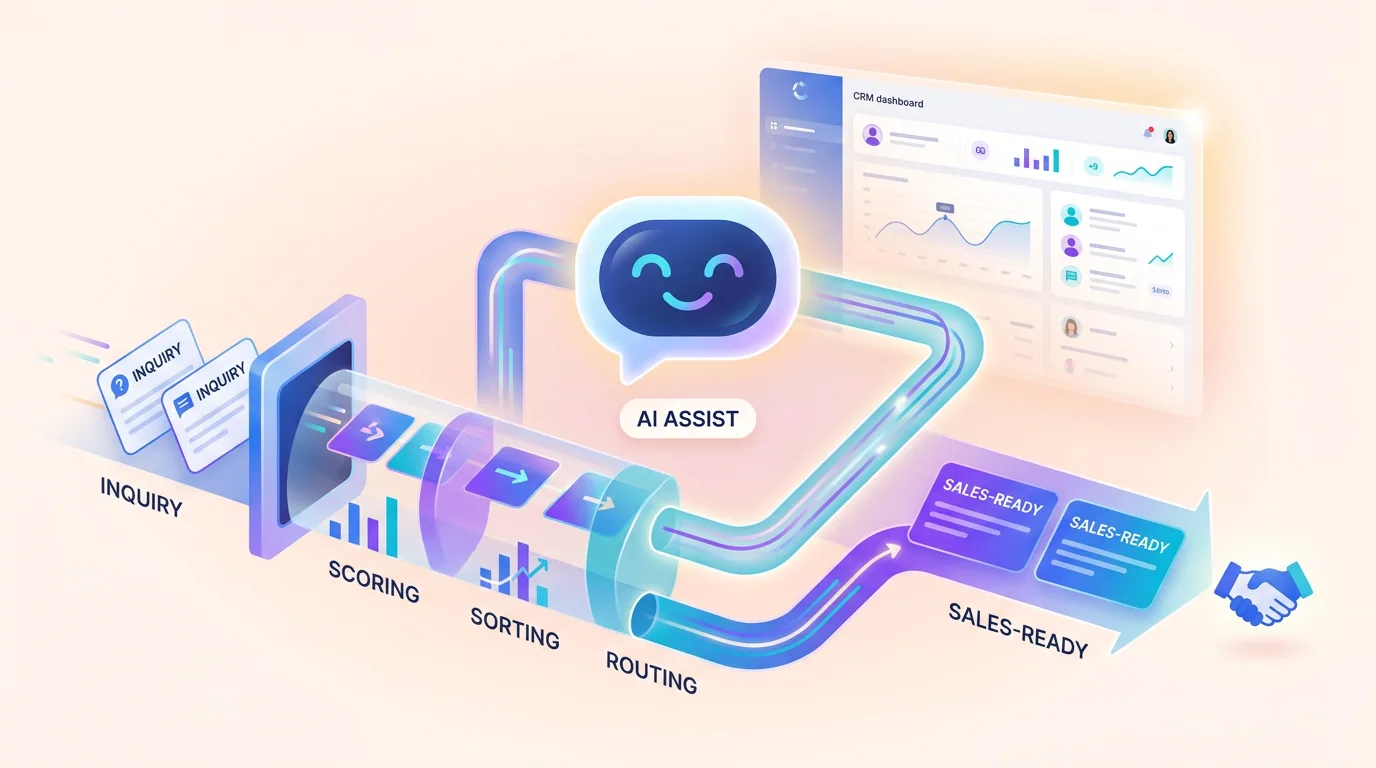
It runs as a short pipeline. The bot engages a visitor (on your site, in a chat widget, or via a form reply), asks a few targeted questions, enriches the answers with any available data, scores the lead against your criteria, then routes it: hot leads to a salesperson with a notification, warm leads into a nurture sequence, and unqualified leads to a polite, helpful dead end.
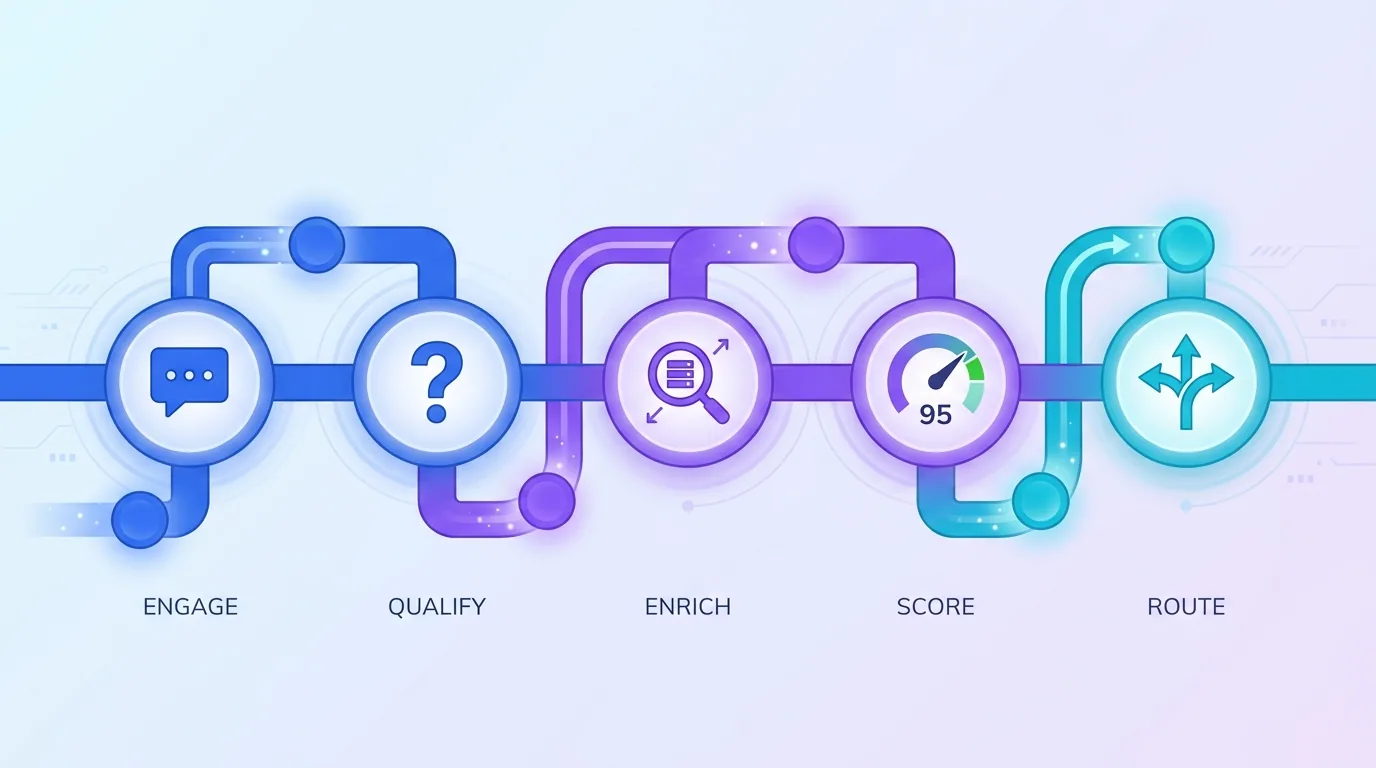
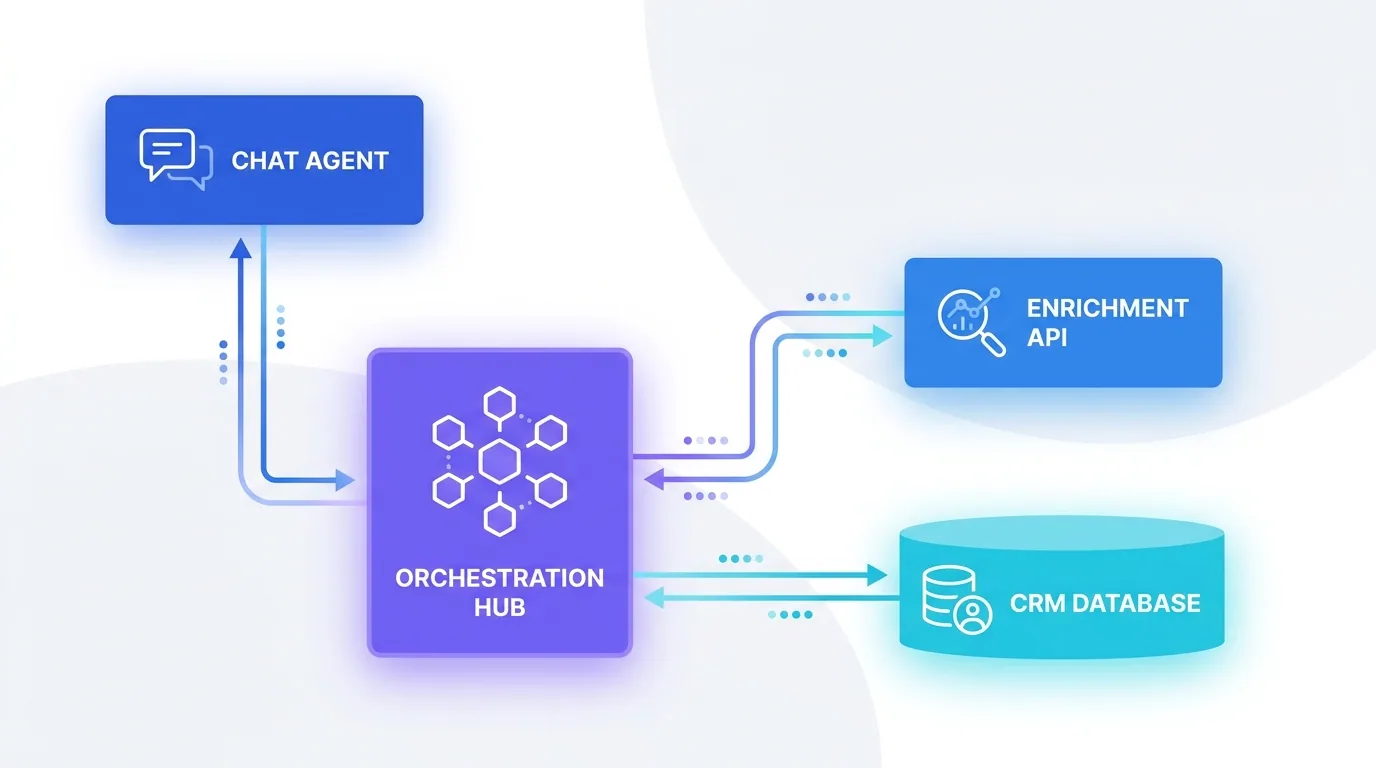
Behind the scenes, the conversational agent handles the chat, and an automation platform like Make or n8n orchestrates the enrichment, scoring, and CRM updates. The two layers connect cleanly, often through the Model Context Protocol (MCP), which lets the AI agent call tools — your CRM, an enrichment API, a calendar — in a standard, controlled way.
What questions should a lead qualification bot ask?
Ask only what you need to decide whether sales should engage. The classic frameworks still apply in 2026 — budget, authority, need, and timeline — but a good bot weaves them into a natural conversation rather than interrogating the visitor. Three to five well-chosen questions qualify most B2B leads without causing drop-off.
- Need: What problem are you trying to solve right now?
- Timeline: Are you looking to move this quarter, or exploring for later?
- Authority: Are you the right person to make this decision, or part of a team?
- Budget or scope: Roughly what scale of solution are you considering?
- Fit: A targeted question specific to your offer that separates ideal customers from poor fits.
How do you score and route leads automatically?
Scoring turns a conversation into a decision. Assign points to the signals that predict a good customer — urgent timeline, decision-making authority, clear budget, strong fit — and set thresholds that decide the route. The beauty of an AI bot is that it can score nuanced, free-text answers, not just multiple-choice clicks, which makes the scores far more accurate.
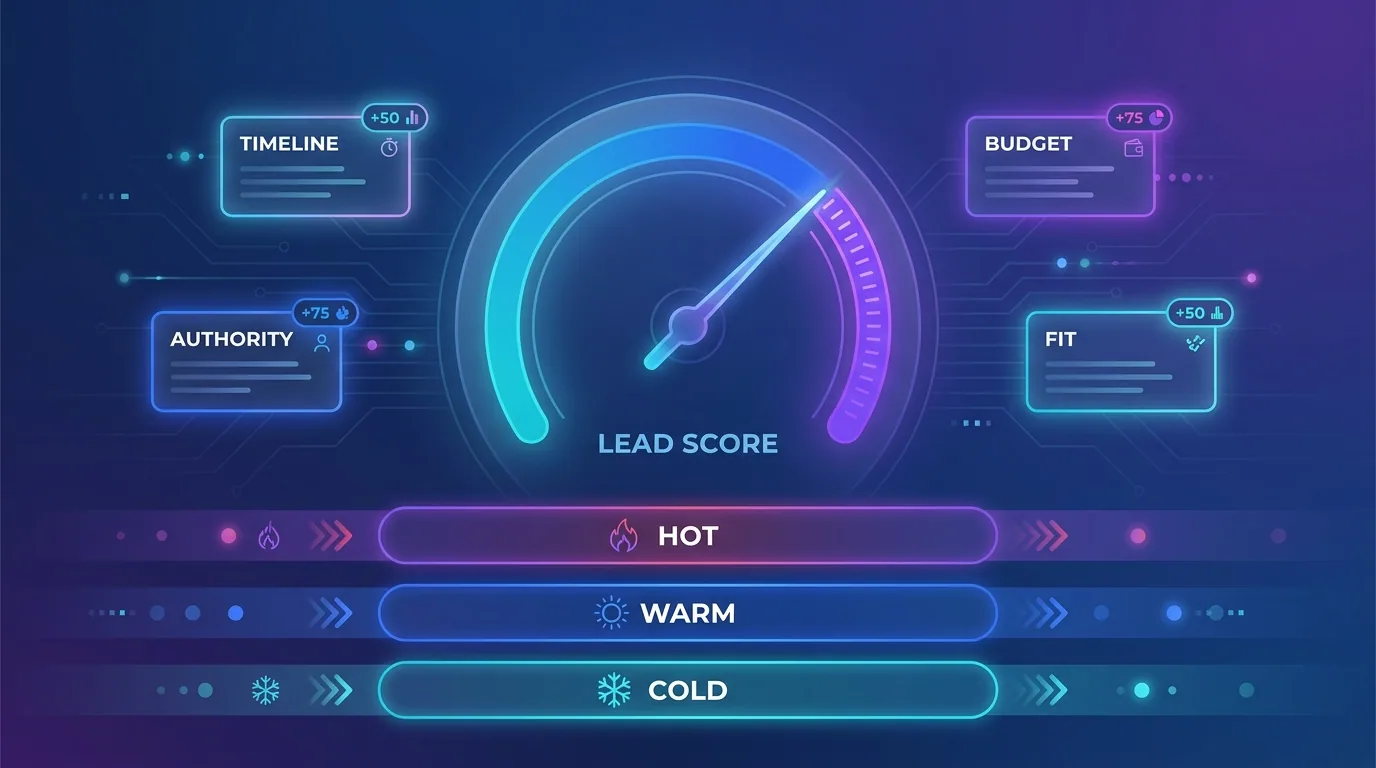
- Hot: high score and ready to buy — create the CRM record, notify a salesperson, and offer to book a meeting on the spot.
- Warm: genuine interest but not ready — add to a nurture sequence and tag for follow-up.
- Cold or poor fit: politely point them to a helpful resource and avoid wasting your team's time.
Every outcome writes back to your CRM so nothing slips through the cracks. This CRM automation is what separates a toy chatbot from a revenue tool: the lead, the full conversation transcript, the score, and the next action all land in one place, ready for sales.
The scoring model should never be set-and-forget, either. Review which scored leads actually closed every few weeks and adjust the weights accordingly — if leads with an urgent timeline keep converting, give that signal more points; if a question you thought mattered turns out to predict nothing, drop it. A qualification bot that learns from real outcomes gets sharper every month, while one left untouched slowly drifts out of step with your market.
When should the bot hand off to a human?
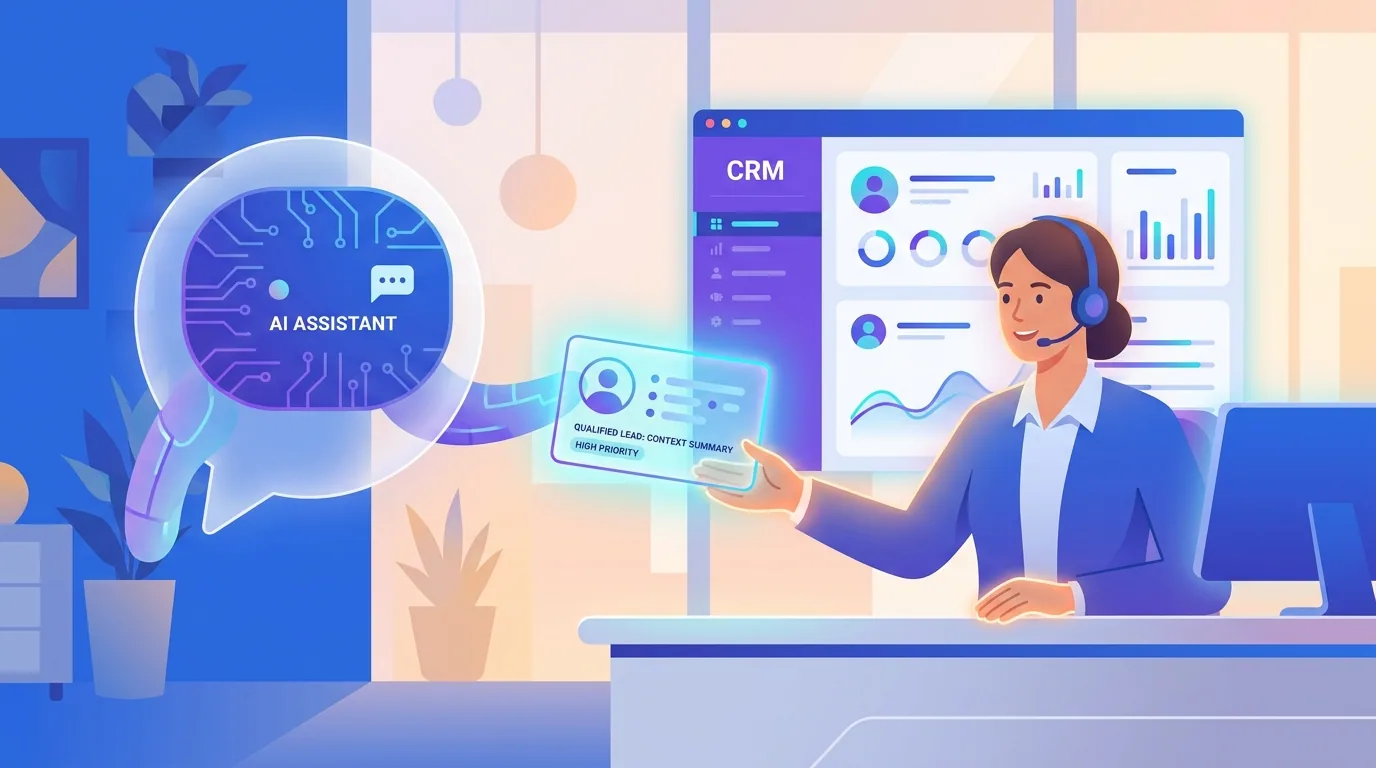
The handoff is the most important moment in the whole flow, and it should always favour the human when stakes are high. A high-value lead, a complex question, or any sign of frustration should trigger an immediate, smooth handoff to a real person — with the full conversation context passed along so the customer never has to repeat themselves.
This is the human-in-the-loop principle applied to sales. The bot does the tireless, repetitive qualifying; the human brings the judgement, rapport, and closing. Set clear handoff triggers and your team spends its energy only where a person genuinely adds value.
A great qualification bot is not measured by how many conversations it finishes alone — it is measured by how perfectly it sets up the ones it hands to a human.
— Priya Nair, AI Solutions Architect, Fryntavo
What tools do you need to build one in 2026?
You can assemble a capable lead qualification bot from off-the-shelf parts. You need a conversational AI agent for the chat, an automation platform to orchestrate the logic, an enrichment source to fill in missing details, and your CRM as the system of record. The exact products matter less than the architecture — a clear pipeline with a defined scoring model and a reliable handoff.
- Conversational agent: an AI chat agent on your site or in your inbox that holds natural conversations.
- Orchestration: Make or n8n to run enrichment, scoring, routing, and CRM writes.
- Enrichment: a data lookup to add company and role context from an email or domain.
- CRM: the destination for the qualified lead, transcript, and score.
- Notifications: instant alerts to sales for hot leads so the five-minute response window is never missed.
The bottom line on building a lead qualification bot
A lead qualification bot turns your inbound flow from a triage headache into a dependable pipeline. Build it as a clear five-stage system — engage, ask, enrich, score, route — keep the conversation human, score the signals that predict good customers, and hand off cleanly when a person adds value. Get those fundamentals right and you will fill your CRM with sales-ready leads instead of noise, around the clock.
Want a lead qualification bot built around your offer, your scoring model, and your CRM — with a clean human handoff? Our team designs and ships AI agents that qualify leads while you sleep.
Build My Lead BotFrequently asked questions
What is a lead qualification bot?
A lead qualification bot is a conversational AI agent that engages every new inquiry, asks targeted questions, scores how sales-ready the lead is, and routes hot leads to your sales team while nurturing the rest. It works around the clock and writes everything back to your CRM with full context.
How does a lead qualification bot score leads?
It assigns points to the signals that predict a good customer, such as an urgent timeline, decision-making authority, clear budget, and strong fit. Because it is AI-powered, it can score nuanced free-text answers rather than just multiple-choice clicks, which makes the scoring more accurate.
Will a bot replace my sales team?
No. A good bot handles the repetitive qualifying and hands the best leads to a human with full context. It frees your sales team to spend their time on rapport, judgement, and closing, which are the parts of selling where people add the most value.
How many questions should the bot ask?
Three to five well-chosen questions qualify most B2B leads without causing drop-off. The bot should weave need, timeline, authority, budget, and fit into a natural conversation rather than interrogating the visitor with a rigid form.
How does the bot connect to my CRM?
An automation platform like Make or n8n orchestrates the workflow, writing the lead, conversation transcript, score, and next action into your CRM automatically. In 2026 these connections increasingly use the Model Context Protocol so the AI agent can call your tools in a standard, controlled way.
When should the bot hand off to a human?
The bot should hand off immediately for high-value leads, complex questions, or any sign of frustration, passing along the full conversation so the customer never repeats themselves. Setting clear handoff triggers keeps the experience smooth and ensures humans engage only where they add value.
How fast does the bot respond to new leads?
Instantly, day or night. Responding within about five minutes dramatically lifts conversion, and a bot meets that window every time, including nights and weekends when a human team cannot. Speed of first response is one of the biggest advantages of a qualification bot.
What tools do I need to build a lead qualification bot?
You need a conversational AI agent for the chat, an automation platform such as Make or n8n to orchestrate the logic, a data-enrichment source, and your CRM as the system of record, plus instant notifications for hot leads. The architecture matters more than the specific brands.
Ready to put this into action?
Fryntavo helps brands grow with web development, SEO, marketplace management, and AI automation. Book a free, no-obligation strategy call.
Book a Free Strategy Call