

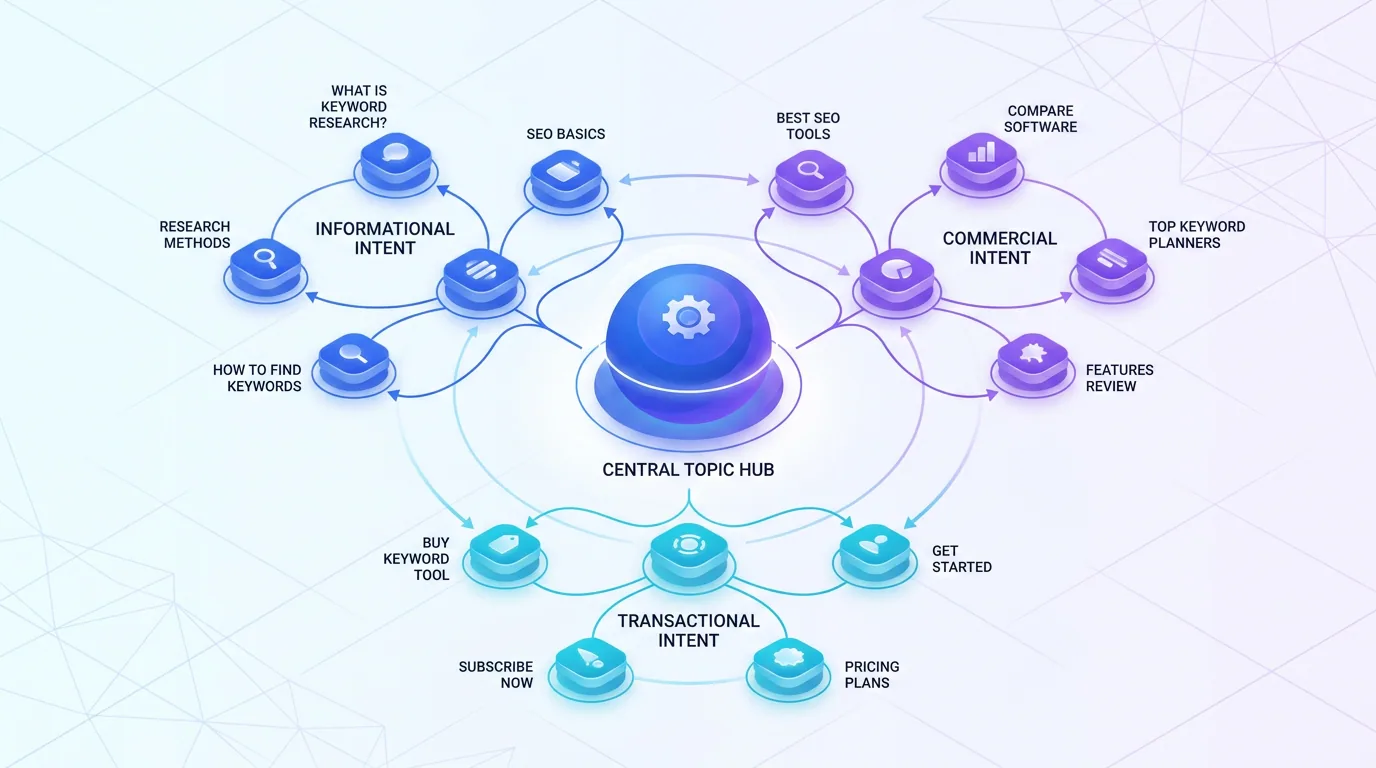
Keyword research in 2026 has shifted from chasing single keywords to mapping intent clusters — groups of related questions and phrases that share one underlying goal. The job is no longer to find one high-volume term and stuff it everywhere; it is to understand what people actually want and build content that satisfies the whole cluster in classic and AI search alike.
Get this right and one well-structured page can rank for dozens of long-tail variants and earn citations in AI answers. This guide walks through the modern keyword research framework our SEO team uses, from intent mapping to clustering to prioritisation.
Why is keyword research different in 2026?
Two forces reshaped keyword research: AI answer engines and the maturity of semantic search. Google and AI engines now understand topics and entities, not just exact-match strings, so a page that comprehensively covers a topic outranks one that merely repeats a keyword.
At the same time, AI Overviews are absorbing simple definitional queries, which pushes the value toward specific, intent-rich, long-tail questions. The keywords worth targeting in 2026 are the ones with a clear goal behind them and a real chance of a click or citation.
This is why raw search volume is a weaker signal than it used to be. A high-volume head term that mostly triggers an AI answer may send far fewer clicks than a lower-volume long-tail query with strong commercial intent. Modern keyword research weighs the likely click outcome and business value of a term, not just how many times it is searched.
What is search intent and why does it matter?
Search intent is the goal behind a query, and matching it is the single biggest factor in whether you rank. Most queries fall into four intents, and the right content format follows directly from which one you are targeting.
Mismatched intent is the most common reason good content fails to rank. If a query is clearly commercial — people comparing options before they buy — a long educational explainer will struggle no matter how well written it is, because it does not give searchers what they came for. Diagnose the intent first, then choose the format, and you compete on a level field instead of fighting the search engine's own understanding of the query.
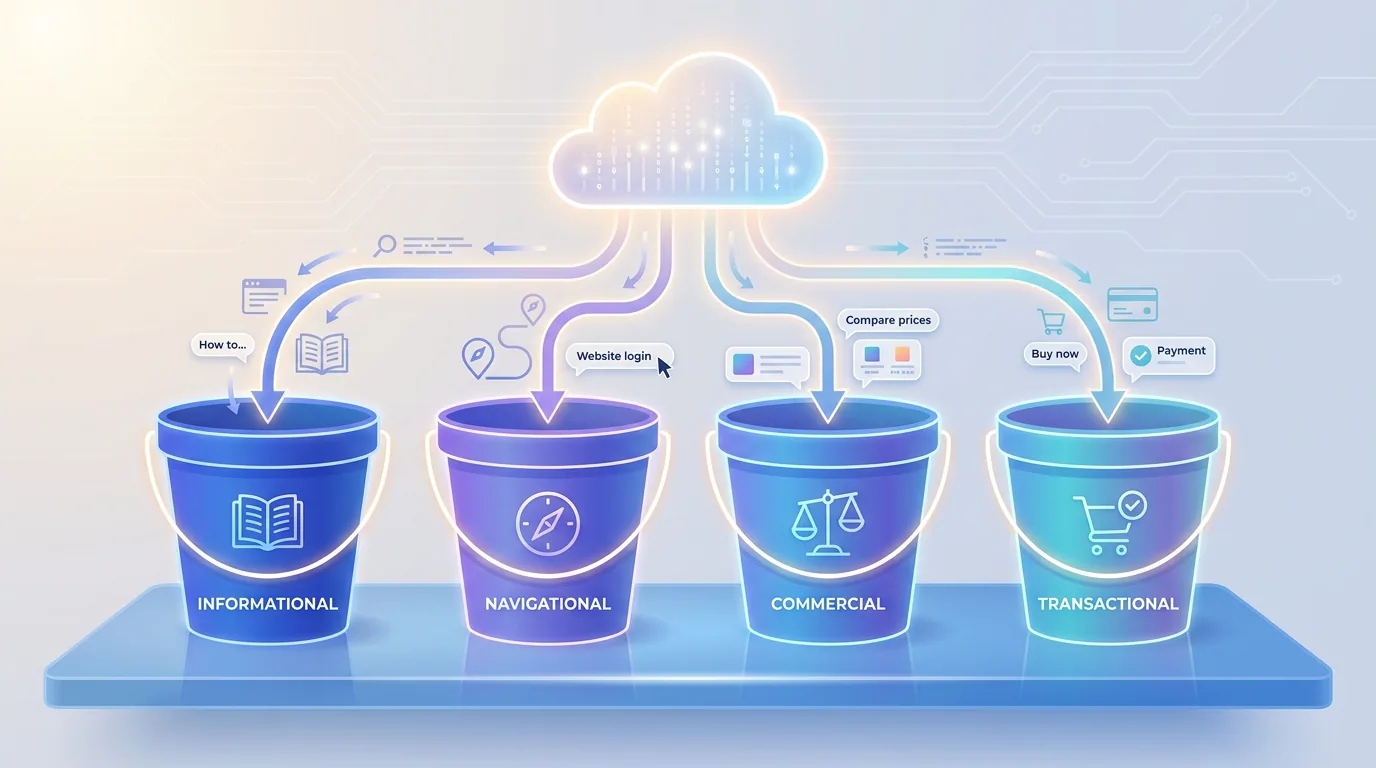
- Informational: the user wants to learn — answer with guides, explainers, and FAQs.
- Navigational: the user wants a specific brand or page — make yours easy to find.
- Commercial: the user is comparing options — answer with comparisons and reviews.
- Transactional: the user is ready to act — answer with clear product or service pages.
How do you build keyword clusters?
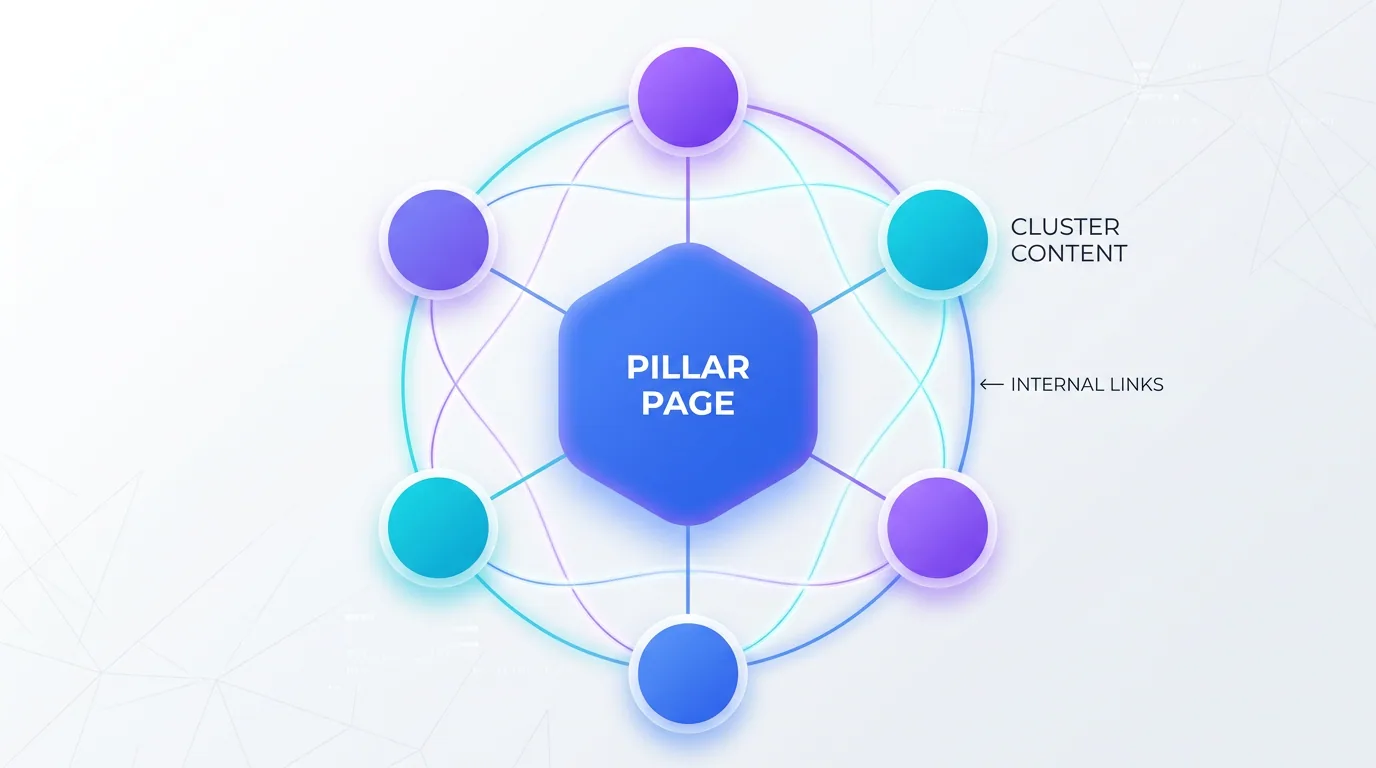
A keyword cluster is a group of queries that share the same intent and can be answered by one comprehensive page. Building clusters lets you target a whole topic at once instead of spinning up thin, cannibalising pages for every minor variant.
Clustering also solves one of the most common SEO self-inflicted wounds: keyword cannibalisation. When several pages target near-identical queries, they compete with each other, split their authority, and confuse search engines about which one to rank. Mapping each cluster to a single canonical page concentrates your relevance and topical authority where it counts.
- Start with a seed topic and expand it with tools, autocomplete, and 'People also ask'.
- Group the raw keywords by shared intent and meaning, not just by matching words.
- Pick a primary keyword per cluster and treat the rest as variants for one page.
- Design a pillar-and-cluster structure: a broad pillar page linked to specific supporting pages.
- Map each cluster to a single target URL to avoid keyword cannibalisation.
How do you find long-tail keywords that convert?
Long-tail keywords are longer, more specific queries with lower volume but higher intent — and they are where most 2026 opportunity lives. They are easier to rank for, convert better, and match the conversational phrasing AI engines pull from.
They have also become more valuable as search gets conversational. People increasingly type and speak full questions into search boxes and AI assistants, so the natural, specific phrasing of long-tail queries is exactly what gets matched and quoted. A single thorough page built around a long-tail cluster can quietly accumulate traffic across hundreds of these variations without ever chasing a single competitive head term.
- Mine Search Console for queries you already get impressions on but rank poorly for.
- Read customer support tickets, sales calls, and reviews for real phrasing.
- Use autocomplete, 'People also ask', and related searches to surface variants.
- Look for question keywords starting with how, what, why, and does.
- Prioritise terms with clear commercial or task intent behind them.
The best keyword research tool is your own customers. Their exact words are the queries the whole market is typing.
— Daniel Okafor, Head of SEO, Fryntavo
How do you prioritise which keywords to target?
Prioritise keywords by balancing opportunity against difficulty and business value. High volume is meaningless if the term is impossibly competitive or attracts visitors who never convert, so weigh all three together.

- Relevance: does the term match what you actually offer?
- Intent fit: can you genuinely satisfy the goal behind the query?
- Difficulty: can you realistically compete given your site's authority?
- Business value: will ranking for it drive leads, sales, or qualified traffic?
How do you turn research into content that ranks?
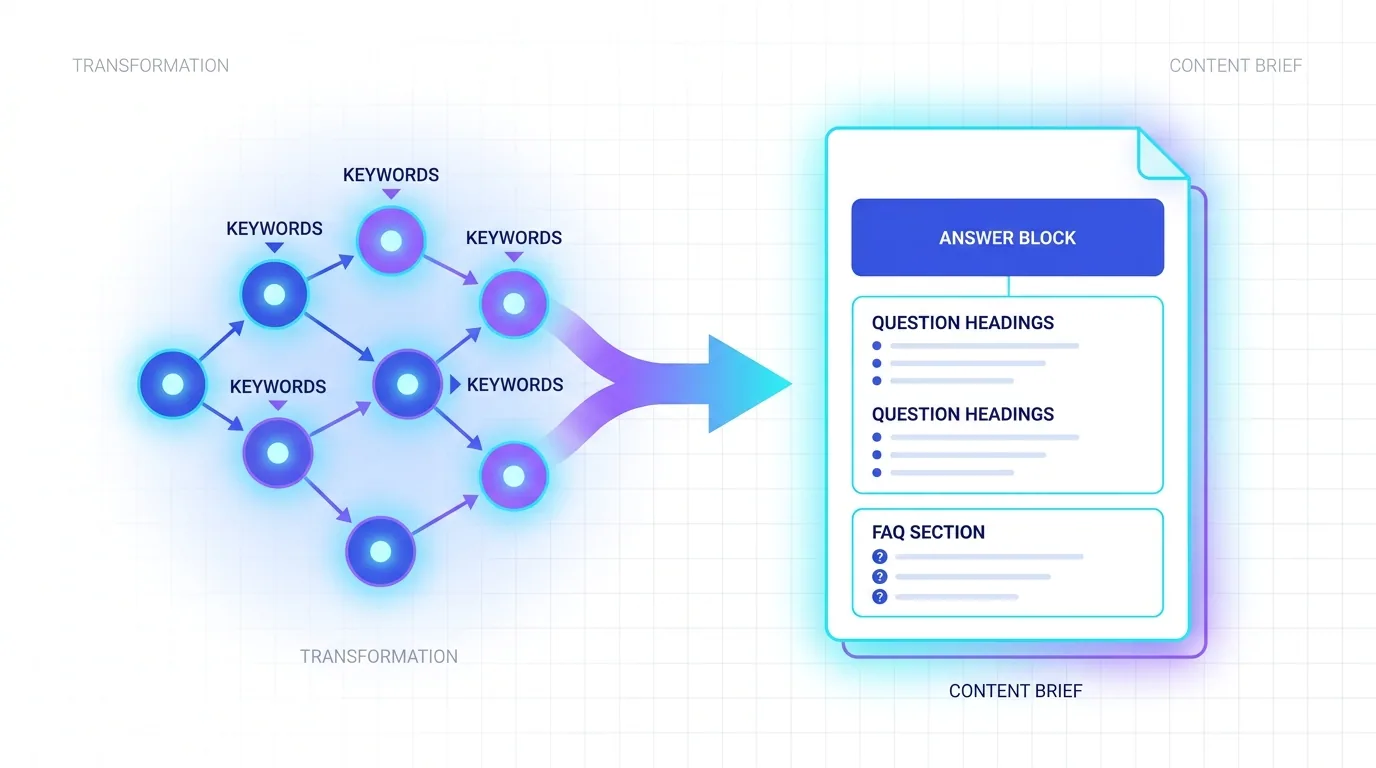
The final step is translating each cluster into an answer-first page that covers the topic comprehensively. Lead with a direct answer, use the cluster's questions as headings, and weave the variants in naturally so one page can earn rankings and AI citations across the whole intent group.
Resist the urge to optimise for an exact-match phrase. Modern engines understand synonyms and related concepts, so the goal is comprehensive topical coverage, not repetition. Write naturally for the human reader, cover the subtopics the cluster implies, and the keyword matching takes care of itself — while the depth signals the authority that wins both classic rankings and AI citations.
Strong research is wasted on a slow, poorly structured site, so pair it with solid technical foundations and fast pages. We connect content strategy with modern web development so your researched topics load fast, render cleanly, and stay eligible for both classic rankings and AI answers.
Putting your keyword research to work
Keyword research in 2026 is intent-first and cluster-based: understand the goal behind each query, group related terms into clusters, prioritise by value and difficulty, and build one comprehensive answer-first page per cluster. Do that and you stop fighting over single keywords and start owning entire topics in search and AI answers.
Want an intent-mapped keyword strategy and a content plan built to rank in classic and AI search? Our team will research your market and hand you a prioritised roadmap.
Get a Free Keyword StrategyFrequently asked questions
How do you do keyword research in 2026?
Keyword research in 2026 is intent-first and cluster-based. Instead of chasing single keywords, you map the goal behind queries, group related terms into intent clusters, prioritise by value and difficulty, and build one comprehensive answer-first page per cluster that can rank for many variants.
What is search intent?
Search intent is the goal behind a query. Most queries fall into four types — informational, navigational, commercial, and transactional — and matching the right content format to the intent is the single biggest factor in whether you rank.
What are keyword clusters?
A keyword cluster is a group of queries that share the same intent and can be answered by one comprehensive page. Building clusters lets you target a whole topic at once with a pillar-and-cluster structure, avoiding thin, cannibalising pages for every minor variant.
What are long-tail keywords and why do they matter?
Long-tail keywords are longer, more specific queries with lower volume but higher intent. They are easier to rank for, convert better, and match the conversational phrasing AI answer engines pull from, which makes them where most 2026 opportunity lives.
How do I find search intent for a keyword?
Search the keyword and study what currently ranks. The existing results reveal the intent Google has confirmed for that query, so match that format — a guide, brand page, comparison, or product page — rather than fighting the established intent.
How do I prioritise which keywords to target?
Balance opportunity against difficulty and business value. Weigh relevance to what you offer, how well you can satisfy the intent, whether you can realistically compete given your authority, and whether ranking will actually drive leads or sales rather than just traffic.
Has AI search changed keyword research?
Yes. AI answer engines absorb simple definitional queries and reward comprehensive, intent-rich content, which pushes value toward specific long-tail questions. Semantic search also means engines understand topics and entities, so covering a topic fully beats repeating an exact-match keyword.
Can Fryntavo help with keyword research and content strategy?
Yes. Fryntavo runs intent-mapped keyword research, builds topic clusters, and delivers prioritised content plans designed to rank in both classic and AI search. Book a free strategy call to get your roadmap.
Ready to put this into action?
Fryntavo helps brands grow with web development, SEO, marketplace management, and AI automation. Book a free, no-obligation strategy call.
Book a Free Strategy Call