
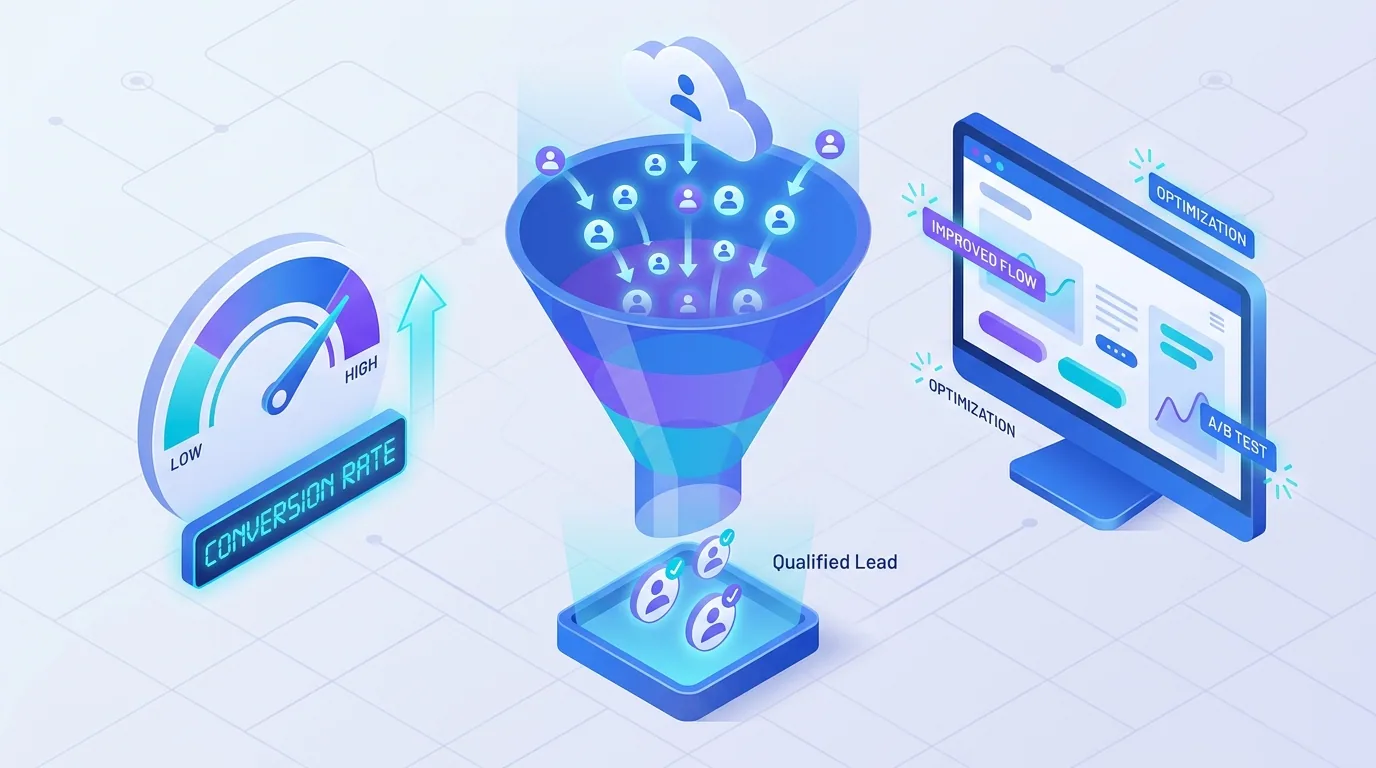
To improve your website conversion rate in 2026, you do not need more traffic — you need to remove the friction stopping the traffic you already have from acting. The fastest gains come from making your offer clearer, your pages faster, your forms shorter, and your proof stronger, then testing systematically to see what moves the needle. Conversion rate optimisation is the highest-leverage marketing work most businesses are not doing.
Here is why it matters: doubling your conversion rate has the same effect as doubling your traffic, but it is usually far cheaper and faster to achieve. This guide walks through the CRO methods we use to turn more visitors into leads and customers without spending a cent more on ads or SEO.
What is a conversion rate and what is a good one?
Your conversion rate is the percentage of visitors who complete a desired action — buying, booking, or submitting a form — out of everyone who visited. A 'good' rate depends heavily on your industry, offer, and traffic quality, so the only benchmark that truly matters is your own baseline and whether you are improving it.
Many service and B2B sites convert in the low single digits, ecommerce often sits a little lower, and high-intent landing pages can do much better. Chasing someone else's number is a distraction. Measure where you are today, then focus relentlessly on beating it month over month.
How do you improve website conversion rate fast?
The fastest way to improve your website conversion rate is to fix the obvious friction first: clarify what you offer, speed up the page, shorten forms, and make the next step impossible to miss. These are high-impact, low-effort changes that often lift conversions before you run a single experiment.
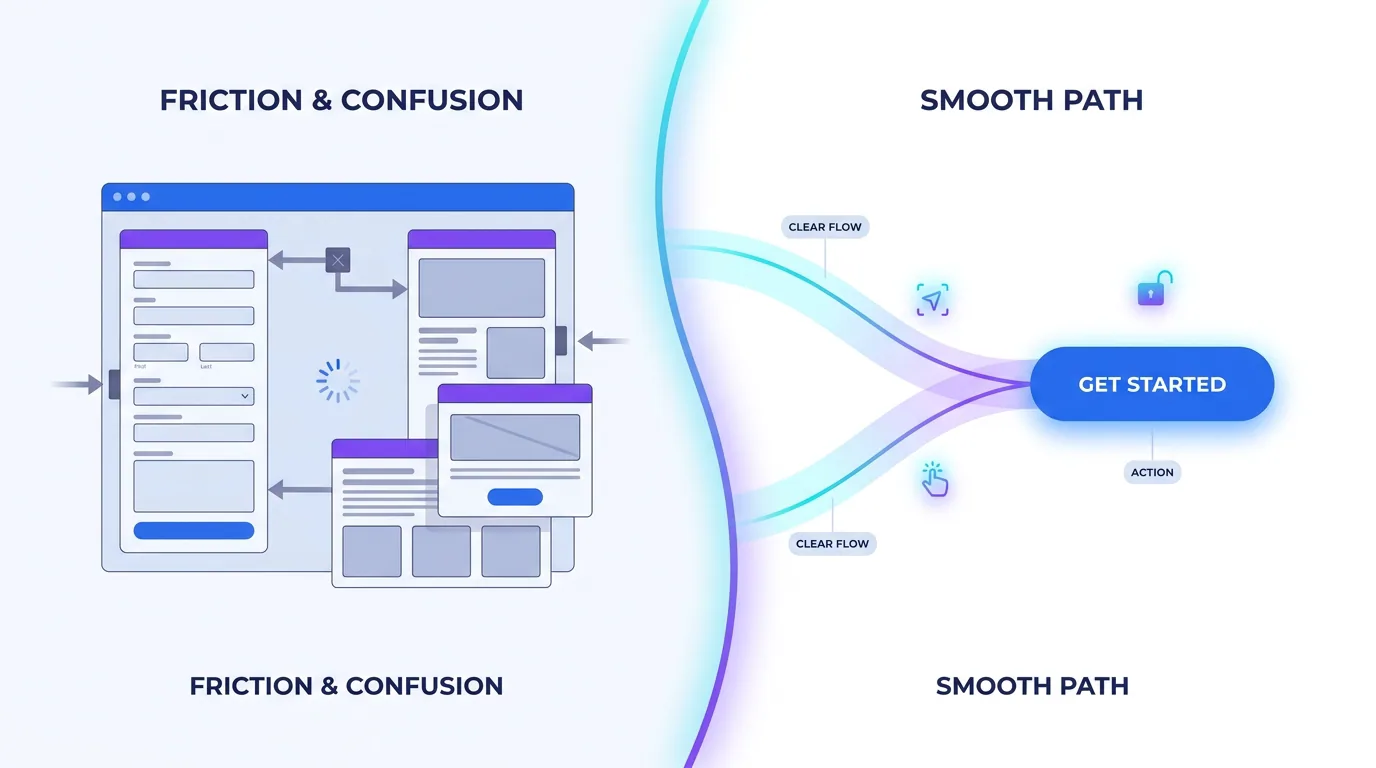
- Clarify the offer: state the core benefit and the next step in plain language above the fold.
- Speed up the page: every second of delay loses conversions, so optimise load and responsiveness.
- Shorten forms: ask only for what you truly need; each removed field lifts completion.
- Strengthen the CTA: one clear, benefit-led primary action, repeated where the visitor is ready.
- Add proof near the action: place testimonials and results beside the form to reduce risk.
Why does page speed affect conversion so much?
Speed is one of the most underrated conversion levers. A slow site loses visitors before they ever see your offer, and the damage is worst on mobile where most traffic now arrives. In 2026, with Core Web Vitals targets of an LCP near 2.0 seconds, an INP under 200ms, and CLS under 0.1, fast pages convert better and rank better at the same time.
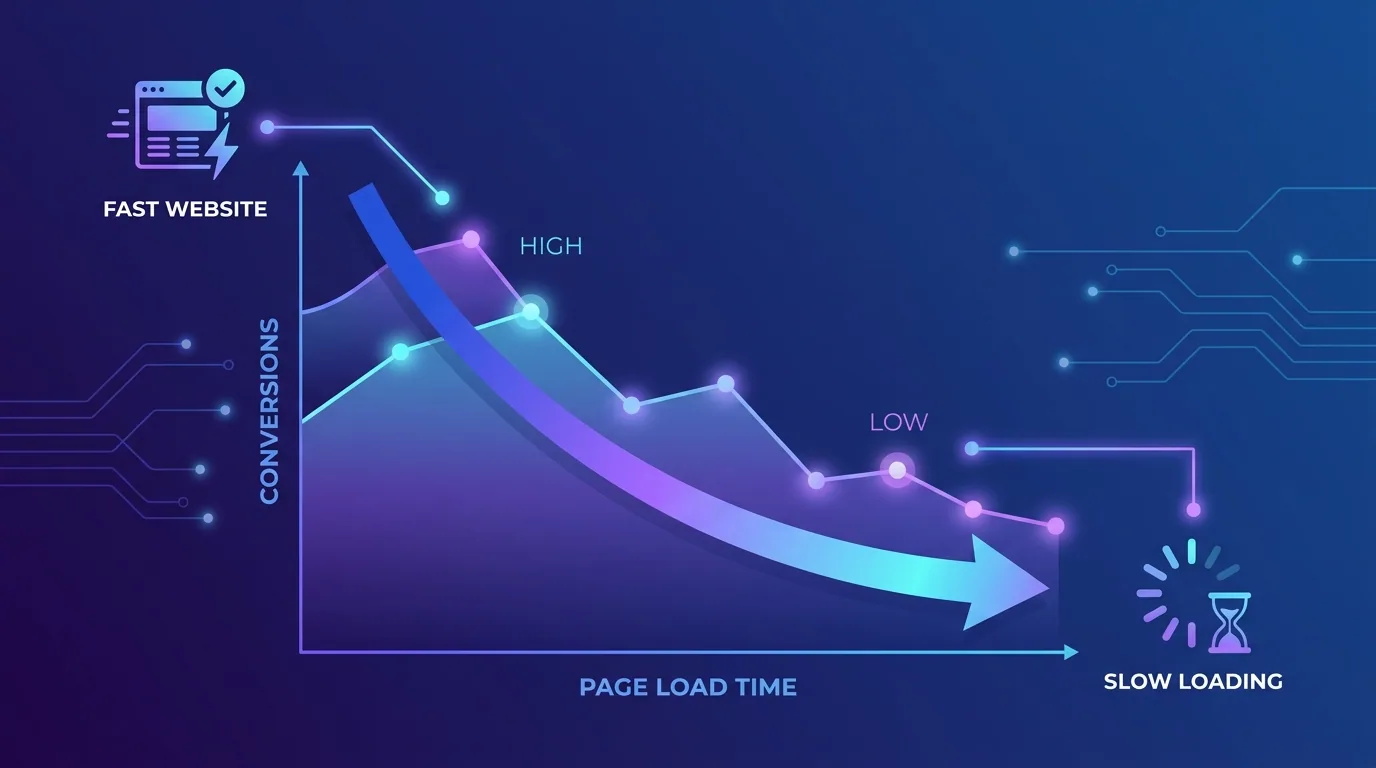
Layout shift is a quiet conversion killer too — when buttons jump as the page loads, people mis-tap and grow frustrated. We build on fast web foundations precisely because performance is not just an SEO concern; it is a direct, measurable input to your conversion rate.
How does trust and social proof increase conversions?
People convert when they feel the risk of saying yes is low, and proof is what lowers that risk. Testimonials, case-study results, review counts, recognisable client logos, guarantees, and security badges all reassure a hesitant visitor. The trick is placement: proof works hardest right next to the moment of decision.
Visitors are not looking for reasons to say yes — they are looking for reasons to say no. Conversion optimisation is largely the work of removing those reasons one by one.
— Aiden Brooks, Lead Web Engineer, Fryntavo
Make proof specific and credible. A concrete result like 'cut our response time by 60%' paired with a real name and role beats a generic 'great team' every time. And keep the basics in order — clear contact details, transparent pricing where possible, and a professional, secure site all signal trustworthiness before a visitor reads a single testimonial.
Risk reversal is the trust lever most sites forget. When a visitor hesitates, it is almost always because the perceived risk of saying yes outweighs the perceived benefit. A money-back guarantee, a free trial, a 'no card required' note, or a simple 'cancel anytime' line shifts that balance by moving the risk from the customer onto you. The stronger and more visible your guarantee, the easier it becomes for a cautious visitor to take the step.
How do you find what is hurting your conversions?
You cannot fix what you cannot see. Use analytics to find where visitors drop off, heatmaps and session recordings to watch how they actually behave, and your own checkout or form flows to feel the friction firsthand. The data almost always reveals a few specific leaks that are quietly draining conversions.
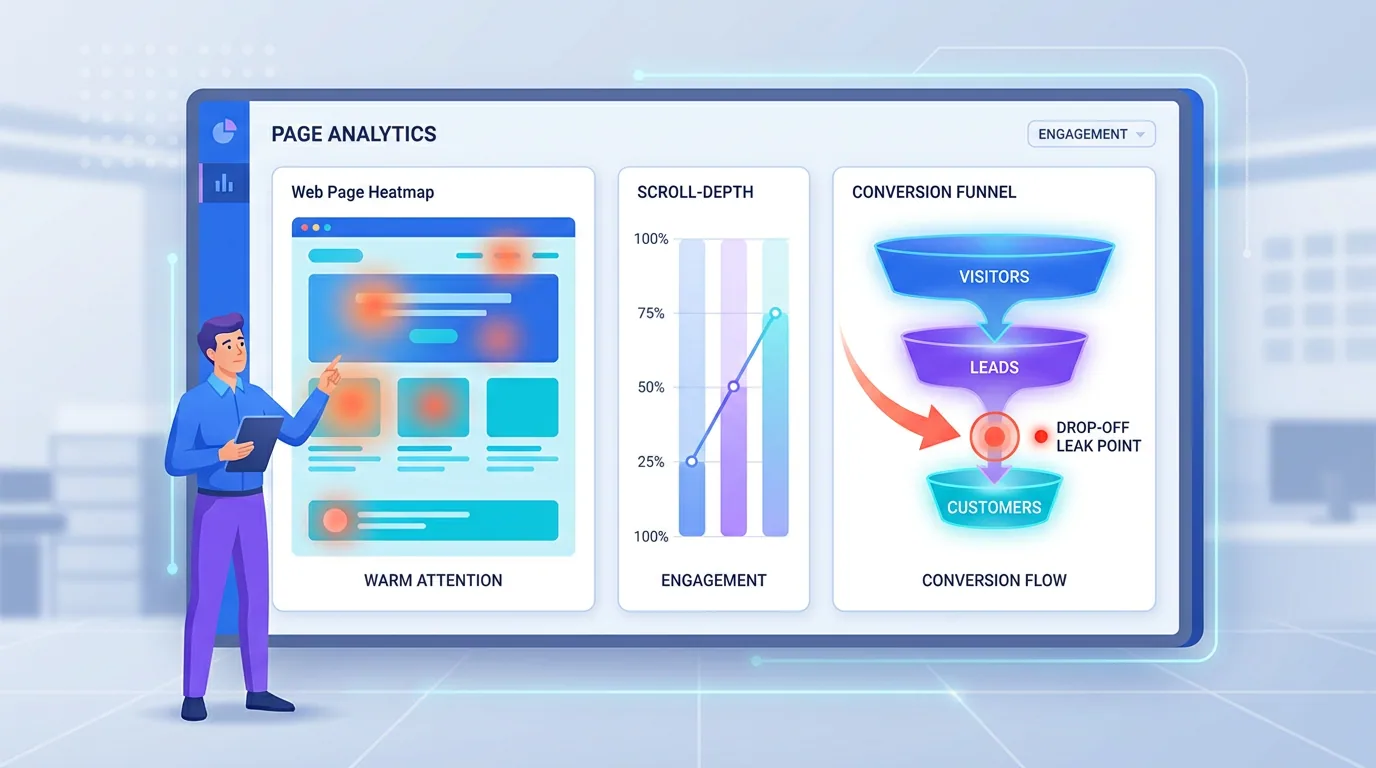
- Funnel analytics: identify the step where the most visitors abandon and focus there.
- Heatmaps: see what people click, ignore, and how far they scroll.
- Session recordings: watch real journeys to spot confusion and dead ends.
- Form analytics: find the exact field where people give up.
- Customer feedback: ask buyers what nearly stopped them — they will tell you.
How should you run A/B tests for CRO?
A/B testing is how you turn guesses into evidence. Form a clear hypothesis based on what your data revealed, change one meaningful element at a time, and run the test long enough to reach a reliable result before declaring a winner. Disciplined testing compounds small wins into a dramatically higher conversion rate over time.
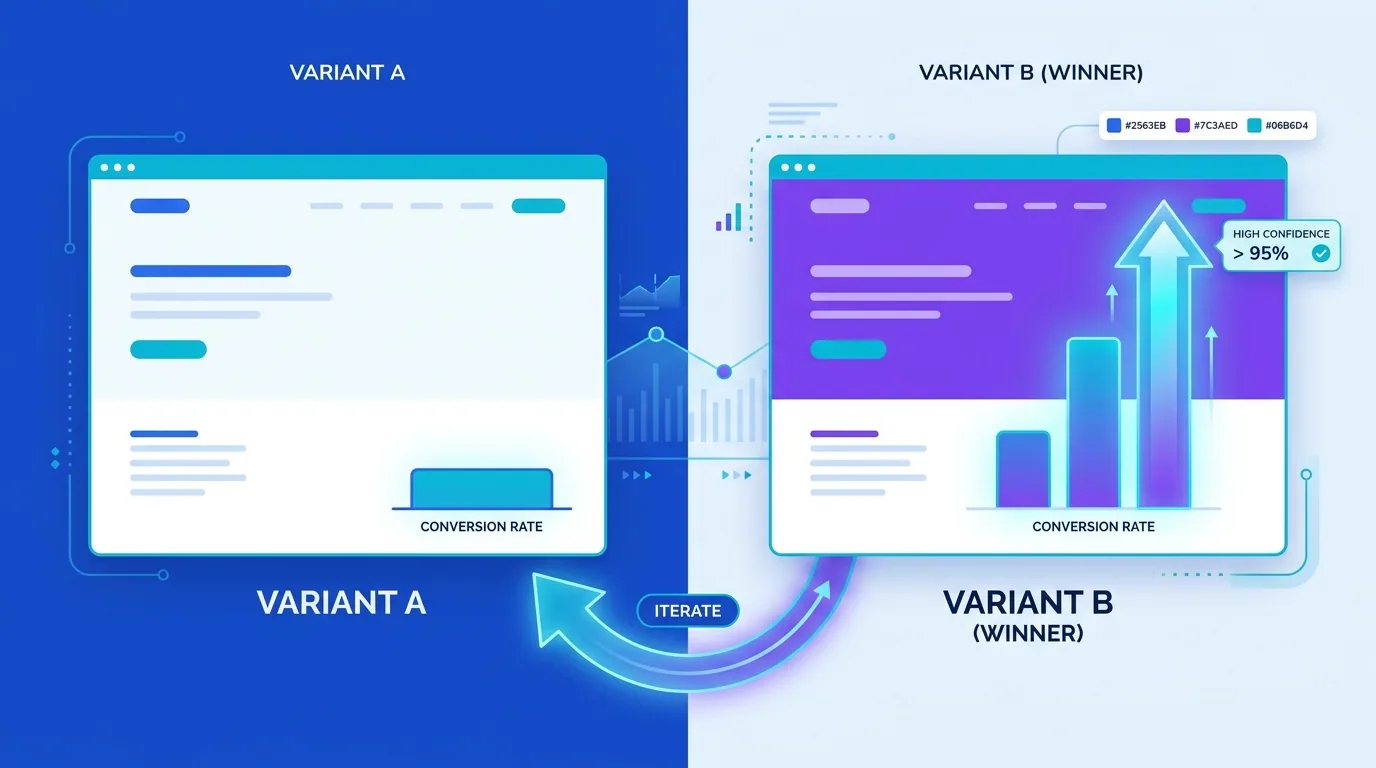
Prioritise tests by likely impact. The headline, the offer, the page structure, and the form usually move conversions far more than colours or micro-copy, so start there. And do not stop after one win — CRO is a continuous cycle of measure, hypothesise, test, and refine.
Beware false winners. A test that looks like a clear improvement after two days and a handful of conversions will often evaporate once more data arrives, so wait for genuine statistical significance and a full business cycle before declaring a result. Equally, when a test loses, treat it as information rather than failure — knowing what does not work narrows the path to what does, and the discipline of learning from every experiment is what separates teams that compound gains from teams that keep guessing.
Conversion optimisation also multiplies the value of everything else you do. The same traffic from your SEO efforts or ad spend produces more leads when the site converts better, which is why CRO is one of the highest-return investments available to most businesses in 2026.
Improving your conversion rate is not about one magic tweak — it is a discipline: clarify, speed up, reduce friction, build trust, find the leaks, and test relentlessly. Apply it consistently and you will turn the same traffic into noticeably more leads, customers, and revenue.
Getting traffic but not enough leads? Our team audits your funnel, removes the friction, and runs the tests that lift your conversion rate.
Get a Conversion AuditFrequently asked questions
How do I improve my website conversion rate?
Start by removing obvious friction: clarify your offer above the fold, speed up the page, shorten forms, strengthen a single primary CTA, and add specific social proof near the action. Then use analytics and heatmaps to find drop-off points and run A/B tests on the highest-impact elements to keep improving.
What is a good conversion rate in 2026?
It varies widely by industry, offer, and traffic quality, so there is no universal number worth chasing. Many service and B2B sites convert in the low single digits and high-intent landing pages do better. The benchmark that matters is your own baseline and whether you are steadily improving it.
What is CRO?
CRO, or conversion rate optimisation, is the systematic practice of increasing the percentage of visitors who complete a desired action. It combines analytics, user research, page improvements, and A/B testing to remove friction and make the next step clearer, so the same traffic produces more conversions.
Does page speed really affect conversions?
Yes, directly and significantly. Slow pages lose visitors before they see the offer, and the impact is worst on mobile. Hitting the 2026 Core Web Vitals targets of an LCP near 2.0 seconds, an INP under 200ms, and CLS under 0.1 improves both conversions and rankings at the same time.
How long should I run an A/B test?
Run a test until it reaches statistical significance with enough conversions and a full set of business cycles, typically at least one to two weeks for many sites, rather than stopping at the first promising result. Ending tests early on small samples produces false winners that do not hold up.
Should I focus on more traffic or better conversion?
For most businesses, improving conversion first delivers a faster, cheaper return because doubling your conversion rate has the same effect as doubling traffic without the added acquisition cost. Once the site converts well, scaling traffic through SEO or ads compounds the gains.
What tools help with conversion rate optimization?
Web analytics to find drop-off points, heatmap and session-recording tools to see behaviour, form analytics to spot abandonment, and an A/B testing platform to validate changes. Combined, they tell you where conversions leak and which fixes actually work, replacing guesswork with evidence.
Can Fryntavo help improve my conversion rate?
Yes. Fryntavo audits your funnel, fixes performance and friction issues, strengthens offers and proof, and runs structured A/B tests to lift your conversion rate. Book a conversion audit and we will turn more of your existing traffic into leads and sales.
Ready to put this into action?
Fryntavo helps brands grow with web development, SEO, marketplace management, and AI automation. Book a free, no-obligation strategy call.
Book a Free Strategy Call