
A headless CMS is a content management system that stores and manages your content but does not control how it looks — it delivers that content to any front end through an API. In plain terms: your team writes and edits content in a familiar dashboard, while developers build the website (and any app, kiosk, or device) separately, pulling the content in. It is the right choice in 2026 if you need elite performance, multi-channel publishing, or strong security; it is overkill for a simple brochure site.
The word 'headless' refers to removing the 'head' — the front-end presentation layer — from the 'body' that manages content. This guide explains what a headless CMS is, how it compares to a traditional CMS, where the Jamstack approach fits, and how to decide whether it makes sense for your business without the hype.
What is a headless CMS in simple terms?
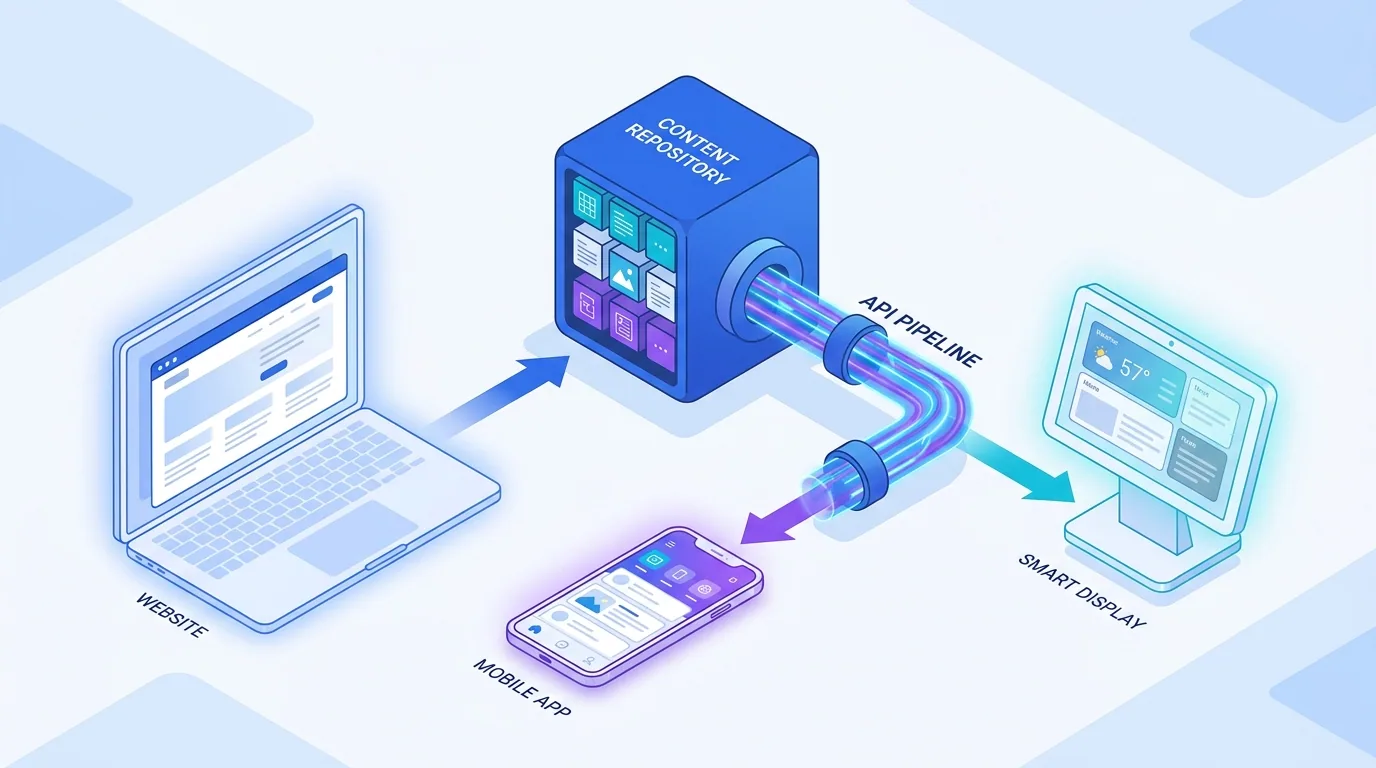
A traditional CMS like classic WordPress couples your content and your design together — the same system that stores a blog post also renders it as a page. A headless CMS decouples the two: it manages the content and exposes it via an API, leaving the presentation entirely to a separate front end that developers build however they want.
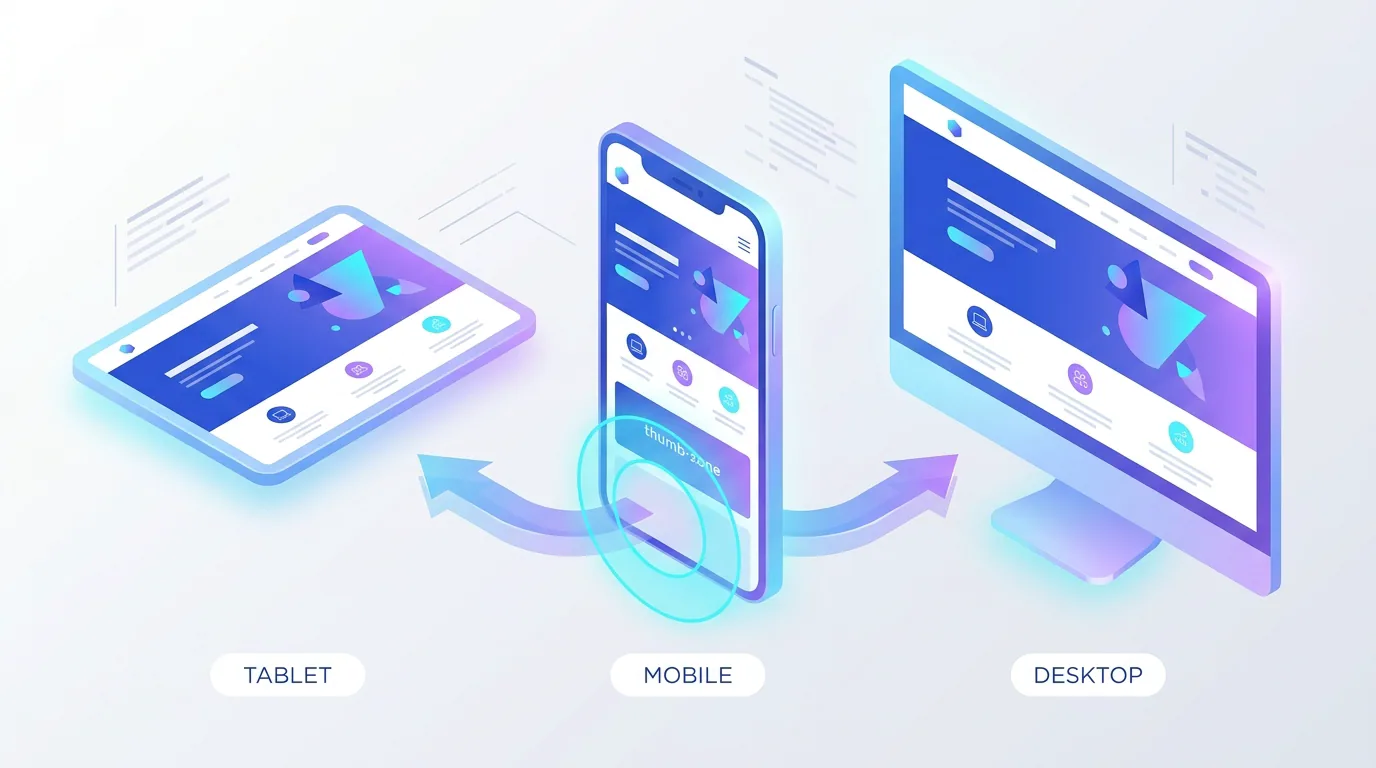
The practical benefit is flexibility. Because the content is delivered as structured data rather than pre-built pages, the same content can power a website, a mobile app, a digital display, and even a voice assistant — all from one source of truth. You write once and publish everywhere.
A simple analogy helps. Think of a traditional CMS as a printed magazine, where the words and the layout are bound together permanently — to show the same article on a billboard you would have to recreate it from scratch. A headless CMS is more like a database of articles: the content sits in clean, reusable fields, and you can pour it into whatever shape the channel needs, whether that is a web page, an email, or a screen in a shop window. That separation is the whole point, and it is why developers describe headless setups as 'decoupled'.
How does headless CMS differ from a traditional CMS?
The core difference is coupling. A traditional CMS is monolithic — content, design, and delivery live together in one system, which is simple but limiting. A headless CMS is decoupled, giving you freedom in how content is presented at the cost of needing developers to build and maintain the front end.
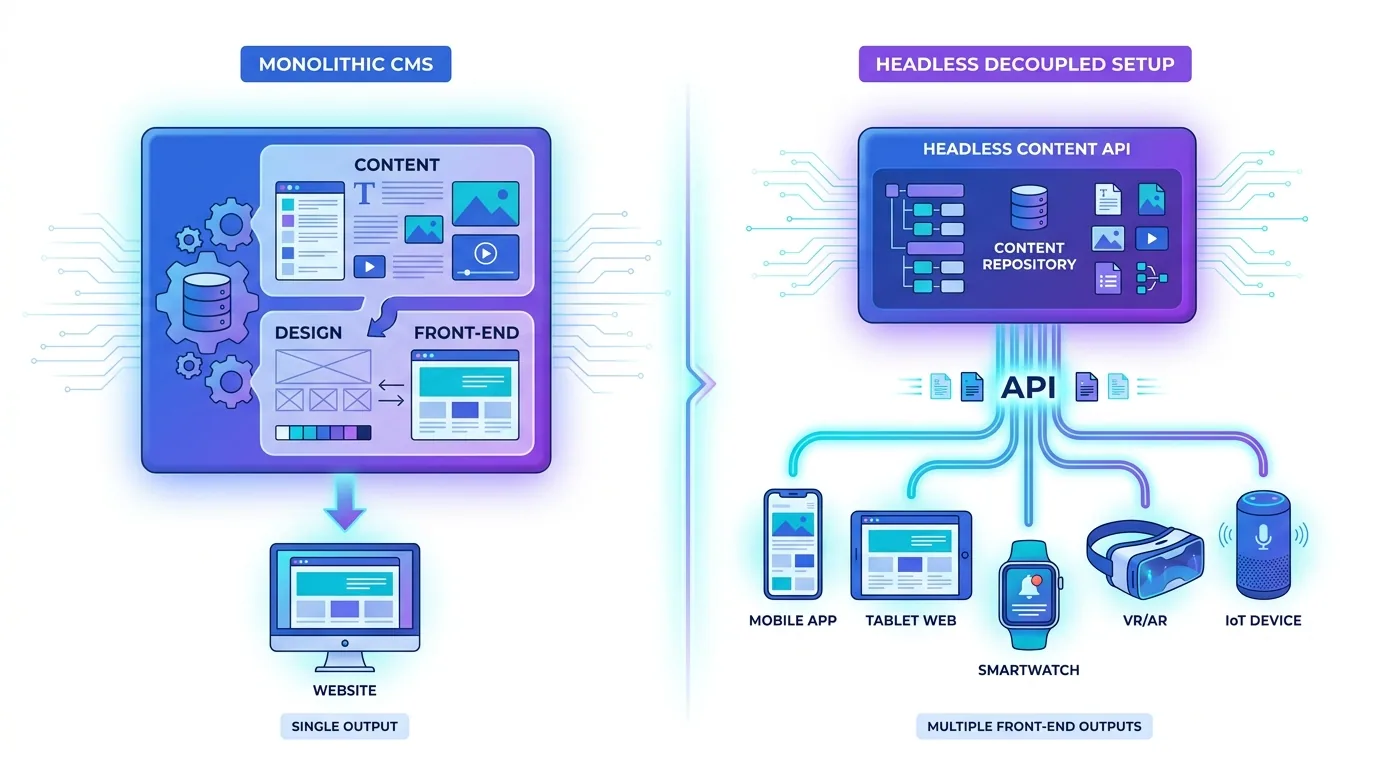
- Traditional CMS: content and presentation bundled, easy to launch, but slower and harder to extend to new channels.
- Headless CMS: content delivered via API, faster and more flexible, but requires development to build the front end.
- Performance: headless front ends (often built with Next.js) hit Core Web Vitals targets more readily.
- Multi-channel: headless serves website, app, and devices from one content source; traditional is web-centric.
- Security: a decoupled front end exposes a smaller attack surface than a monolithic, plugin-heavy CMS.
Where does the Jamstack fit in?
Headless CMS is a natural fit for the Jamstack architecture — a modern approach that pre-builds pages and serves them fast, pulling dynamic content from APIs. A typical 2026 stack pairs a headless CMS for content with a framework like Next.js for the front end, producing sites that are extremely fast, secure, and scalable.
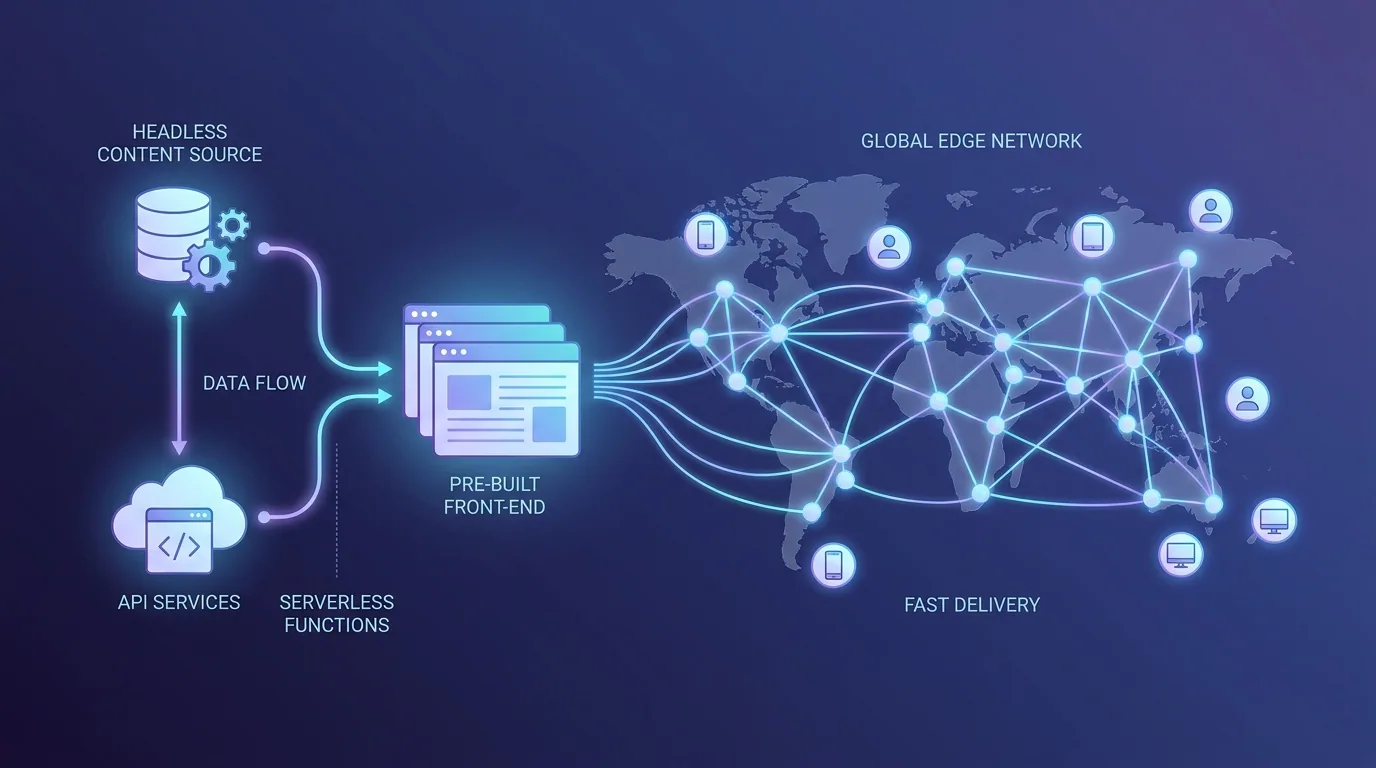
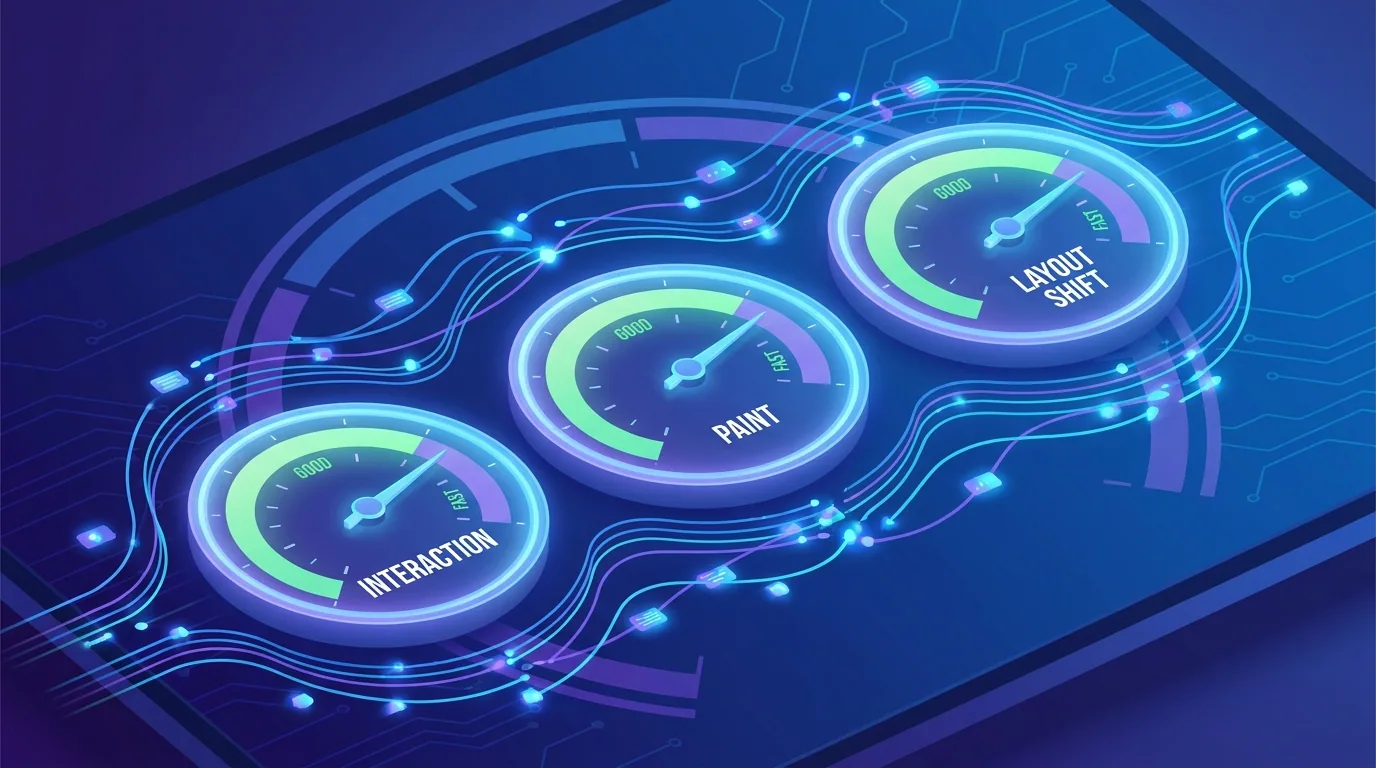
The performance gains are real and matter for SEO. Pre-rendered pages served from a global edge network load quickly, which helps you hit the 2026 Core Web Vitals — an LCP near 2.0 seconds, an INP under 200ms, and CLS under 0.1 — and keeps your content fast to crawl for AI Overviews and answer engines. We often build client sites on exactly this pattern through our web development work.
What are the benefits of going headless?
Headless delivers four benefits that compound for the right business: speed, security, flexibility, and future-proofing. Because the front end is decoupled and can be pre-built, sites are fast. Because there is no monolithic, plugin-heavy back end exposed to the public, the attack surface shrinks.
Headless is not about being modern for its own sake. It is about owning your content as structured data so you can deliver it anywhere — today's website and tomorrow's channels you have not built yet.
— Aiden Brooks, Lead Web Engineer, Fryntavo
The flexibility is the part businesses underrate. When your content lives as structured data behind an API, adding a new channel — a mobile app, a partner site, an AI assistant integration — does not require re-creating the content. You connect a new front end to the same source, which is why headless is genuinely future-proof in a multi-device, AI-driven world.
Scalability is the fourth benefit, and it shows up most under pressure. Because pre-built pages can be served from a global edge network rather than generated on demand by a single server, a headless site handles traffic spikes — a viral post, a product launch, a seasonal rush — far more gracefully than a monolithic CMS that has to render every page hit. For growing businesses, that means the architecture you launch on is the same one that carries you through your busiest day, without an emergency re-platform.
What are the downsides and costs?
Headless is not free of trade-offs, and ignoring them leads to regret. It adds engineering complexity and cost: you need developers to build and maintain the front end, the initial setup takes longer than installing a theme, and content editors lose the instant visual preview that a coupled CMS provides unless you invest in configuring it.
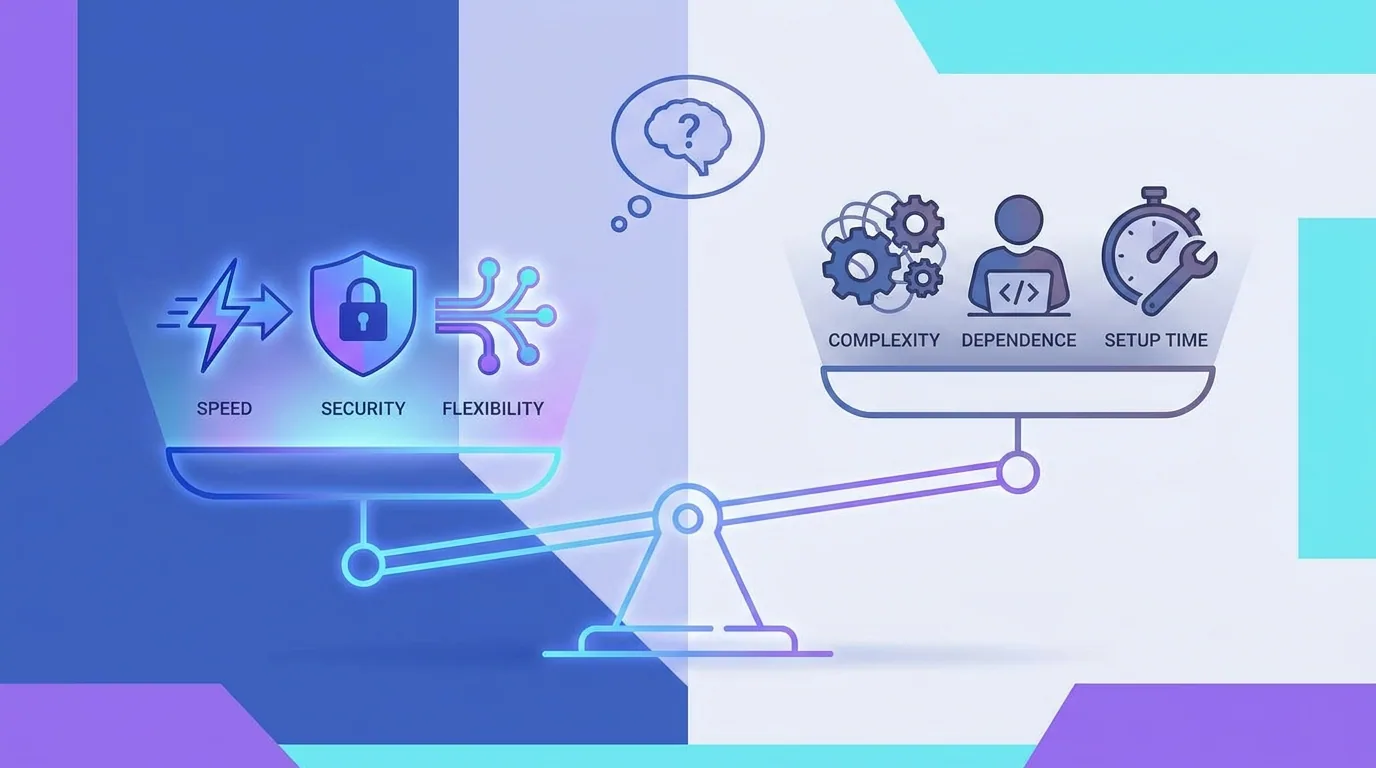
- Higher initial cost: custom front-end development takes more time and skill than a template install.
- Developer dependence: front-end and feature changes typically need a developer.
- Editor experience: visual previews and 'what you see is what you get' editing must be configured deliberately.
- More moving parts: the CMS, API, front end, and hosting are separate pieces to integrate and maintain.
Is a headless CMS right for your business in 2026?
A headless CMS is right for your business if you need top-tier performance, publish across multiple channels, expect to scale significantly, or have strict security requirements — and you have development support. It is the wrong choice if you run a small, simple, single-website business where a well-built traditional CMS would serve you faster and cheaper.
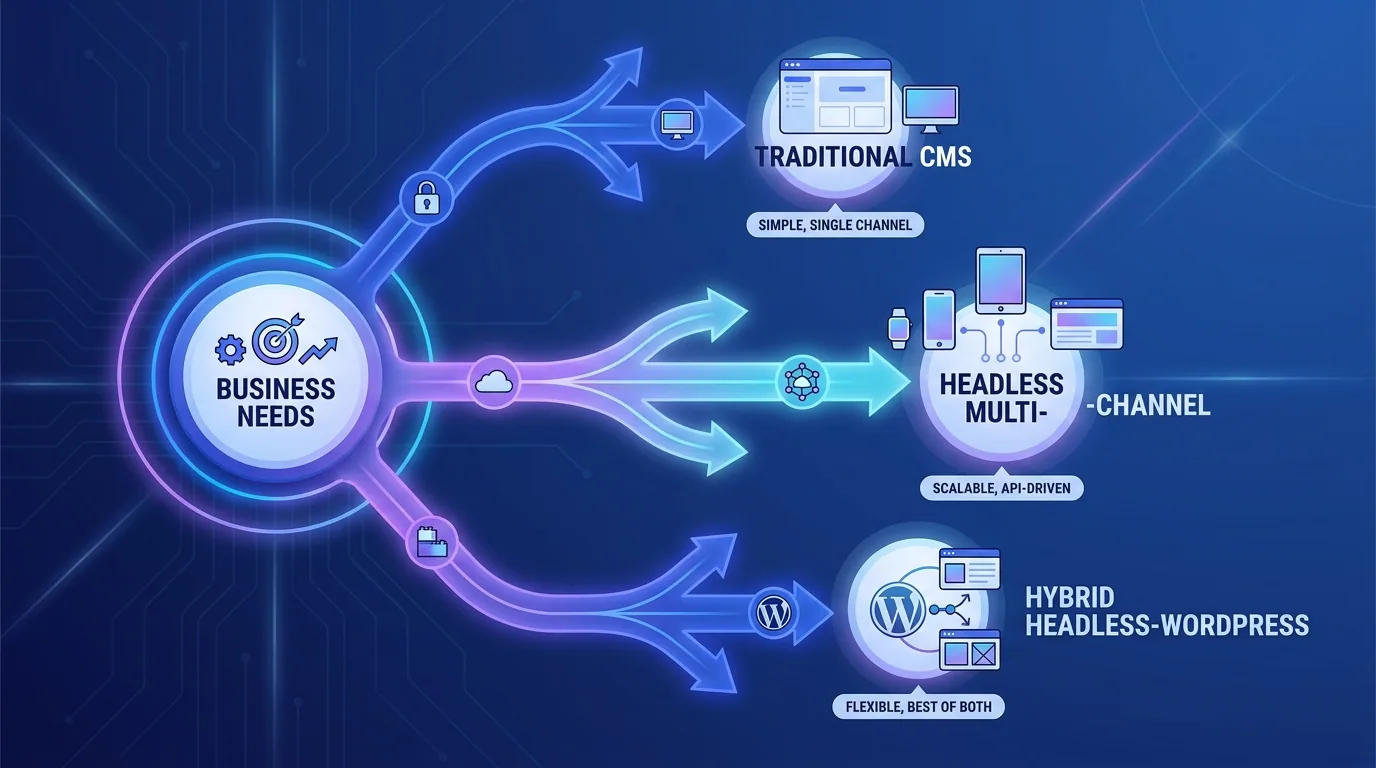
There is a popular middle path: keep WordPress as the editor your team already knows, and use Next.js as a fast headless front end on top. This hybrid gives content editors familiar tools while visitors get elite performance — a pragmatic way to gain most of the headless upside without retraining your whole team.
The honest answer is that headless is a powerful architecture for the businesses that genuinely need its strengths, and unnecessary complexity for those that do not. Decide based on your real requirements — channels, scale, performance, and team — not on what sounds most modern. If you want help making that call, our web development team will recommend the setup that fits your goals rather than the trendiest one.
Not sure whether headless, traditional, or hybrid is right for you? Our engineers will assess your needs and recommend the architecture that actually fits your business.
Get an Architecture ConsultationFrequently asked questions
What is a headless CMS?
A headless CMS is a content management system that manages your content but does not control how it is displayed. Instead of rendering pages itself, it delivers content as structured data through an API to any front end — a website, mobile app, or device. The 'head' (presentation) is decoupled from the 'body' (content management).
What is the difference between headless and traditional CMS?
A traditional CMS couples content and design in one system, which is simple to launch but web-centric and harder to extend. A headless CMS decouples them, delivering content via an API to any front end. Headless is more flexible, faster, and more secure, but it requires developers to build and maintain the front end.
What is the Jamstack?
The Jamstack is a modern web architecture that pre-builds pages and serves them quickly, pulling dynamic content from APIs. It pairs naturally with a headless CMS: content lives in the CMS while a framework like Next.js renders fast, secure, scalable pages served from a global edge network.
Is a headless CMS faster than WordPress?
A headless front end, typically built with a framework like Next.js, usually loads faster because pages can be pre-built and served from the edge with minimal overhead. Traditional WordPress can be fast with a lightweight theme and few plugins, but it often slows down as plugins accumulate, whereas a decoupled front end keeps performance under engineering control.
What are the downsides of a headless CMS?
Headless adds engineering complexity and cost. You need developers to build and maintain the front end, initial setup takes longer than installing a theme, content editors may lose instant visual previews unless configured, and there are more moving parts to integrate. For a simple single-website business, it can be more than you need.
Can I use WordPress as a headless CMS?
Yes. A common hybrid pattern keeps WordPress as the content editor your team already knows and uses a framework like Next.js as a fast headless front end that pulls content via the WordPress API. This gives editors familiar tools while visitors get modern performance, without retraining your whole team.
Is a headless CMS right for a small business?
Often not. If you run a small, simple, single-website business, a well-built traditional CMS is usually faster to launch and cheaper to maintain. Headless makes the most sense when you need elite performance, multi-channel publishing, significant scale, or strict security, and have development support available.
Can Fryntavo build a headless website for me?
Yes. Fryntavo builds headless and hybrid websites, commonly pairing a headless CMS with a fast Next.js front end, and also builds on traditional platforms when that fits better. Book an architecture consultation and we will recommend and build the setup that suits your goals, team, and budget.
Ready to put this into action?
Fryntavo helps brands grow with web development, SEO, marketplace management, and AI automation. Book a free, no-obligation strategy call.
Book a Free Strategy Call