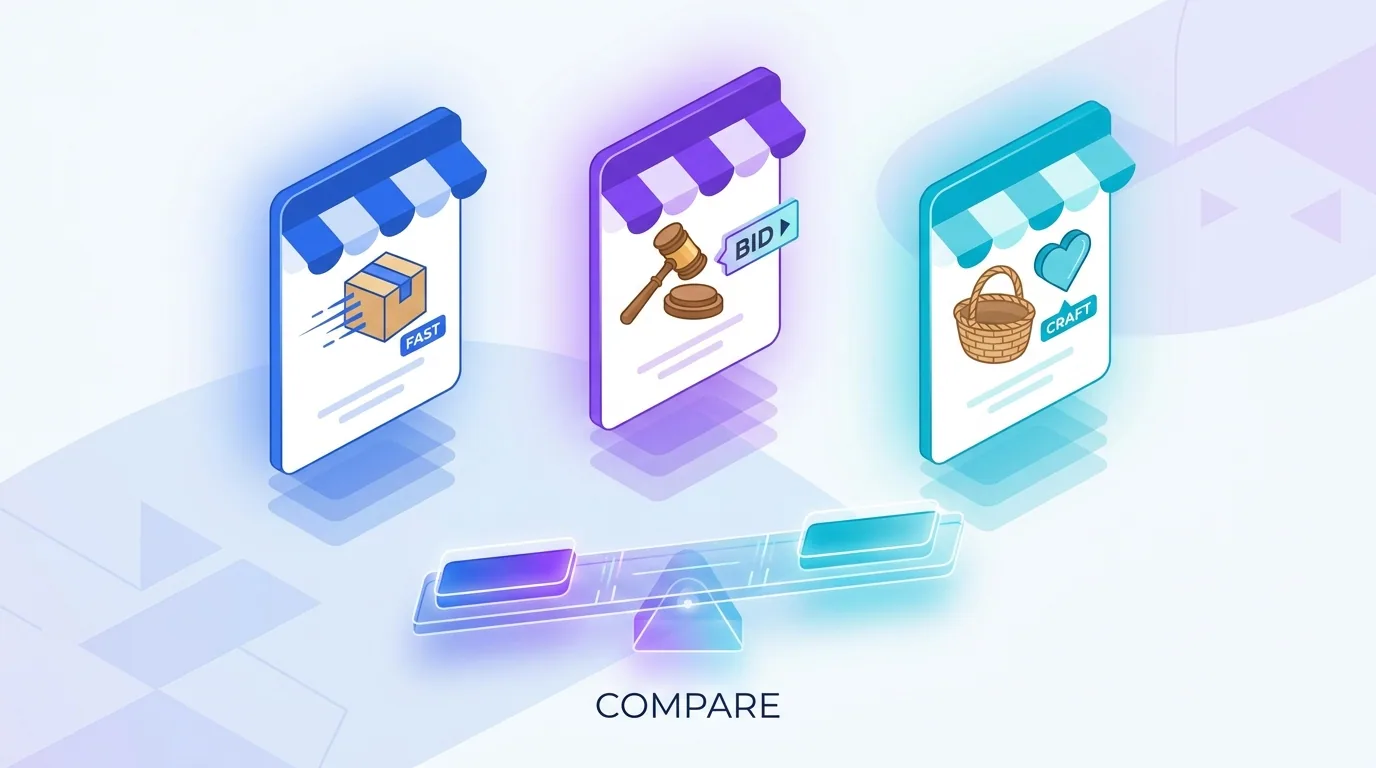


The Etsy algorithm in 2026 ranks listings on two stages: first it finds every listing relevant to a search, then it orders them using a quality score built mostly from your conversion rate, listing quality, recency, and customer-experience signals. In short, Etsy shows shoppers the listings most likely to turn a click into a sale — so the fastest way to rank higher is to become more relevant and more sellable, not just more keyword-stuffed.
If your views are flat or sliding, the problem is rarely "bad luck." It is almost always a mismatch between what shoppers search, what your listing promises, and how often people actually buy. This guide breaks down how Etsy search works in 2026 and the ranking factors that genuinely move the needle — the same framework our Etsy management team uses on live shops.
How does Etsy search work in 2026?
Etsy search runs in two phases: query matching and ranking. In query matching, Etsy scans titles, tags, categories, and attributes to assemble the pool of listings that could answer the search. In ranking, it scores that pool and sorts it — and this is where conversion rate, listing quality, and shopper signals decide the order.
The big 2026 shift is intent. Etsy now leans on semantic understanding, so it matches the meaning behind a query, not just exact-match strings. A search for "cozy gift for new mom" can surface a personalised blanket even if those exact words never appear in the title. That makes natural, descriptive language far more valuable than robotic keyword chains.
It also matters that ranking is increasingly personalised. Two shoppers typing the same query can see different results based on their location, browsing history, and what they have favourited or bought before. You cannot game personalisation, but you can benefit from it by being genuinely relevant to a clear audience rather than trying to be everything to everyone. The tighter your niche, the more reliably Etsy can match you to the right buyers.
What are the main Etsy ranking factors?
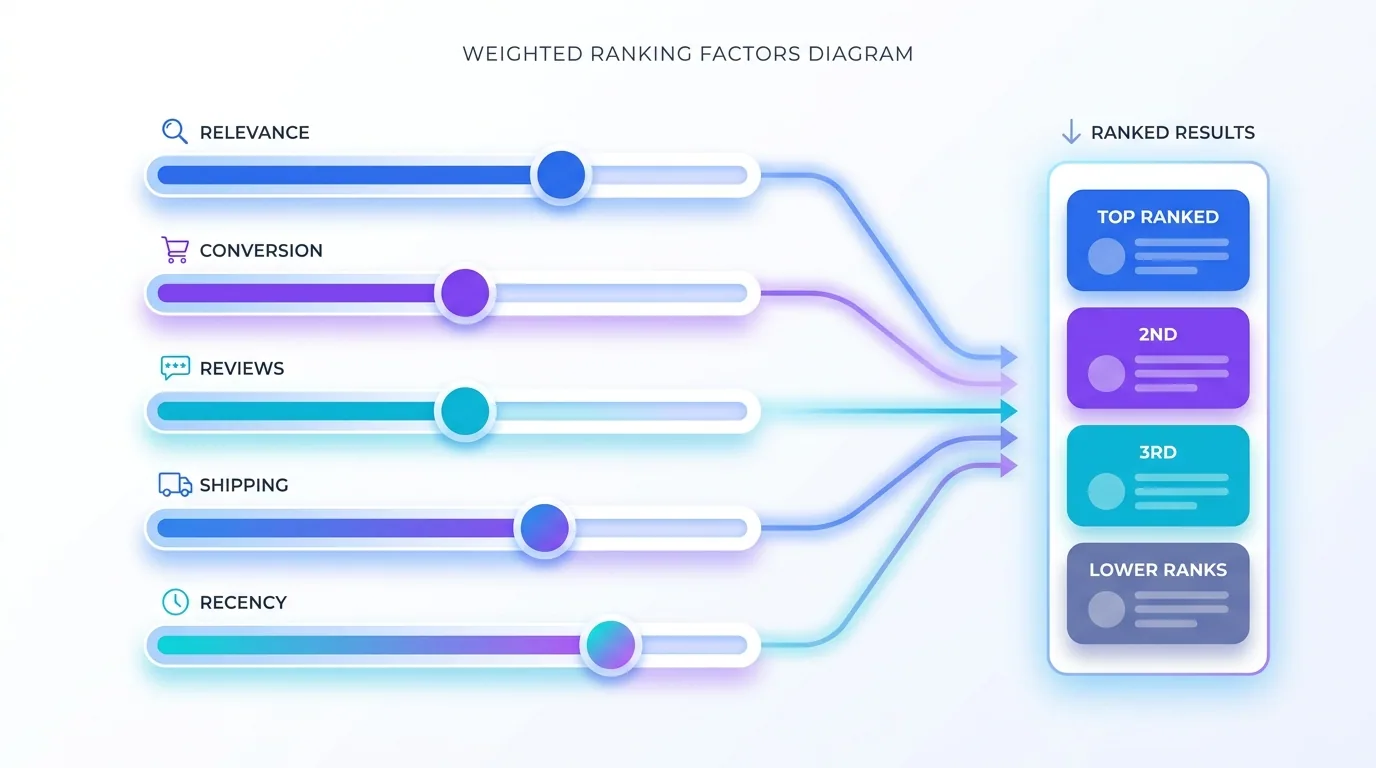
Etsy weighs a handful of factors together. No single one wins — but relevancy gets you into the race and conversion rate decides how far up you finish. Here are the ones that matter most in 2026.
- Query relevance: how closely your title, tags, categories, and attributes match the search intent.
- Listing quality / conversion rate: how often views become favourites, add-to-carts, and sales — Etsy's strongest ordering signal.
- Recency: a small, temporary boost for newly listed or renewed items so Etsy can gather fresh data.
- Customer & market experience: reviews, complete shop policies, fast dispatch, and low cancellation rates.
- Shipping price: competitive or free shipping correlates with higher conversion and better placement.
- Shop location & language: relevant for buyers searching within their own region or language.
Why is conversion rate the most important Etsy ranking factor?
Etsy is a business that earns when items sell, so it favours listings that sell. Your conversion rate — the share of visitors who buy — is the clearest proof that a listing satisfies the search. When two listings are equally relevant, the one that converts better will almost always rank higher.
This is why chasing views alone is a trap. Ten thousand poorly-targeted visitors who never buy can actively suppress a listing, because Etsy reads the low conversion as "shoppers looked and left." A tighter listing that draws fewer but better-matched visitors will out-rank it over time.
Etsy also looks at engagement signals along the way to a sale. Favourites, add-to-carts, and time spent on a listing all tell Etsy that shoppers find your item appealing, even before they check out. Each of those micro-conversions feeds the quality score, which is why a listing that earns lots of favourites often climbs steadily as those signals accumulate.
How do I write titles and tags that Etsy understands?
Write for a human first and the algorithm second. Lead your title with the most important, most-searched phrase, then add descriptive, natural variations — not a comma-soup of repeated words. Fill all 13 tags with multi-word phrases that match how shoppers actually search, and complete every attribute (colour, material, occasion, size) because Etsy uses attributes as ranking signals too.
- Put your strongest keyword phrase in the first few words of the title.
- Use all 13 tags as distinct multi-word phrases — avoid single words and duplicates.
- Mirror long-tail buyer language: "personalised birth flower necklace" beats "necklace gift".
- Complete every attribute and pick the most specific category available.
- Repeat your core phrases in the first lines of the description for context, not stuffing.

How do photos and reviews affect Etsy ranking?
Photos drive conversion, and conversion drives ranking — so your images are an indirect but powerful ranking factor. Use all available image slots, lead with a bright, clear hero shot, and show scale, detail, and the product in real use. Listings that look trustworthy convert better, and Etsy rewards that with placement.
Reviews compound the effect. A steady stream of positive reviews lifts conversion and signals a reliable shop, while late dispatch and cancellations quietly drag you down. Treat your customer experience — clear policies, fast shipping, responsive messages — as part of your SEO, because in 2026 Etsy absolutely does.
Pricing and shipping work the same way. Etsy openly favours competitive shipping, and free or low-cost delivery removes one of the biggest reasons shoppers abandon a cart. Price your items so the total at checkout feels fair, present any discount clearly, and make sure your processing times are realistic — a missed dispatch estimate hurts both your reviews and your standing in search.
On Etsy, your conversion rate is your ranking. Make the listing easier to buy and you make it easier to find.
— Sofia Marino, Ecommerce & Marketplace Lead, Fryntavo
Does Etsy Ads or renewing listings change ranking?
Paid Etsy Ads do not buy you a better organic position — they place you in ad slots. But ads can be a smart discovery tool: they generate sales data on a new listing, and the resulting conversion can strengthen its organic standing. Manually renewing listings gives only a brief recency nudge; it is not a substitute for genuine demand.
If you do run ads, point them at your best-converting listings, not your weakest. Spending to drive traffic to a page that does not convert simply burns budget and teaches Etsy that the listing under-performs. Prove a listing can sell organically first, then use ads to pour fuel on something that already works.

Putting it together: a 2026 Etsy ranking checklist
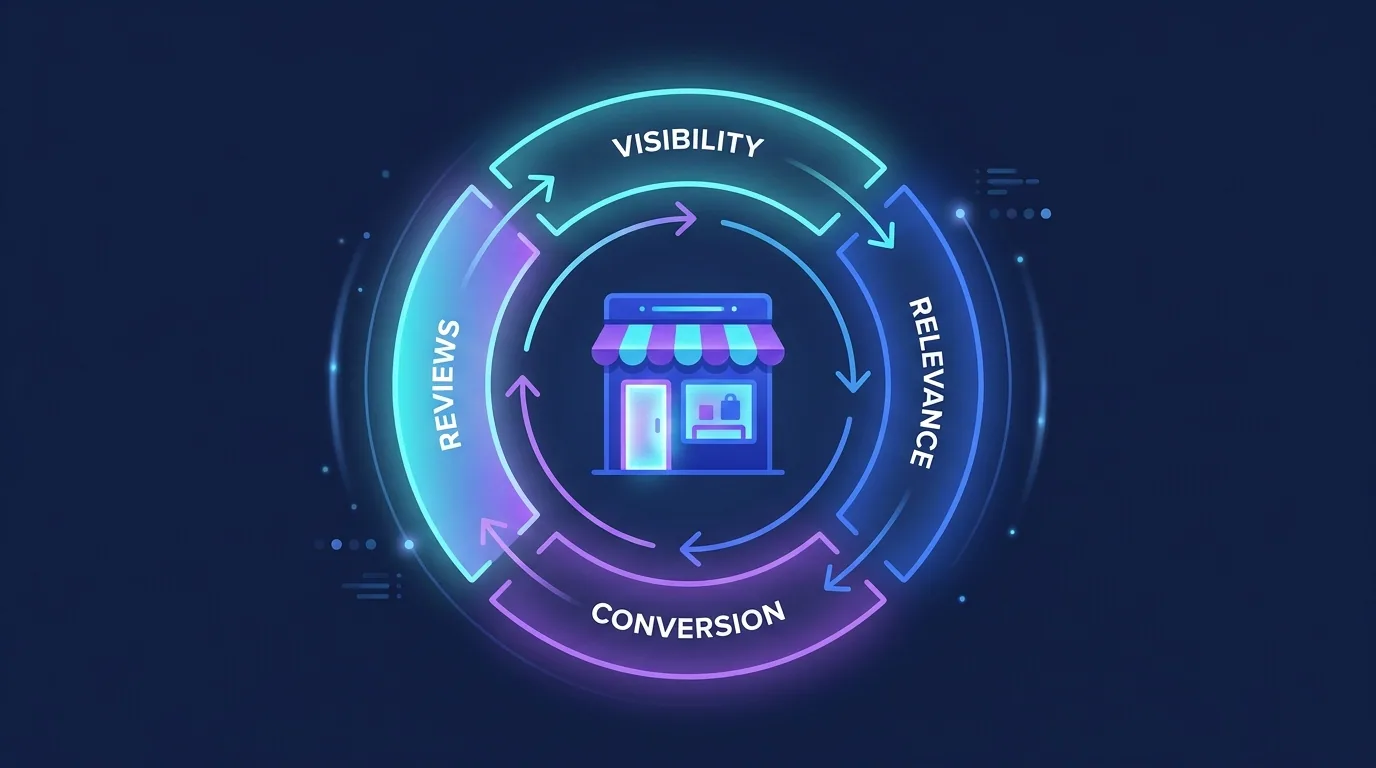
Ranking on Etsy in 2026 is a flywheel: relevant, natural keywords get you discovered, strong photos and pricing convert the click, great reviews and fast shipping prove you are reliable, and rising conversion pushes you up — which earns more views, more sales, and more ranking. Optimise the whole loop, not just one part of it.
If you would rather have specialists run that flywheel for you — keyword research, listing optimisation, photography direction, and ongoing conversion testing — our Etsy management service does exactly that.
Want your Etsy listings ranking on page one and converting like they should? Let our marketplace team audit your shop and build a ranking plan.
Get an Etsy Shop AuditFrequently asked questions
How does the Etsy algorithm work in 2026?
Etsy search works in two phases. First it matches your titles, tags, categories, and attributes to the shopper's query to build a pool of relevant listings. Then it ranks that pool using listing quality and conversion rate, recency, customer-experience signals, shipping price, and location.
What is the most important Etsy ranking factor?
Conversion rate — the share of visitors who buy — is Etsy's strongest ordering signal once your listing is relevant. Etsy favours listings that sell, so improving your photos, price, and offer to lift conversion is the most reliable way to rank higher.
How many tags should I use on an Etsy listing?
Use all 13 tags. Make each one a distinct multi-word phrase that matches how shoppers actually search, and avoid single words or duplicates. Combined with a natural, keyword-led title and completed attributes, this gives Etsy the most context to rank you.
Does Etsy SEO still matter with semantic search?
Yes, but the approach has changed. Etsy now understands intent and meaning, so natural, descriptive language beats robotic keyword chains. You still need relevant titles, full tags, and complete attributes, just written for humans first.
Do Etsy Ads improve my organic ranking?
Not directly. Etsy Ads place you in paid slots rather than boosting your organic position. However, the sales an ad generates can improve a listing's conversion data, which can indirectly strengthen its organic ranking over time.
Does renewing a listing help it rank higher?
Renewing gives only a small, temporary recency boost while Etsy gathers fresh data. It is not a substitute for genuine demand, good photos, and a strong conversion rate, which are what sustain a high ranking.
Why are my Etsy views high but sales low?
High views with low sales usually means a relevance or conversion problem: your listing attracts the wrong searchers, or the photos, price, or shipping cost are not convincing them to buy. A low conversion rate can also suppress future ranking, so fix the listing before chasing more traffic.
Can Fryntavo manage my Etsy shop?
Yes. Fryntavo's Etsy management service handles keyword research, listing and photo optimisation, pricing strategy, and ongoing conversion testing to grow your rankings and sales. Book a free shop audit to get started.
Ready to put this into action?
Fryntavo helps brands grow with web development, SEO, marketplace management, and AI automation. Book a free, no-obligation strategy call.
Book a Free Strategy Call