


Generative engine optimization (GEO) is the practice of optimising your content, brand signals, and structured data so generative AI engines — ChatGPT Search, Gemini, Perplexity, and Google AI Overviews — mention and cite you when they compose answers. Unlike classic SEO, which targets a ranked link, GEO targets your inclusion in the synthesised response itself.
By 2026, millions of buying journeys begin inside a generative chat rather than a search box. If the model does not know your brand exists, you are invisible at the exact moment of intent. This guide explains what GEO is, how it differs from SEO, and the playbook our SEO team uses to help brands rank in AI answers.
What is generative engine optimization?
Generative engine optimization is the discipline of becoming a trusted, frequently-cited source that large language models draw on when they generate answers. Instead of competing for a single position, you are competing to be part of the model's reasoning — recommended, summarised, or quoted within the response.
Generative engines pull from two layers: their training data and a live retrieval layer that fetches current web pages at query time. GEO works on both — building durable brand presence across the web while shaping individual pages so they are easy to retrieve and quote in the moment.
Understanding those two layers is the key to GEO strategy. The training layer is slow-moving and reflects the long-term consensus about your brand: what publications, reviews, and communities have said about you over time. The retrieval layer is fast and current, fetching live pages to ground an answer in up-to-date facts. You influence the first with sustained reputation building and the second with clean, fast, well-structured pages.
Most brands over-invest in their own website and under-invest in the wider web. But a generative engine has already read your homepage; what moves the needle is what everyone else says about you. That is why GEO blends classic on-page craft with digital PR, partnerships, and consistent positioning across every place your brand is mentioned.
How is GEO different from SEO?
GEO and SEO share the same foundation — crawlable, authoritative, well-structured content — but they diverge on the target and the tactics. SEO earns a clickable rank; GEO earns a mention inside a generated answer that may never produce a traditional click at all.

- Surface: SEO competes on a results page; GEO competes inside the answer text.
- Signals: SEO leans on links and on-page relevance; GEO adds brand mentions, consensus, and entity clarity.
- Click model: SEO assumes a click; GEO often delivers value through visibility without a click.
- Freshness: GEO rewards being current and consistently referenced across the web.
How do you rank in AI answers?
To rank in AI answers you need to be both retrievable (easy for the engine to fetch and parse in the moment) and recommendable (known and trusted across the wider web). The two reinforce each other: strong off-page presence gets you into the candidate set, and clean on-page structure gets you quoted once you are there.
On-page, lead with the answer, use question-based headings, and add concrete specifics the model can lift. Off-page, earn mentions in industry publications, get listed in the directories and comparison pages models rely on, and keep your brand described consistently everywhere it appears.
Comparison and "best of" content deserves special attention, because generative engines lean on it heavily when a user asks for recommendations. If the curated lists and roundups in your category never mention you, the model has little reason to surface your name. Getting included in credible third-party comparisons is often the single fastest way to start appearing in AI answers for commercial prompts.

- Define your brand as a clear entity with Organization schema and a consistent description everywhere.
- Lead every page and section with a direct, quotable answer to a real question.
- Earn citations in third-party articles, reviews, and comparison content models trust.
- Add original data, statistics, and named examples that engines prefer to quote.
- Keep content fresh — update key pages regularly so retrieval favours your latest version.
Why does brand authority drive GEO?
Generative engines weight authority and consensus heavily, so off-page brand building is often the bigger lever in GEO than on-page tweaks. A model is far more likely to recommend a brand that respected publications, review sites, and communities all describe consistently.
That means GEO overlaps with digital PR and reputation work. Get mentioned in the right places, keep your messaging consistent, and ensure your strongest proof points — results, credentials, differentiators — appear across the web, not just on your own domain.
Consistency of language matters as much as volume of mentions. If one source calls you a "marketing agency," another a "growth consultancy," and a third a "web studio," the model struggles to form a confident view of what you do. Decide on a crisp, repeatable description of your category and your differentiators, then use it everywhere so the consensus the engine learns is the one you intend.
In generative search, you are not optimising a page — you are optimising what the entire web says about you.
— Daniel Okafor, Head of SEO, Fryntavo
Does technical performance affect GEO?
Yes. The live retrieval layer behind generative engines uses crawlers that behave like search bots, so a slow or broken site gets skipped at fetch time. The 2026 targets still apply: a Largest Contentful Paint near 2.0 seconds and an Interaction to Next Paint under 200ms keep your pages retrievable and renderable.

Server-side rendering, modern image formats, and clean markup all help engines fetch and read your content. We build client sites on fast, modern web foundations precisely because retrieval-time performance is now part of search visibility.
How do you measure GEO performance?
Measure GEO by share of voice in AI answers: how often you are mentioned for your target prompts, how you are described, and which competitors appear alongside you. Test representative prompts across ChatGPT, Gemini, and Perplexity on a regular cadence and log the results.
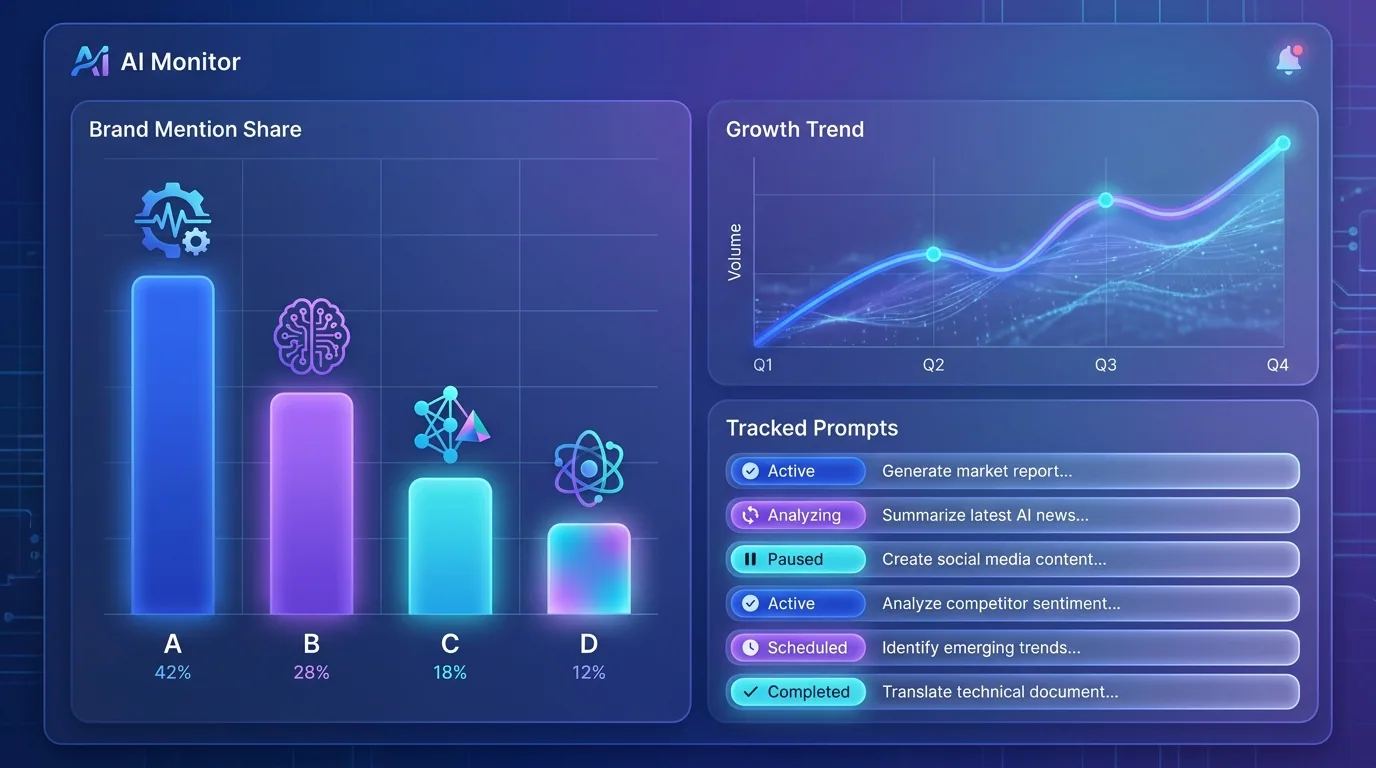
Pair that with referral analytics for AI sources and branded search growth. Rising mentions and branded demand are the leading indicators that your GEO program is compounding, even when raw click counts stay flat.
Putting GEO into practice
Generative engine optimization rewards brands that are genuinely known, consistently described, clearly structured, and technically fast. Build entity clarity, lead with quotable answers, earn third-party citations, keep your content fresh, and track your mention share across engines. Do that and the generative engines will recommend you by name at the moment of intent.
Want generative engines to recommend your brand inside their answers? Our team can build a GEO strategy that makes you the name AI mentions first.
Get a Free GEO AuditFrequently asked questions
What is generative engine optimization (GEO)?
Generative engine optimization is the practice of optimising your content, brand signals, and structured data so generative AI engines like ChatGPT, Gemini, and AI Overviews mention and cite you when they compose answers. The goal is to be included in the synthesised response itself, not just a ranked link.
How is GEO different from SEO?
SEO competes for a clickable position on a results page, while GEO competes to be mentioned inside the generated answer. GEO shares SEO's foundation but adds heavy emphasis on brand mentions, consensus across credible sources, and entity clarity, and it often delivers value without a traditional click.
How do I rank in AI answers like ChatGPT and Gemini?
Be both retrievable and recommendable: lead pages with quotable answers, use question-based headings, and add concrete specifics, while earning consistent mentions in trusted third-party articles, reviews, and directories. Strong off-page presence gets you into the candidate set and clean on-page structure gets you quoted.
Is GEO the same as AEO?
They overlap heavily. AEO focuses on being the cited source for direct answers, while GEO emphasises being recommended and mentioned by generative models, including ChatGPT-style chat assistants. In practice most 2026 strategies combine both under an AI-search umbrella.
Do brand mentions really affect GEO?
Yes. Generative engines weight authority and consensus heavily, so consistent mentions across respected publications, review sites, and communities make a model more confident about recommending your brand. Off-page presence is often the bigger lever than on-page tweaks.
How do I measure GEO success?
Track your share of voice in AI answers: how often you are mentioned for target prompts, how you are described, and which competitors appear alongside you. Test prompts across multiple engines regularly and pair that with AI referral analytics and branded search growth.
Does site speed matter for GEO?
Yes. The live retrieval layer behind generative engines uses crawlers that skip slow or broken pages, so a Largest Contentful Paint near 2.0 seconds and an Interaction to Next Paint under 200ms keep your content retrievable and renderable at query time.
Can Fryntavo help with generative engine optimization?
Yes. Fryntavo offers GEO strategy, content optimisation, entity and schema work, and digital PR support designed to make your brand the one generative engines recommend. Book a free strategy call to get started.
Ready to put this into action?
Fryntavo helps brands grow with web development, SEO, marketplace management, and AI automation. Book a free, no-obligation strategy call.
Book a Free Strategy Call