

Amazon PPC for beginners comes down to one idea: you pay for clicks, so you must turn enough of those clicks into profitable sales. The fastest safe start in 2026 is to launch a single Sponsored Products campaign with automatic targeting, set a modest daily budget, watch your ACoS (advertising cost of sale), and gradually move winning search terms into tighter manual campaigns. Everything else is refinement on that loop.
Amazon advertising can feel intimidating because of the jargon, but the mechanics are simple once you separate them out. This playbook from our Amazon management team walks you through the terms, the structure, and the step-by-step launch plan we use for new sellers.
What is Amazon PPC and how does it work?
Amazon PPC (pay-per-click) is advertising where you bid for ad placements on Amazon and pay only when a shopper clicks. The most common format, Sponsored Products, promotes individual listings in search results and on product pages. You set a bid (the most you'll pay per click) and a daily budget, and Amazon's auction decides where and how often your ad shows.
The beauty of PPC for beginners is feedback speed. Within days you see which search terms drive clicks, which clicks convert, and what each sale costs you in ad spend. That data is the foundation of every optimization that follows.
PPC also does something organic ranking alone cannot: it buys you visibility on day one. New listings have no sales history for Amazon to rank on, so ads are how you generate those first conversions, gather reviews, and kick-start the organic flywheel. The early clicks may cost more than you'd like, but they are an investment in the sales velocity that lifts your organic position later.
Beyond Sponsored Products, Amazon offers Sponsored Brands (which showcase your logo and a few products in a banner) and Sponsored Display (which retargets shoppers across Amazon). For beginners, ignore those at first. Master Sponsored Products until it is reliably profitable, then layer the others on once you understand your numbers.
What is the difference between ACoS and TACoS?
ACoS is advertising cost of sale: ad spend divided by sales generated by those ads. It tells you how efficient a campaign is. TACoS is total advertising cost of sale: ad spend divided by your total sales, including organic. It tells you whether your advertising is building a healthy business overall.
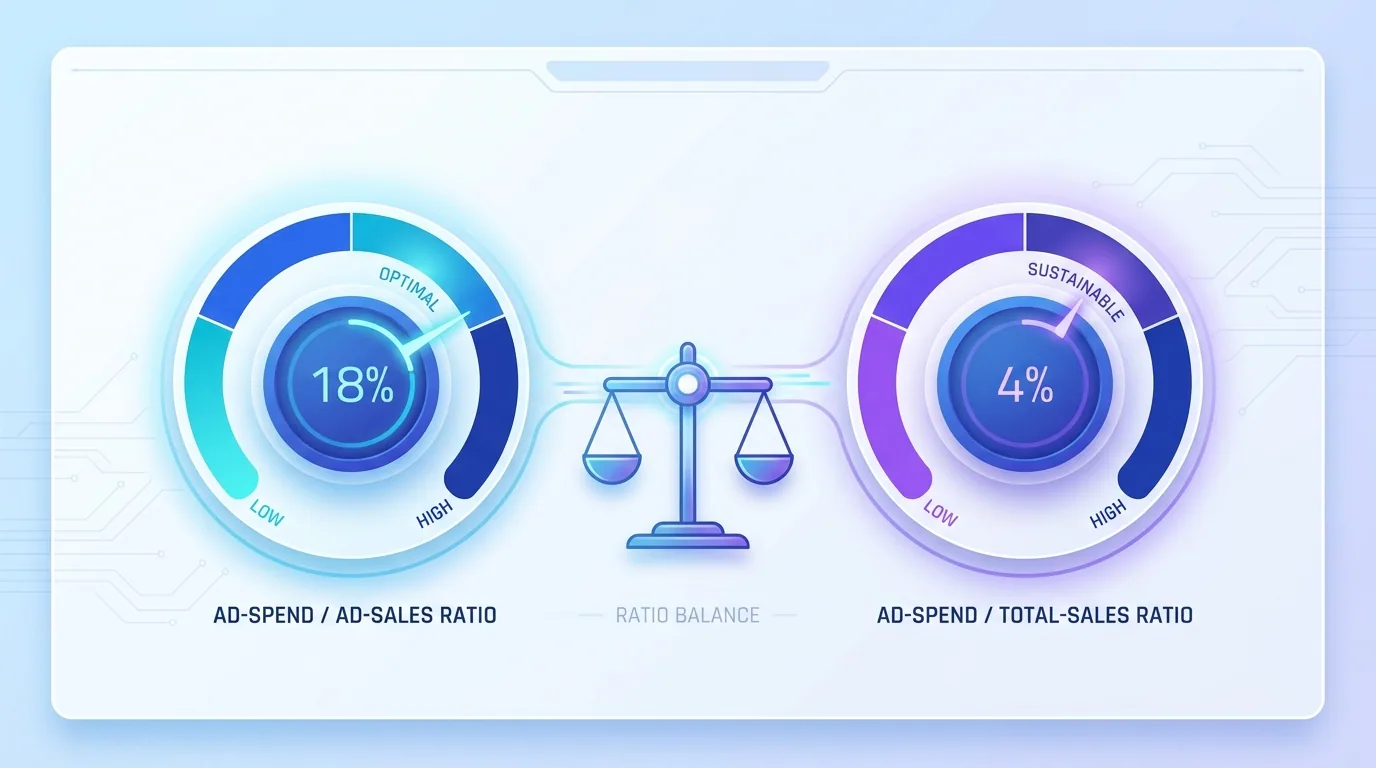
Beginners often obsess over ACoS alone and starve their ads. A slightly higher ACoS that drives organic ranking and repeat buyers can lower your TACoS over time — which is the real win. Watch both: ACoS for tuning individual campaigns, TACoS for deciding how aggressive to be overall.
To use these numbers well, you need one more figure: your break-even ACoS, which is simply your profit margin before ad costs. If your product carries a 35% margin, then an ACoS of 35% means the ad campaign breaks even, anything below it is profit, and anything above it is a deliberate investment in growth or ranking. Knowing this single number turns ACoS from an abstract metric into a clear decision rule.
How should beginners structure Sponsored Products campaigns?
Start simple and let the data tell you where to expand. A reliable beginner structure uses an automatic campaign to discover search terms, then graduates the winners into manual campaigns where you control bids precisely. This keeps spend disciplined while still casting a wide enough net to learn.
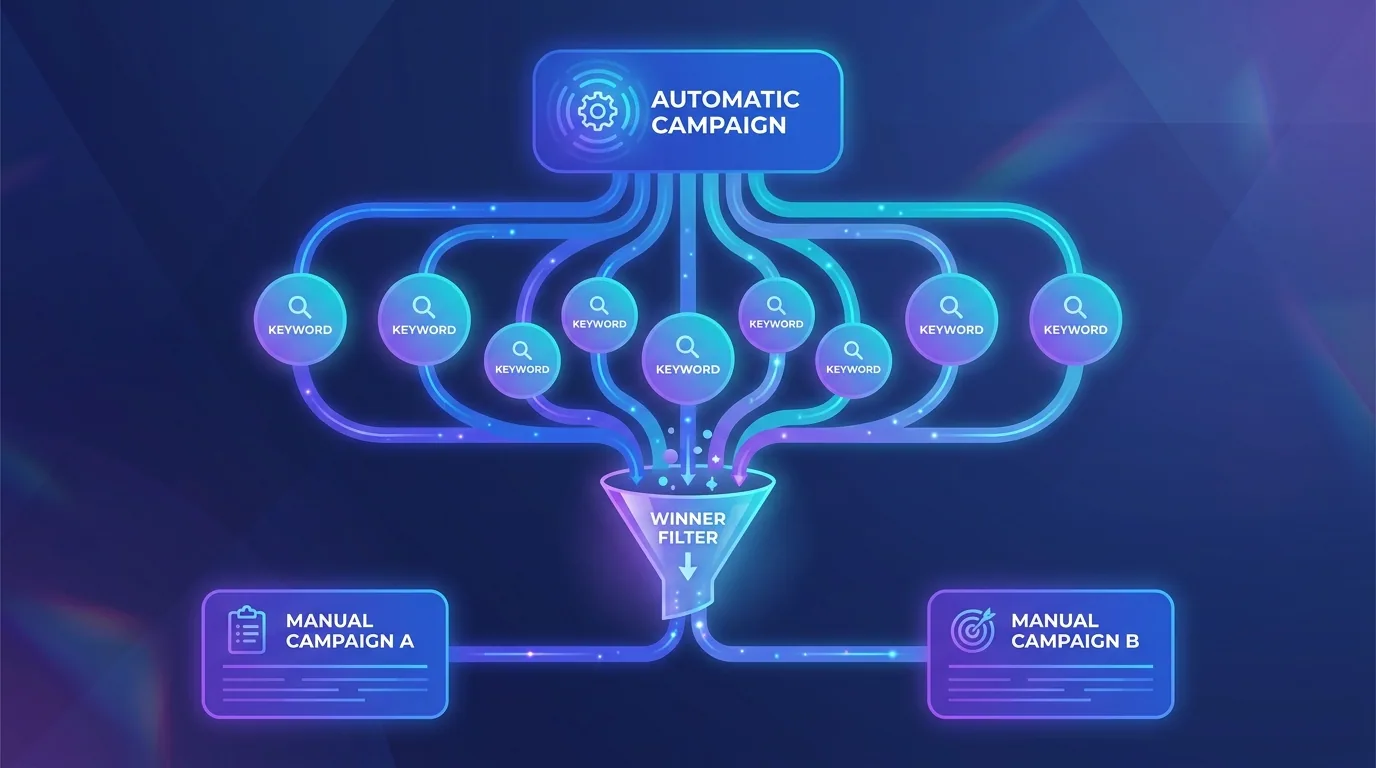
- Launch an auto campaign on your best listing with a modest daily budget to discover search terms.
- Review the search-term report after one to two weeks to find converting queries.
- Create a manual campaign with exact-match keywords for your proven winners.
- Add negative keywords to the auto campaign so you stop paying for irrelevant clicks.
- Adjust bids gradually — small, frequent changes beat dramatic swings.
- Scale budget only on campaigns that hit your target ACoS consistently.
The biggest beginner mistake isn't a high ACoS — it's quitting a campaign during its learning window or never adding a single negative keyword.
— Sofia Marino, Ecommerce & Marketplace Lead, Fryntavo
How do you avoid wasting Amazon ad budget?
Wasted spend usually comes from three places: bidding on irrelevant search terms, sending paid traffic to a listing that doesn't convert, and judging campaigns too early. Fix the listing first — even perfect ads can't rescue weak copy, images, or reviews. PPC amplifies your listing; it doesn't replace listing quality, which is why our Amazon management service always tunes the product page before scaling spend.
- Mine search-term reports weekly and add irrelevant terms as negatives.
- Don't advertise a listing that converts poorly — fix the page before you scale spend.
- Respect the learning window of 7 to 14 days before major decisions.
- Cap bids sensibly so a single expensive keyword can't drain the budget.
- Match keyword type to intent — broad to discover, exact to scale efficiently.
How does AI affect Amazon advertising in 2026?
In 2026, Amazon's advertising tools lean heavily on machine learning for bidding and placement, and the rise of AI shopping assistants like Alexa for Shopping means conversion-weighted ranking matters more than ever. Profitable ads now feed a tighter loop: clicks that convert raise your listing's conversion rate, which improves organic rank and assistant recommendations, which lowers your TACoS.
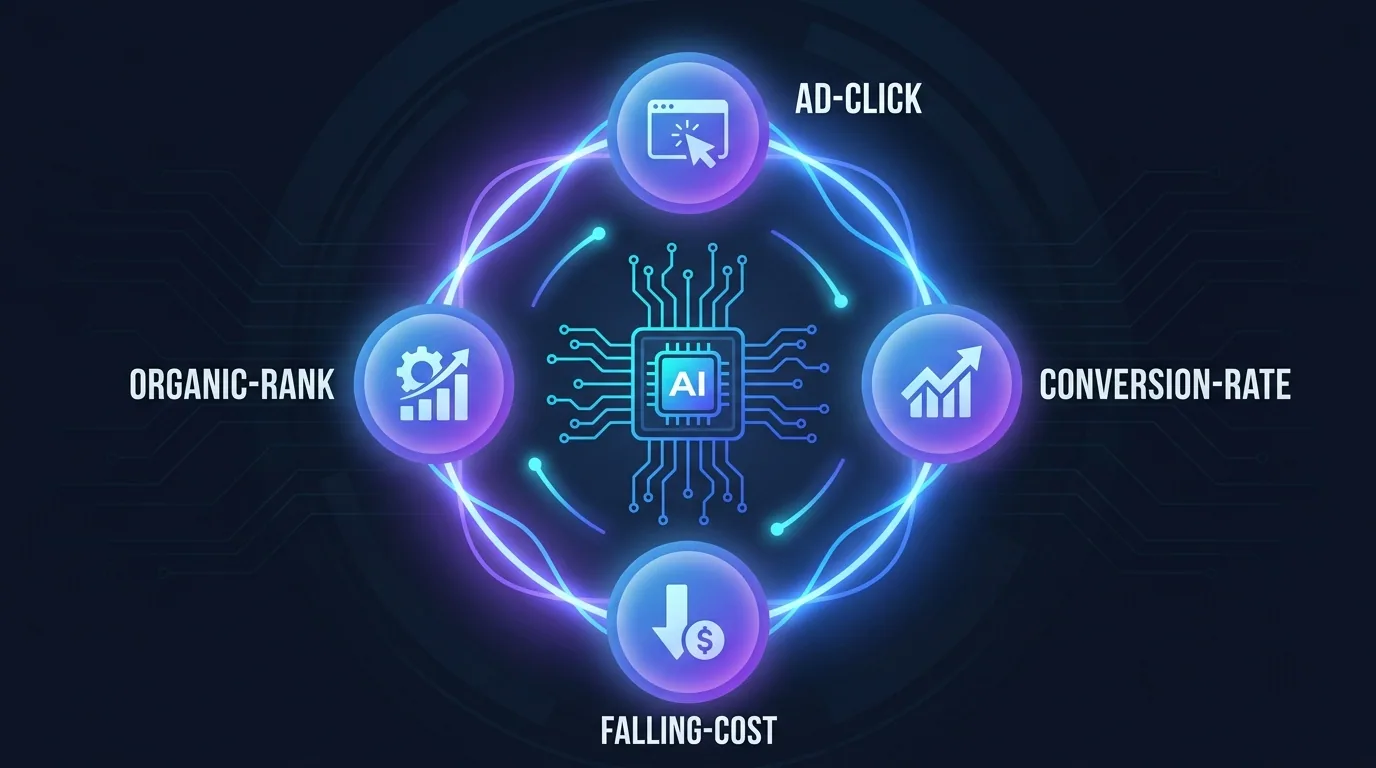
Lean on Amazon's automated bidding to handle the moment-to-moment auction, but keep human strategy on top: decide the targets, structure, and budgets, and review the AI's choices regularly. Automation is a powerful assistant, not an autopilot you can ignore.
There is also a strategic implication for new sellers. As AI assistants like Alexa for Shopping shape more discovery, the relevance between your keyword, your ad, and your landing experience matters more than ever. Bidding on tightly relevant terms and sending that traffic to a listing that genuinely answers the query produces the high conversion rate that both the ad auction and the assistant reward. Sloppy, broad targeting that drives mismatched clicks is doubly penalized in 2026.
Putting it together
Amazon PPC for beginners is a disciplined loop, not a gamble. Launch one auto Sponsored Products campaign, learn from the search-term data, graduate winners into manual campaigns, add negatives, and watch both ACoS and TACoS. Fix your listing before you scale, respect the learning window, and let AI handle the bidding while you set the strategy. Do that and your advertising becomes a profit engine, not a cost center.

Want Amazon ads that actually turn a profit? Our PPC specialists build and manage campaigns tuned to your ACoS and TACoS goals.
Get a PPC Strategy CallFrequently asked questions
What is Amazon PPC?
Amazon PPC (pay-per-click) is advertising where you bid for placements on Amazon and pay only when a shopper clicks your ad. The most common format is Sponsored Products, which promotes individual listings in search results and on product pages.
What is a good ACoS for beginners?
A good ACoS depends on your profit margins, but many beginners target an ACoS at or below their break-even margin while learning. Early on, a slightly higher ACoS can be acceptable if it builds organic rank and lowers your overall TACoS over time.
What is the difference between ACoS and TACoS?
ACoS is ad spend divided by sales from ads, measuring campaign efficiency. TACoS is ad spend divided by total sales including organic, measuring whether your advertising is building a healthy overall business. Use ACoS to tune campaigns and TACoS to judge overall strategy.
How should a beginner structure Amazon campaigns?
Start with an automatic Sponsored Products campaign on your best listing to discover converting search terms, then graduate those winners into manual campaigns with exact-match keywords. Add negative keywords to the auto campaign and scale budget only on campaigns hitting your target ACoS.
How much should I budget for Amazon PPC as a beginner?
Begin with a modest daily budget you're comfortable treating as learning spend, then scale only the campaigns that consistently hit your target ACoS. The goal of early spend is data, not immediate profit, so keep budgets disciplined while you learn.
How long before I should judge a new campaign?
Allow a learning window of roughly 7 to 14 days before making major decisions, so Amazon's algorithm and your data have time to stabilize. Judging or killing a campaign too early is one of the most common beginner mistakes.
Do I need good listings before running PPC?
Yes. PPC amplifies your listing rather than replacing its quality, so weak copy, images, or reviews will waste ad budget. Fix conversion on the product page before scaling paid traffic to it.
Can Fryntavo manage my Amazon PPC?
Yes. Fryntavo's Amazon management team builds and optimizes Sponsored Products and other campaigns, tuning bids, structure, and negatives to your ACoS and TACoS goals. Book a free strategy call to get started.
Ready to put this into action?
Fryntavo helps brands grow with web development, SEO, marketplace management, and AI automation. Book a free, no-obligation strategy call.
Book a Free Strategy Call