
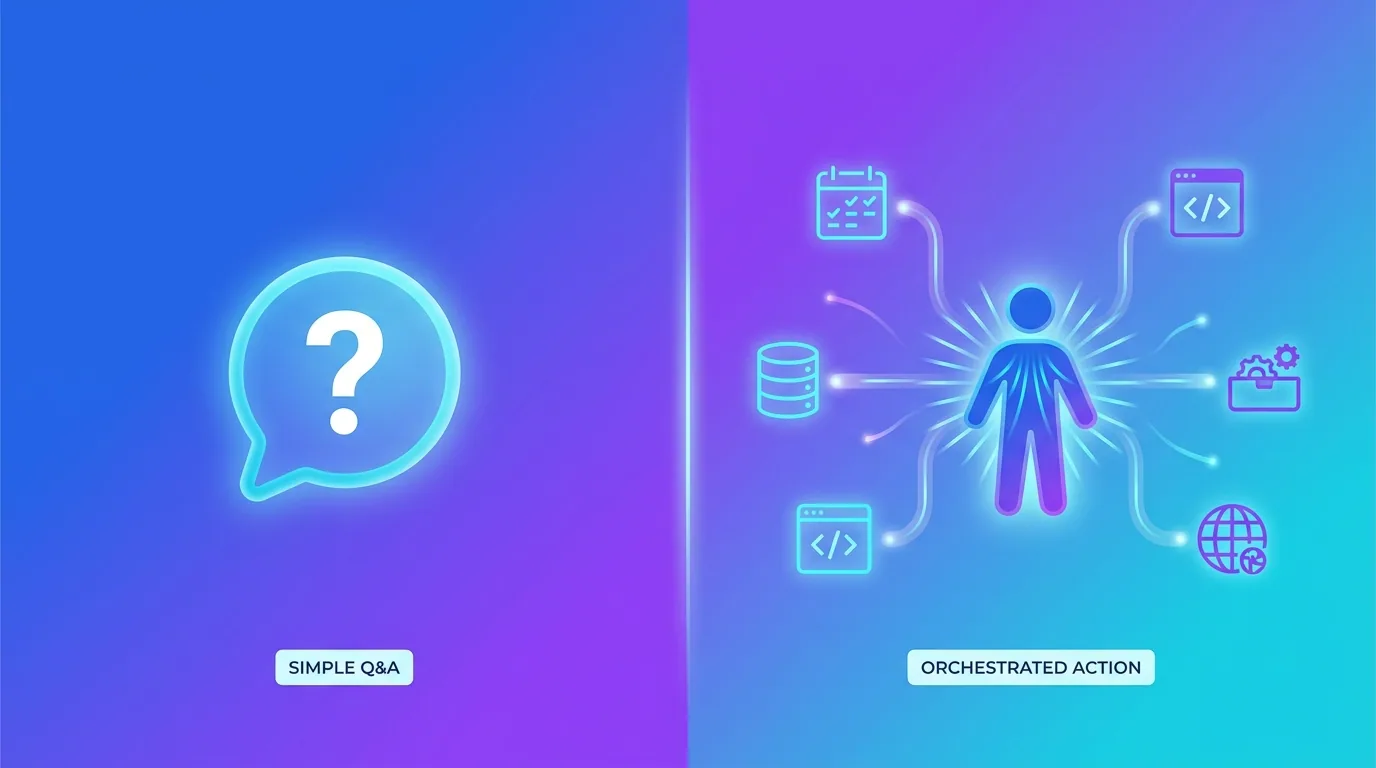
The short answer: an AI chatbot responds to messages, while an AI agent takes action to complete a goal. A chatbot can tell a customer your return policy; an AI agent can actually process the return, issue the refund, update the order, and email the customer — without a human in the loop. In 2026 the difference is no longer academic, because agentic AI is what turns conversation into completed work.
If you are deciding where to invest, the distinction matters enormously. A chatbot deflects questions; an agent removes the task entirely. This guide breaks down how each one works, where the lines blur, and how to pick the right tool — drawing on what we build every day for clients with our AI agents practice.
What is an AI chatbot?
An AI chatbot is a conversational interface that understands a user's message and returns a relevant response. Modern chatbots are powered by large language models, so they sound natural and can handle messy, open-ended questions far better than the rigid scripted bots of a few years ago. But their core job is still communication, not action.
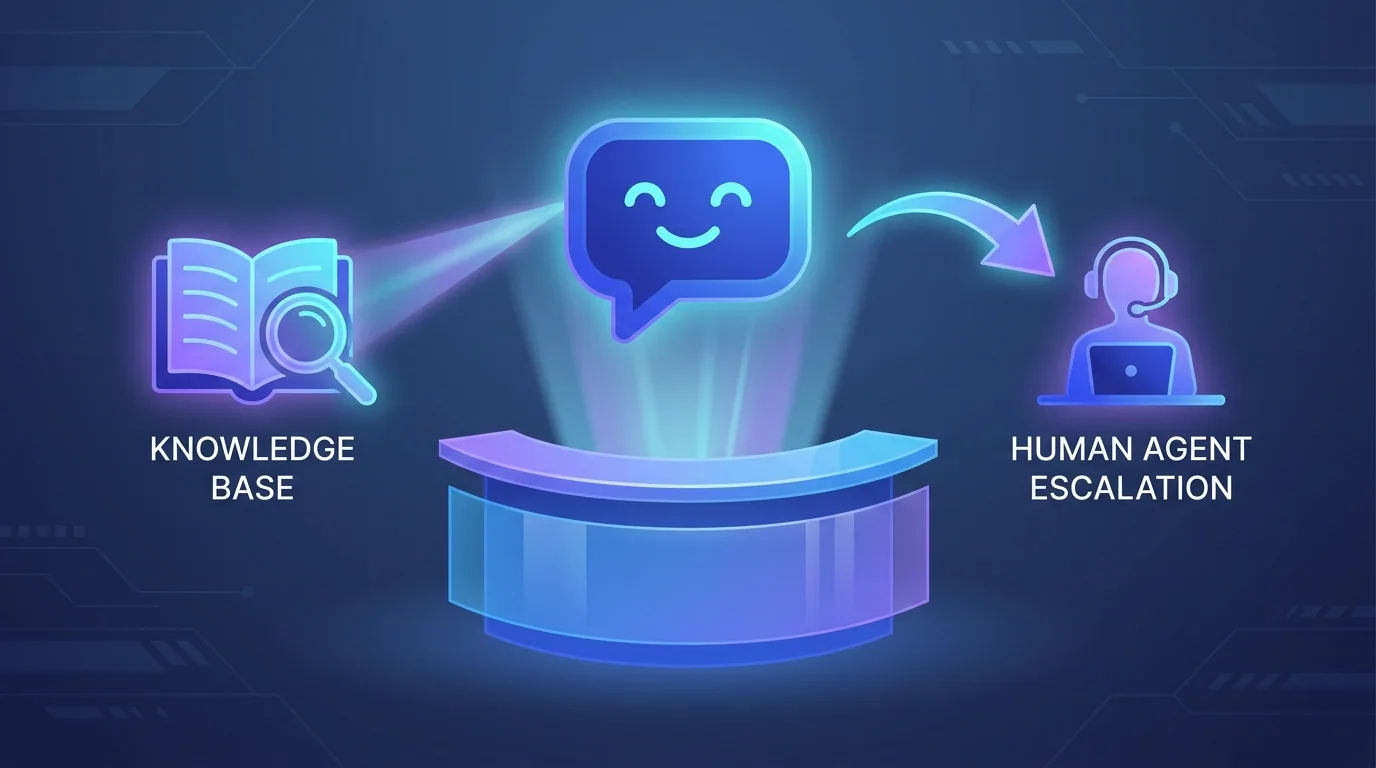
Think of a chatbot as a brilliant front desk. It can explain, recommend, summarise, and route. What it generally does not do on its own is reach into your systems and change the state of the world — booking the appointment, moving the inventory, or cancelling the subscription. When a chatbot needs something done, it usually hands off to a human or a separate workflow.
What is an AI agent?
An AI agent is software that can reason about a goal, choose actions, use tools, and execute a multi-step plan to reach an outcome — often with little or no human intervention. Where a chatbot generates a reply, an agent generates a sequence of decisions: check this, call that API, evaluate the result, then decide the next step. This loop of plan, act, observe, and adapt is what people mean by agentic AI.
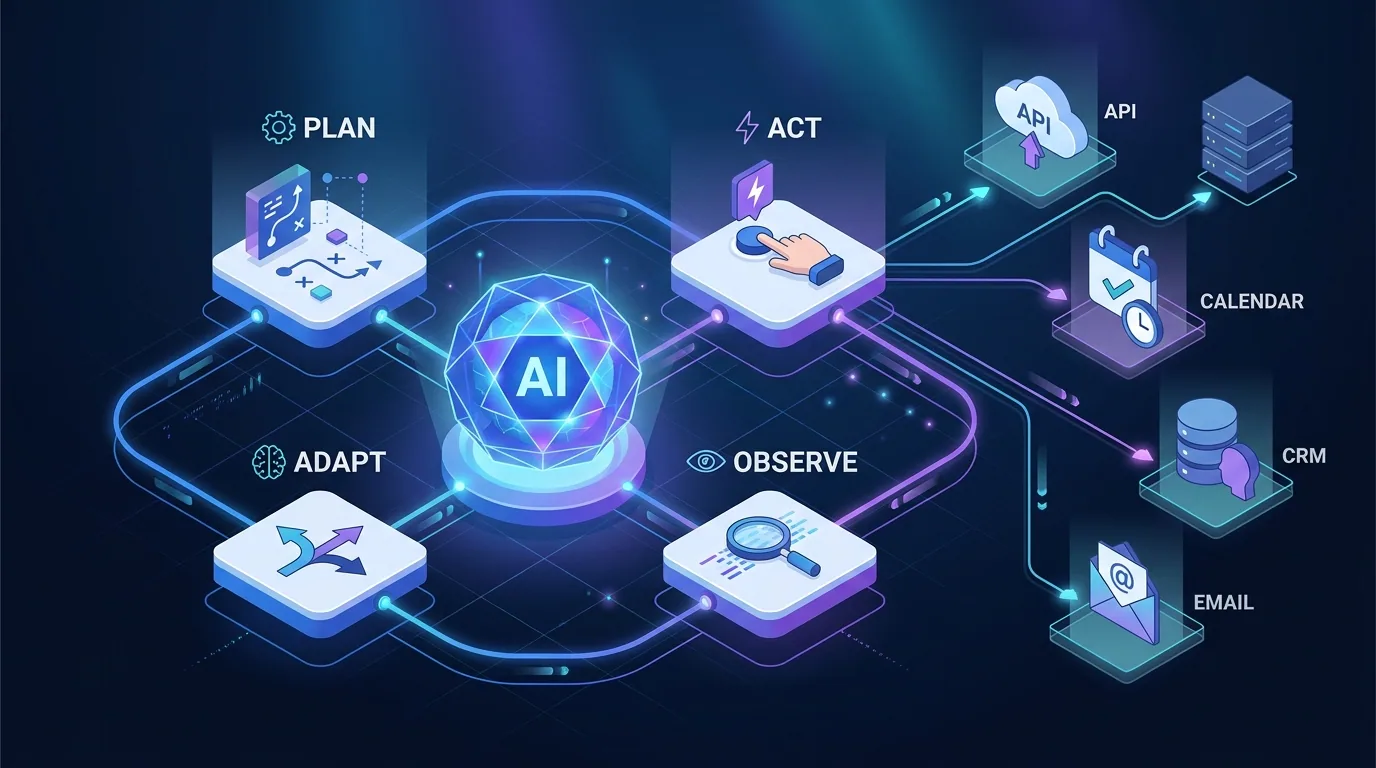
The breakthrough that made agents practical at scale is tool use standardised through the Model Context Protocol (MCP), now the common standard for connecting models to external systems. With MCP, an agent can securely call your booking system, your payment processor, your inventory database, or your help desk — and chain those calls together to finish a job end to end.
Chatbot vs agent: the core differences
The cleanest way to separate the two is by what they are responsible for. A chatbot is responsible for a good answer. An agent is responsible for a good result. That single shift changes everything about how they are designed, tested, and trusted.
- Goal: chatbots answer a message; agents complete an objective that may span many steps.
- Autonomy: chatbots respond and wait; agents decide what to do next and keep going until the goal is met.
- Tools: chatbots mostly retrieve information; agents call APIs, write to databases, and trigger workflows.
- Memory: chatbots often forget between turns; agents maintain state across a whole task or session.
- Risk profile: a wrong chatbot answer is a bad reply; a wrong agent action can change real data, so guardrails matter far more.
Where the line gets blurry
In practice, the categories overlap. Many products today are agentic chatbots: a conversational front end that can also take limited actions, like checking an order status or rescheduling a delivery. The interface looks like a chatbot, but underneath it is calling tools like an agent. This hybrid is often the most useful shape for customer-facing experiences.
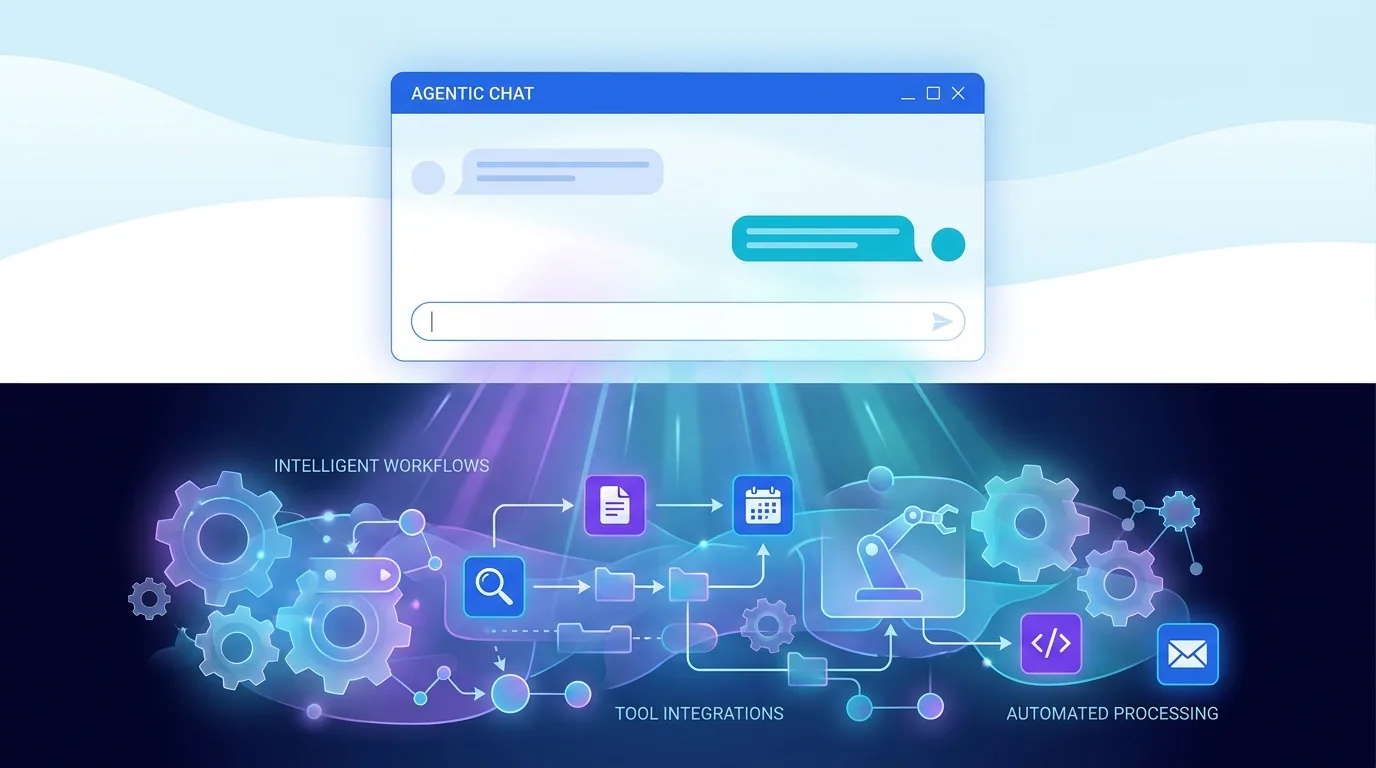
The useful question is therefore not "chatbot or agent?" but how much autonomy and action a given use case should have. A marketing FAQ assistant needs almost none. An operations assistant that reconciles invoices needs a lot. Most real deployments sit somewhere on that spectrum, and good design means granting only as much capability as the task safely requires.
A chatbot makes your team faster at answering. An agent makes the answer unnecessary because the work is already done.
— Priya Nair, AI Solutions Architect, Fryntavo
Which one does your business actually need?
Start from the outcome, not the technology. If your goal is to reduce repetitive questions, capture leads, or guide people to the right page, a well-built chatbot delivers fast value with low risk. If your goal is to remove entire processes — fulfilment updates, refunds, onboarding, appointment management — you need an agent that can act inside your systems.
- Map the top tasks your team repeats every day and note which ones end in an action versus an answer.
- For answer-heavy tasks, deploy a chatbot with strong retrieval over your real, up-to-date content.
- For action-heavy tasks, scope an agent with explicit tools, permissions, and human approval on anything risky.
- Instrument everything — measure resolution rate and errors, not just deflection, so you can trust the system as you expand it.
Many of our clients begin with a focused chatbot and graduate to agents once the data and guardrails are proven. That staged path keeps risk low while the upside compounds. If you are not sure where you sit, our AI agents team can help you map tasks to the right level of autonomy, and our AI workflows practice connects those agents to the rest of your stack.
Guardrails: the part nobody should skip
Because agents take real actions, they need real safety. That means scoped permissions (an agent should only touch what it must), human-in-the-loop approval for irreversible or high-value steps, full logging of every action, and clear fallback to a person when confidence is low. A chatbot that hallucinates gives a wrong answer; an agent without guardrails can take a wrong action — so the engineering bar is higher.
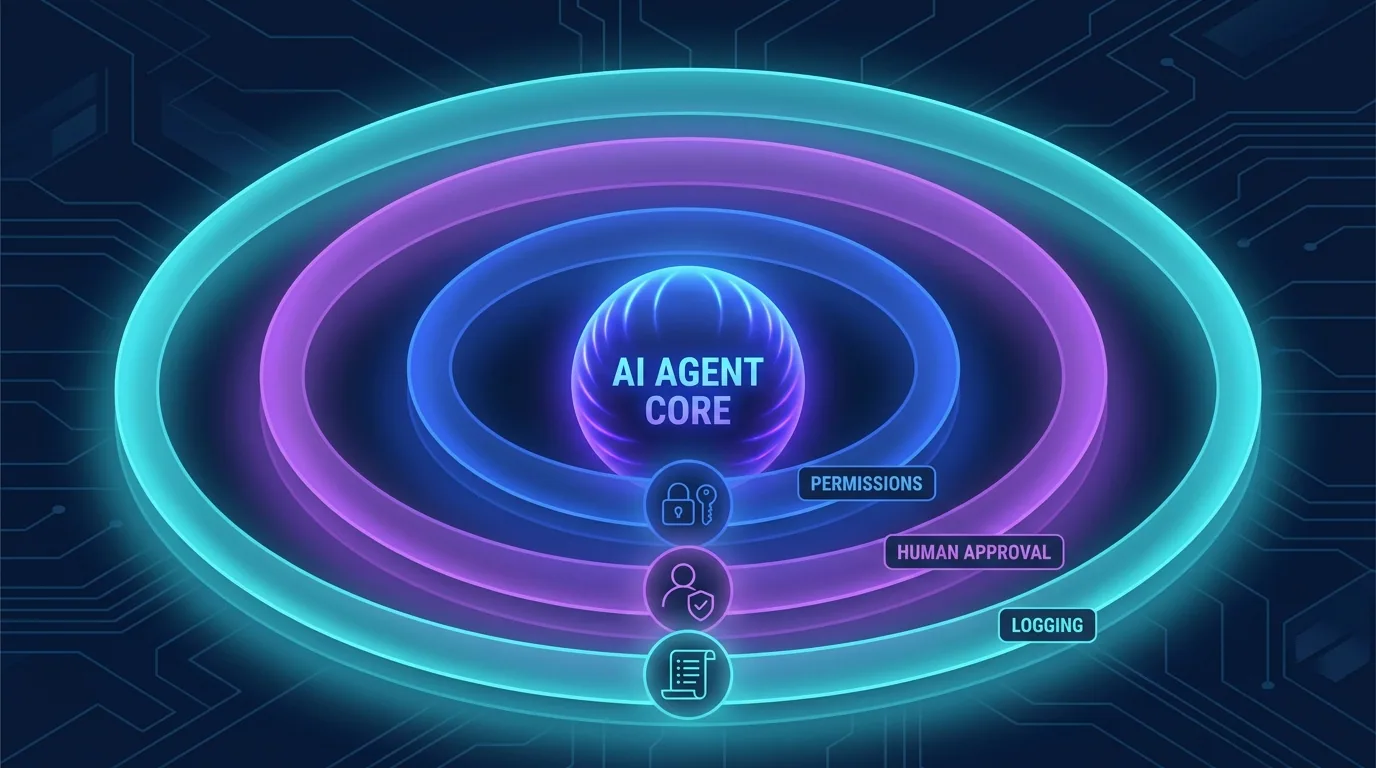
Done well, guardrails are not friction — they are what makes autonomy trustworthy. The most successful 2026 deployments treat permissions and logging as first-class features, not afterthoughts, which is exactly why they can confidently let agents run unattended on the boring, high-volume work.
The bottom line on AI chatbot vs AI agent
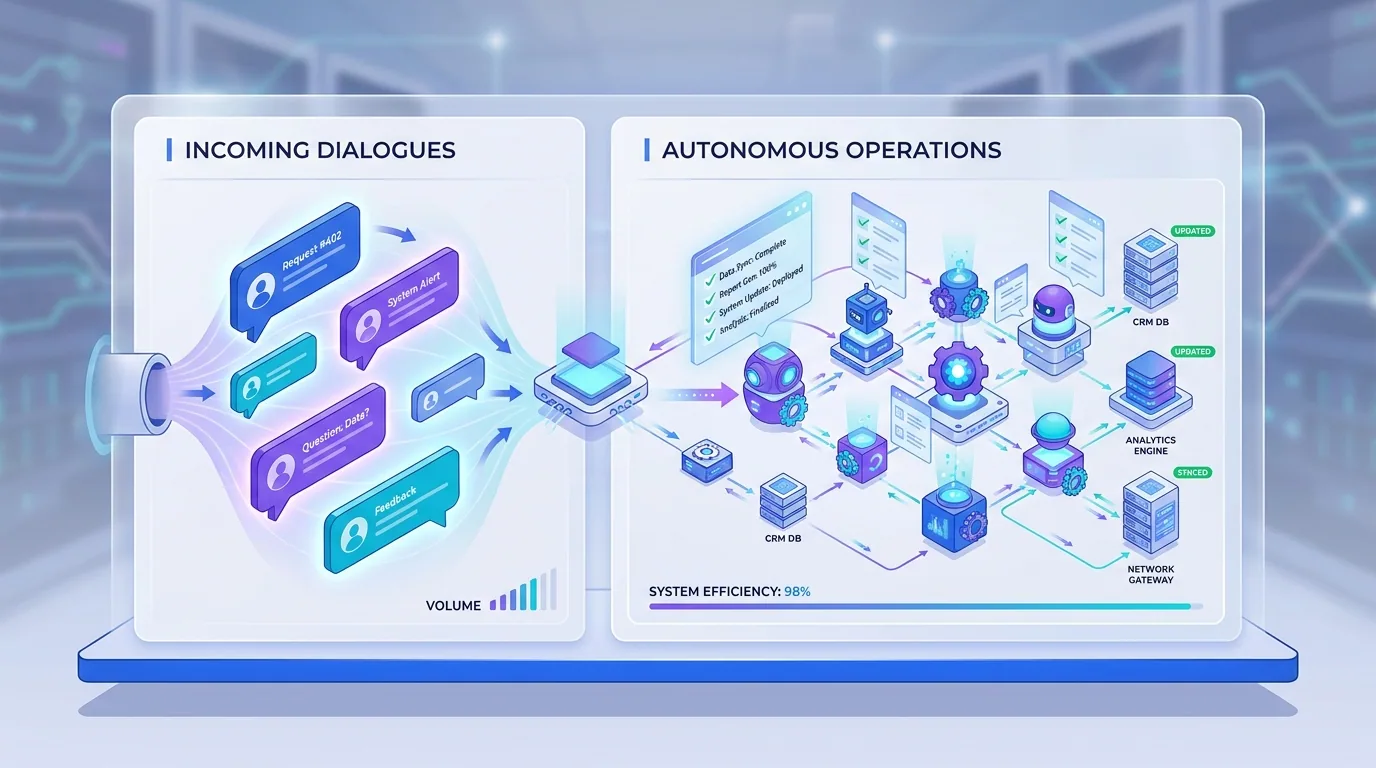
A chatbot talks; an agent acts. In 2026 the smartest businesses use both — chatbots to handle conversation at scale and agents to quietly finish the work behind the scenes. The winning strategy is not picking a side but matching each task to the right amount of autonomy, then wrapping it in the guardrails that make the whole thing dependable.
Not sure whether you need a chatbot, an agent, or both? Our team will map your highest-volume tasks to the right level of automation and build it safely.
Book a Free AI Strategy CallFrequently asked questions
What is the difference between an AI chatbot and an AI agent?
An AI chatbot responds to messages with relevant answers, while an AI agent reasons about a goal and takes multi-step actions to complete it using real tools and APIs. In short, a chatbot answers questions and an agent gets things done.
What is agentic AI?
Agentic AI refers to systems that can plan, act, observe results, and adapt to reach a goal with minimal human intervention. Instead of just generating a reply, an agentic system runs a loop of decisions and calls external tools to complete real work.
Can a chatbot also be an agent?
Yes. Many modern products are agentic chatbots that look conversational on the surface but call tools underneath to take limited actions, such as checking an order or rescheduling an appointment. The interface is a chat, but the behaviour is partly agentic.
Do AI agents replace human employees?
Usually they replace repetitive tasks rather than whole roles. Agents handle high-volume, rule-bound work so people can focus on judgment, relationships, and edge cases, with humans kept in the loop for risky or irreversible actions.
What is MCP and why does it matter for AI agents?
MCP, the Model Context Protocol, has become the common standard for securely connecting AI models to external tools and data. It lets an agent call your booking system, database, or help desk in a consistent way, which is what makes reliable tool use possible.
Which should my business build first, a chatbot or an agent?
Most businesses start with a focused chatbot for answer-heavy tasks because it delivers value fast with low risk, then graduate to agents for action-heavy processes once data and guardrails are proven. The right choice depends on whether your task ends in an answer or an action.
Are AI agents safe to let run on their own?
They can be, when they are built with scoped permissions, human approval on high-value steps, complete logging, and clear fallback to a person. Guardrails are what make autonomy trustworthy, so they should be treated as core features rather than afterthoughts.
Can Fryntavo build an AI agent for my company?
Yes. Fryntavo designs and deploys AI chatbots and AI agents connected to your real systems, with the permissions and logging needed to run safely. Book a free strategy call and we will map your tasks to the right level of automation.
Ready to put this into action?
Fryntavo helps brands grow with web development, SEO, marketplace management, and AI automation. Book a free, no-obligation strategy call.
Book a Free Strategy Call