
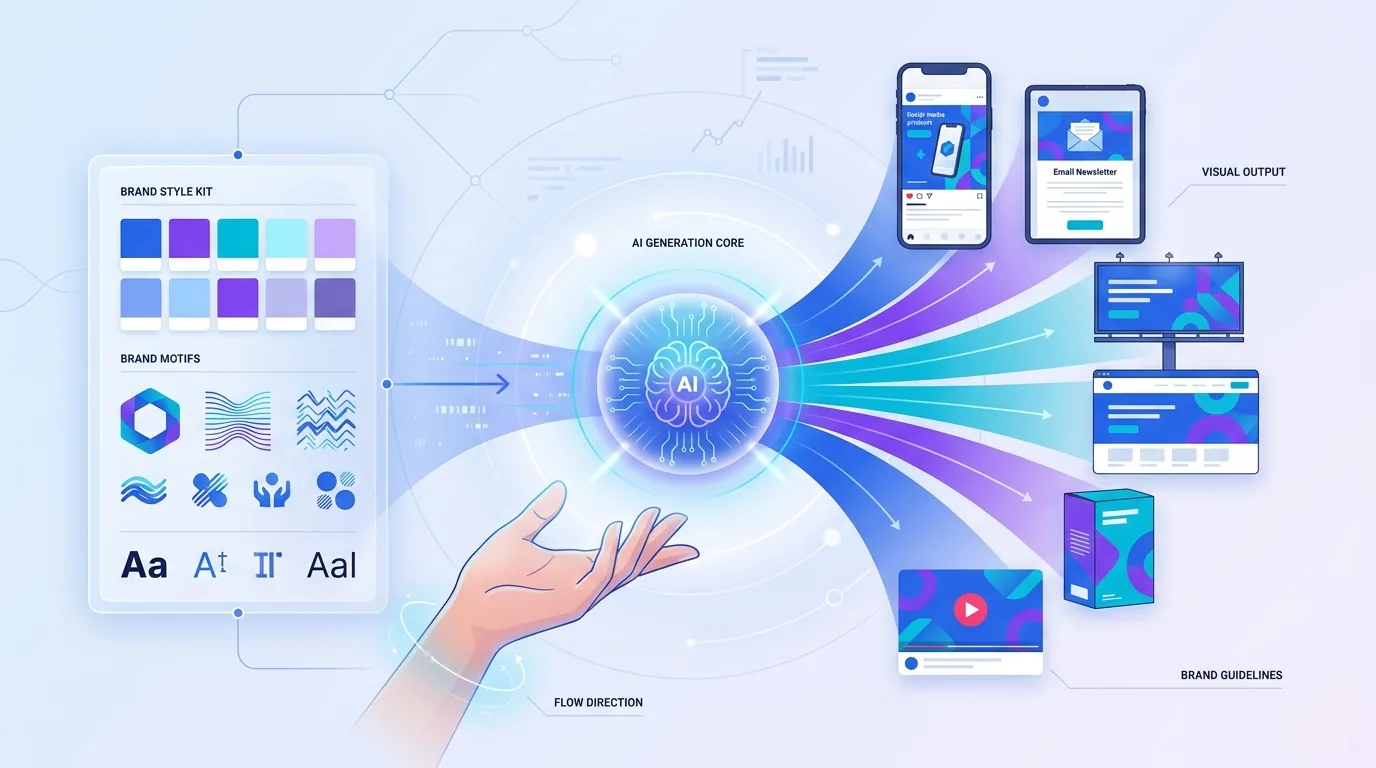
AI image generation for marketing works best as a guided production engine, not a magic button. In 2026, the brands getting real value feed generative tools a tight brand brief, use AI for volume and exploration, keep humans in charge of strategy and final judgment, and disclose AI use where it matters. Used that way, AI images cut production time dramatically without flattening your brand into generic stock.
This playbook is the practical workflow our creative team uses to deploy generative AI across campaigns — covering the process, brand consistency, the AI-versus-human decision, and the ethics and disclosure rules that keep you trustworthy. It assumes you want quality and scale, not one without the other.
What is AI image generation for marketing?
AI image generation for marketing is using generative models to create or adapt visuals — ad creative, social graphics, backgrounds, product mockups, and concept art — from text prompts and reference inputs. The advantage is speed and volume; the risk is that, left unguided, it produces visuals that look like everyone else's. The discipline is in the direction you give it.
Think of AI as the world's fastest junior designer: tireless and prolific, but in need of clear art direction and a senior eye on the output. That mental model keeps expectations right and quality high.
What does an AI image generation workflow look like?
A reliable workflow turns AI from a slot machine into a system. It starts with a brand brief, moves through guided generation, and ends with human curation and finishing. Skipping the brief is the single most common reason teams get off-brand, unusable output.
- Brief: define the goal, audience, message, and a locked visual style for the batch.
- Prompt with references: feed brand colors, motifs, and reference images, not just words.
- Generate in volume: produce many options to explore the space, not one and done.
- Curate ruthlessly: a human selects the few that fit brand and message, and kills the rest.
- Finish and integrate: refine, color-correct, add real type and logos, and adapt per platform.
- Review and approve: a final brand and accuracy check before anything goes public.
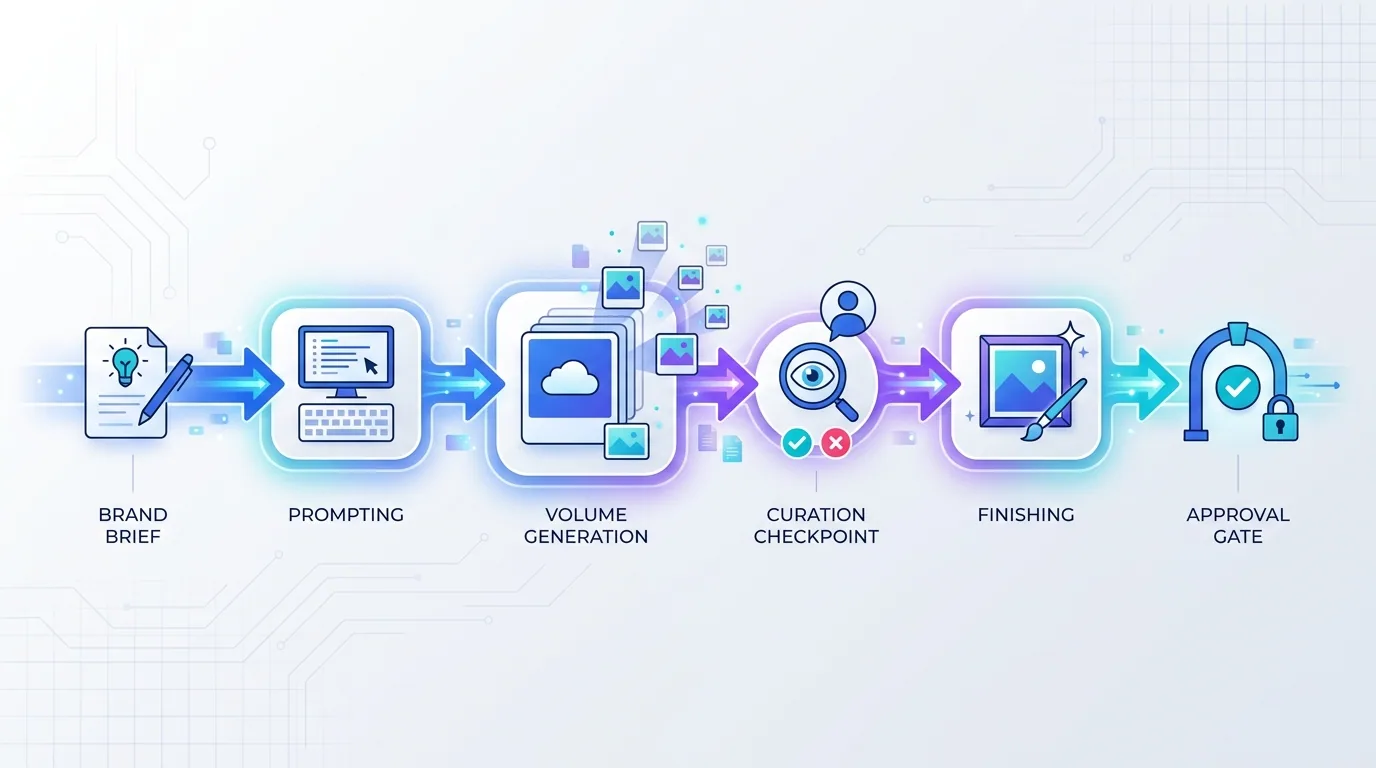
The curation step is where brand value is protected. Generating a hundred images is easy; the skill is choosing the three that are genuinely on-brand and useful. That judgment is human, and it is exactly where experienced creatives earn their keep in an AI workflow.
Documenting the workflow matters as much as following it. Save the prompts, references, and settings that produced your best results so the process is repeatable across a team rather than locked in one person's head. A workflow you can hand off is what turns AI from a personal trick into a real production capability.
How do you keep AI images consistent with your brand?
Brand consistency is the hardest part of AI image generation, because models default to a generic, average-of-the-internet look. You beat that with constraints: a documented style, reference images the model can lock onto, reusable prompt templates, and trained or fine-tuned styles where the tooling supports it.
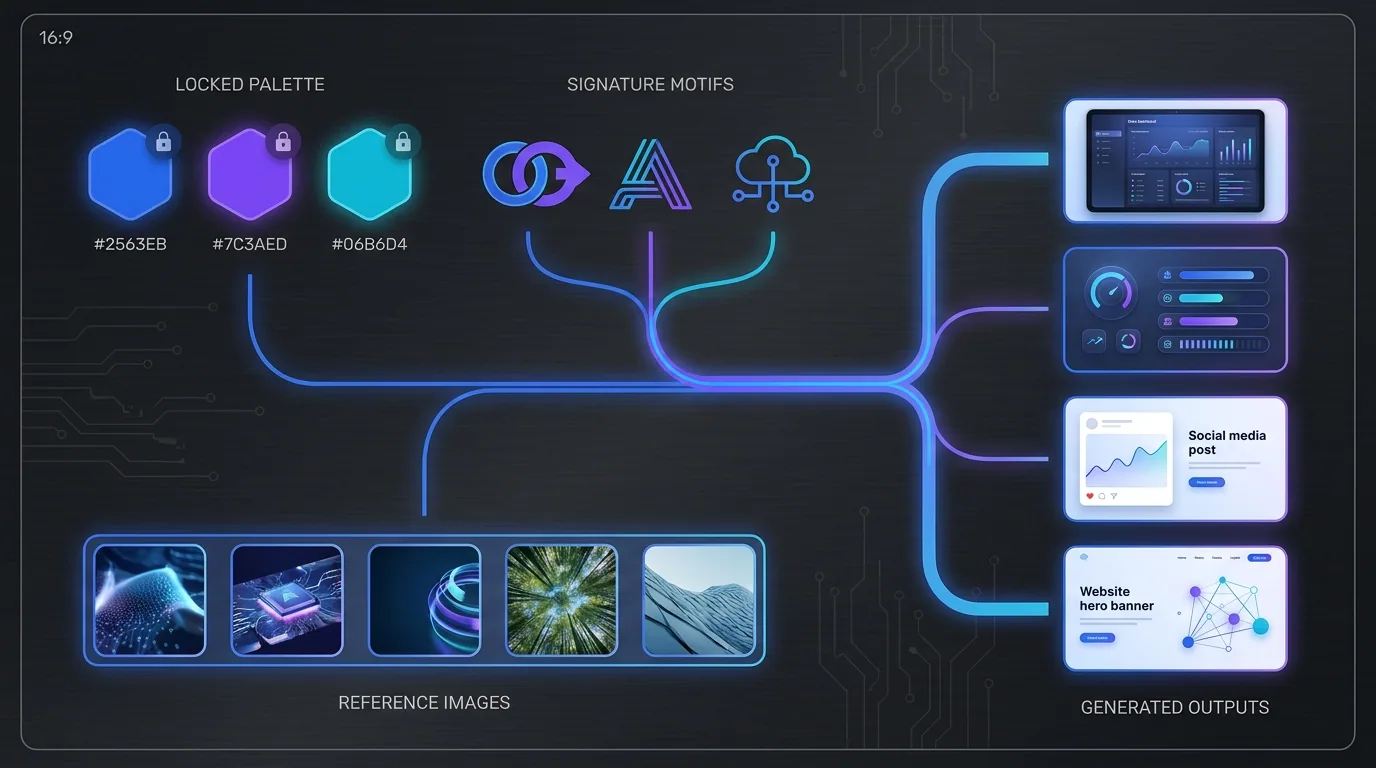
Consistency also comes from finishing. Even great generations usually get human polish — corrected color to exact brand values, real typography instead of AI gibberish text, and proper logo placement. The AI provides the raw material; your system makes it unmistakably yours.
Be wary of letting the model's defaults creep into your look over time. Many tools nudge everything toward the same hyper-glossy, ultra-symmetrical aesthetic, and if you accept it uncritically your brand slowly drifts toward the internet average. Push back with deliberate references and constraints so your visuals stay distinctly yours rather than distinctly AI.
When should you use AI versus a human designer?
Use AI where speed and volume matter and the stakes for precision are lower; use human designers where strategy, originality, brand-defining work, and accuracy are critical. The smartest 2026 teams do not choose one — they blend both, with AI handling production scale and people owning the decisions that define the brand.
- Lean AI: concept exploration, social variants, backgrounds, mockups, mood boards, and rapid resizing.
- Lean human: logo and identity design, brand strategy, hero campaign concepts, and high-stakes hero shots.
- Blend both: AI drafts at volume, a designer curates, directs, and finishes to brand standard.
- Avoid AI: anything requiring factual accuracy about real products, people, or claims you cannot verify.
We build this blend directly into our AI-assisted creative services: generative tools give clients the volume modern channels demand, while our creatives hold the line on taste, originality, and brand integrity. That combination is what scales content without it feeling churned out.
What are the ethics and disclosure rules for AI images?
Ethics is not optional in 2026 — it is a trust and, increasingly, a compliance issue. Be honest about AI use, avoid generating real people's likenesses without consent, respect intellectual property, and never use AI to fabricate things that look like real evidence, results, or testimonials. Misleading AI visuals damage trust far faster than they save time.
AI lets you make more images than ever. The brands people trust are the ones disciplined about which images they should make at all.
— Lena Vasquez, Creative Director, Fryntavo
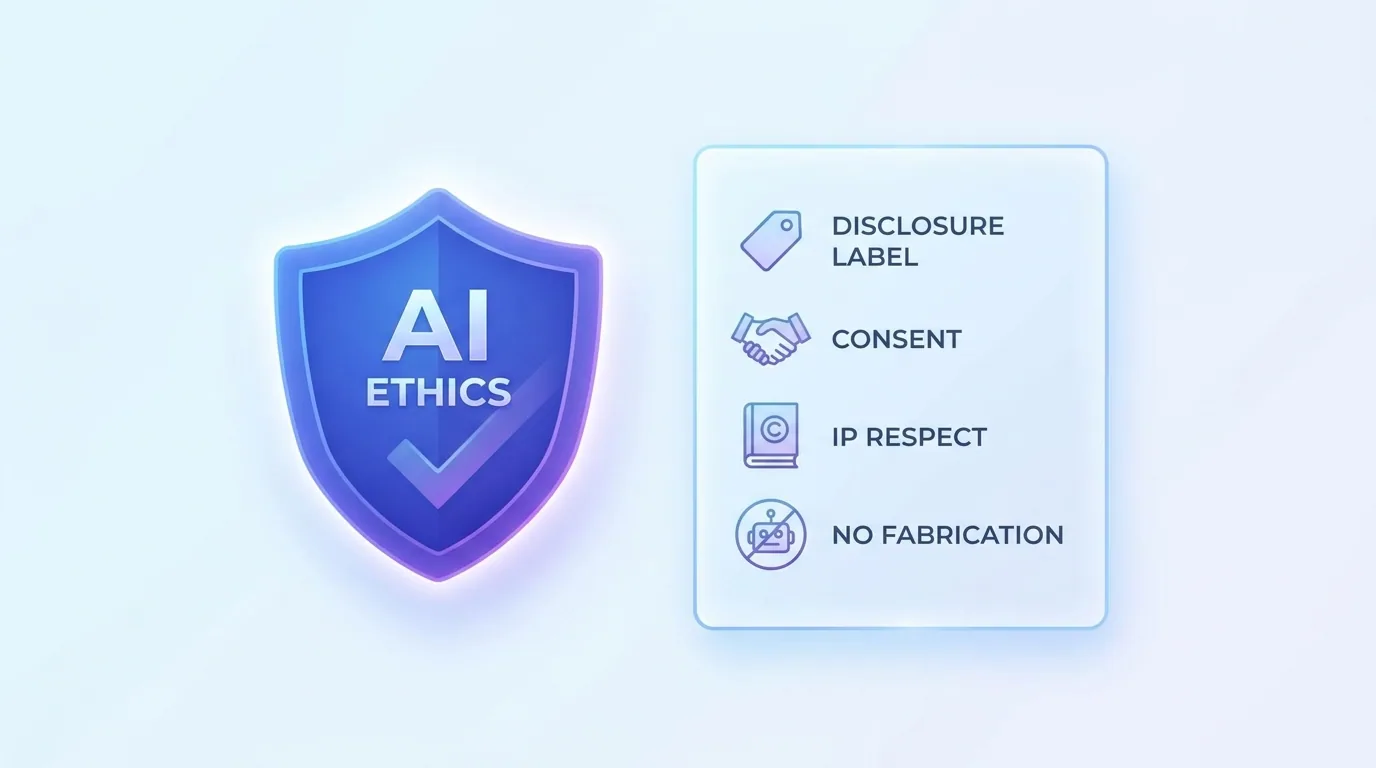
Practical disclosure means labeling AI-generated or heavily AI-edited imagery where audiences would reasonably expect a real photo — especially product, person, or proof shots — and following the platform and regional rules that now govern synthetic media. When in doubt, disclose; the cost of transparency is tiny compared to the cost of being caught misleading.
How do you measure the ROI of AI image generation?
Measure both efficiency and effectiveness. On efficiency, track production time and cost per asset and the number of variants you can now test. On effectiveness, track whether AI-assisted creative performs as well or better than fully human-made creative on engagement and conversion — because faster is only a win if quality holds.
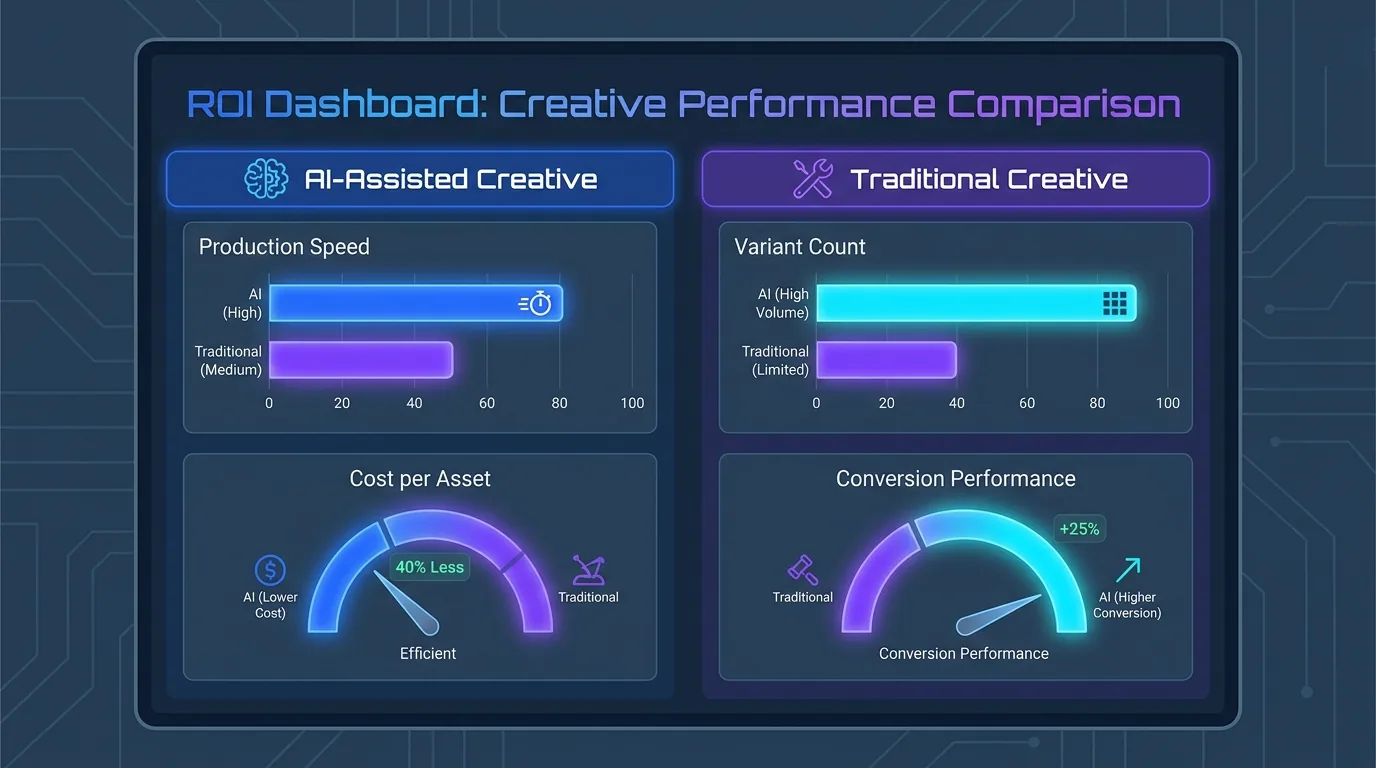
It helps to run a short pilot before committing your whole pipeline. Pick one campaign, produce a batch of AI-assisted assets alongside your usual process, and compare both the production economics and the live performance. That evidence settles internal debates quickly and shows you exactly which parts of your workflow benefit most from generative tools.
Put the playbook together and the pattern is clear: brief tightly, generate in volume, curate and finish like a pro, blend AI with human judgment, and stay honest about it. Do that, and AI image generation for marketing becomes a genuine competitive edge in 2026 — more output, steady brand quality, and trust intact.
Want to put AI image generation to work without losing your brand? Our creative team can build your AI style kit and a workflow that scales on-brand visuals.
Build Your AI Creative WorkflowFrequently asked questions
What is AI image generation for marketing?
AI image generation for marketing uses generative models to create or adapt visuals such as ad creative, social graphics, backgrounds, and mockups from text prompts and reference inputs. Its strength is speed and volume; the key is guiding it with a strong brand brief so output is not generic.
Can AI-generated images stay on-brand?
Yes, with discipline. Use a documented AI style kit of locked colors, type, signature motifs, and reference images, reuse prompt templates, and apply human finishing for exact color, real typography, and logos. Constraints and curation are what keep AI output recognizably yours.
When should I use AI versus a human designer?
Use AI for speed and volume tasks like concept exploration, social variants, backgrounds, and resizing. Use human designers for logos, brand strategy, hero campaigns, and anything needing accuracy or originality. The strongest approach blends both, with AI drafting and people directing and finishing.
Do I need to disclose AI-generated images in marketing?
You should disclose AI-generated or heavily AI-edited imagery where audiences would expect a real photo, especially product, person, or proof shots, and follow platform and regional rules on synthetic media. Transparency protects trust and is far cheaper than being caught misleading.
Is it ethical to use AI images in advertising?
It can be, when used responsibly. Be honest about AI use, avoid real people's likenesses without consent, respect intellectual property, and never fabricate fake evidence, results, or testimonials. Ethical use is both a trust issue and increasingly a compliance requirement in 2026.
How much time does AI image generation actually save?
Teams commonly see large reductions in first-draft production time and the ability to explore many more variants per campaign. The real saving comes from the full workflow, not just generation, since curation and finishing still require human time and judgment.
Does AI-generated creative perform as well as human-made creative?
It can perform comparably or better when guided by strong direction and human curation, but quality is not automatic. Measure both efficiency and performance, since faster, cheaper output is only a win if engagement and conversion hold up against human-made creative.
Can Fryntavo help set up an AI image generation workflow?
Yes. Fryntavo builds AI style kits and end-to-end creative workflows that blend generative tools with human direction, so brands scale on-brand visuals without sacrificing quality or trust. Book a call to design a workflow tailored to your brand.
Ready to put this into action?
Fryntavo helps brands grow with web development, SEO, marketplace management, and AI automation. Book a free, no-obligation strategy call.
Book a Free Strategy Call